
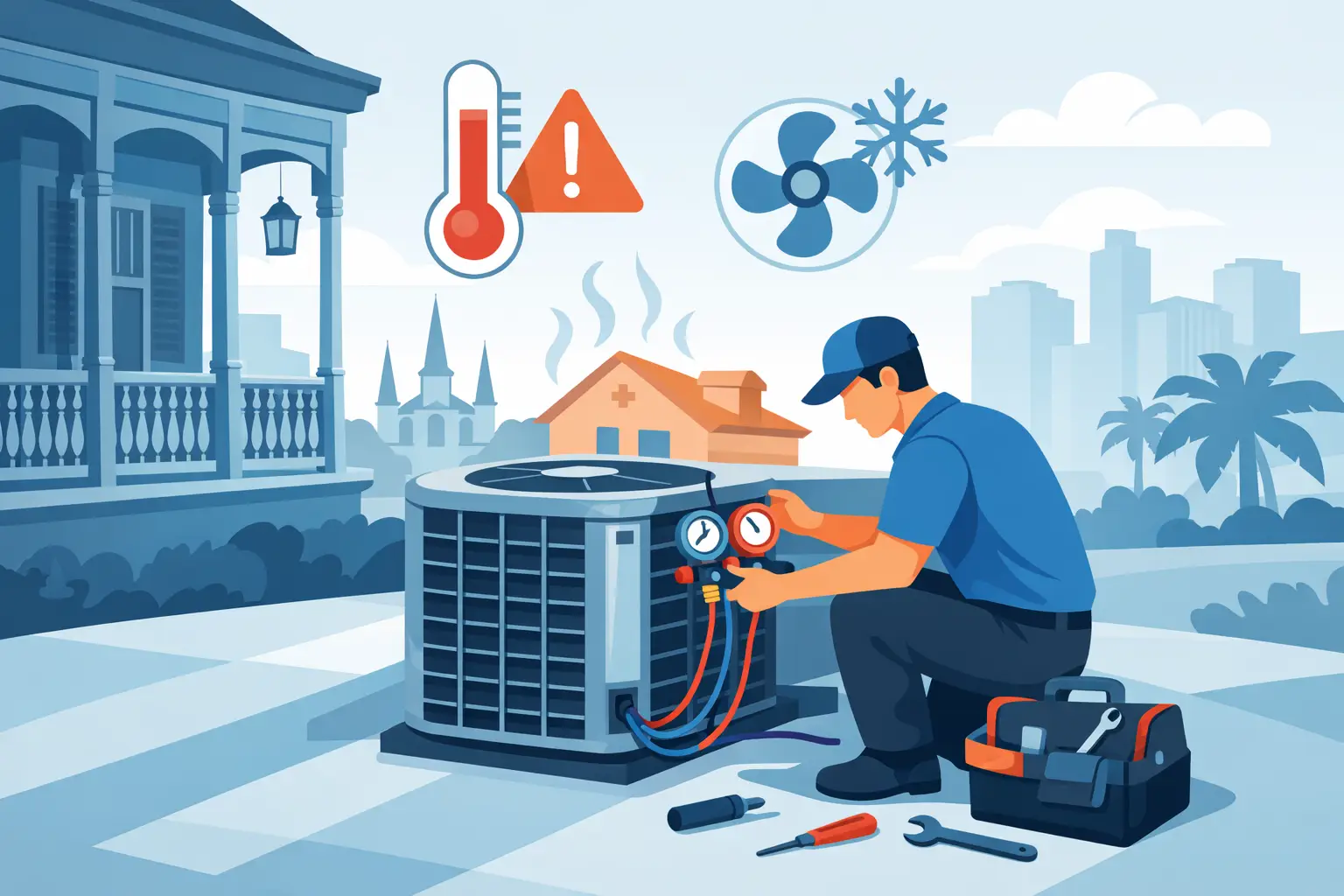
A New Orleans AC failure rarely happens at a convenient time. It often shows up on a humid afternoon, during a holiday weekend, or after a storm-related power interruption. When indoor temperatures rise quickly and the system cannot keep up, emergency ac repair new orleans property owners need is about more than restoring cold air. It is about protecting people, equipment, furnishings, and the property itself from excessive heat and moisture.
For homeowners, a failed system can make sleeping, caring for young children, or checking on older family members difficult. For businesses, it can disrupt employees, tenants, customers, inventory, or refrigeration-dependent operations. Knowing what qualifies as an HVAC emergency and what to do before a technician arrives can prevent additional damage and help speed up the repair.
When an AC Problem Is an Emergency
Not every cooling issue requires an after-hours service call. An AC system that is running but a few degrees behind on a mild day may be able to wait for a scheduled appointment. In Southeast Louisiana, however, high heat and humidity change the calculation. A small mechanical issue can turn into an urgent indoor air and moisture problem fast.
Call for emergency service when the system has stopped cooling entirely during extreme heat, particularly if children, seniors, pets, or people with health concerns are inside. Fast action is also warranted when you smell burning, see smoke, notice sparks, hear loud grinding or screeching, or find water actively leaking through a ceiling, wall, or drain pan.
Commercial properties should treat cooling loss as urgent when it affects server rooms, medical equipment, occupied spaces, tenant safety, or refrigerated products. A refrigeration failure is its own category of emergency because temperature loss can create expensive inventory losses in a matter of hours.
Warning Signs That Should Not Wait
Some failures give a property owner a short warning window. Warm air from the vents, repeated breaker trips, ice on the refrigerant line, a thermostat that will not respond, or a system that cycles on and off every few minutes all deserve prompt attention. Water around the indoor unit is also a concern. In New Orleans, condensate drains work hard for much of the year, and a clogged line can overflow into ceilings, flooring, drywall, and insulation.
If you notice a sharp electrical smell, smoke, or an overheating outdoor unit, turn the system off at the thermostat and, if safe to do so, at the breaker. Do not keep resetting a breaker that trips repeatedly. That can point to an electrical fault or failing component that needs licensed HVAC diagnosis.
What to Do Before Emergency AC Repair Arrives
A few practical checks can sometimes identify a simple issue. More importantly, they help you give the technician useful details when you call.
First, verify that the thermostat is set to cool and that the temperature setting is below the current room temperature. Replace weak batteries if the thermostat uses them. Then check the electrical panel for a tripped breaker. Reset it once only if there is no burning smell, buzzing, or visible damage. If it trips again, leave it off.
Next, look at the return-air filter. A severely clogged filter restricts airflow, can cause the evaporator coil to freeze, and forces the equipment to work harder. If the filter is dirty, replace it with the correct size and type. Do not run the system without a filter, and do not use an overly restrictive filter unless the system is designed for it.
If you see ice on the indoor coil area or refrigerant line, turn the cooling system off. Set the thermostat fan to ON if it will run safely, allowing airflow to help thaw the coil. Do not chip or scrape ice away. Frozen equipment may be caused by low airflow, a refrigerant issue, a dirty coil, or a mechanical problem. Continuing to run it can cause further damage.
For a water leak, place a container or towels beneath the indoor unit if it can be done safely, then turn the system off if water is approaching electrical components or flowing into finished areas. Move belongings away from the leak and document visible damage. Catching a condensate overflow early can reduce the risk of mold-friendly moisture conditions inside walls, ceilings, and insulation.
Why New Orleans AC Failures Need a Bigger View
Air conditioning in this climate is not just about temperature. Your system also removes moisture from indoor air. When cooling performance drops, indoor humidity can climb even before the house feels extremely hot. That moisture can make rooms feel sticky, encourage musty odors, and create conditions that affect drywall, wood finishes, and other materials.
This is why a quality emergency repair should not stop at replacing the part that failed. The technician should consider why it failed and whether the building is adding unnecessary strain to the equipment. Air leakage, insufficient attic insulation, leaky ducts, oversized or undersized equipment, drainage problems, and poorly managed moisture can all contribute to recurring comfort issues.
For example, a failed capacitor may be a straightforward repair. But if the outdoor unit is constantly overworked because hot attic air, duct leakage, or inadequate insulation is raising the load, the same system may continue to experience avoidable stress. The right next step depends on the age and condition of the equipment, the property’s layout, and the source of the heat and humidity entering the building.
Repair or Replace? The Decision Depends on the System
An emergency visit does not automatically mean you need a new air conditioner. Many issues, including failed capacitors, contactors, drain clogs, blower components, thermostats, and certain electrical repairs, can be resolved without replacement. A well-maintained system with a limited, clearly identified problem is often worth repairing.
Replacement may make more sense when an older system has a major compressor failure, repeated refrigerant leaks, costly recurring repairs, or poor efficiency that keeps utility bills high. Equipment using older refrigerants can also present repair and cost considerations. A technician should explain the condition of the system, the immediate repair option, and the trade-offs of investing in replacement rather than pressuring you toward one answer.
For commercial facilities, the decision may also involve operational risk. A repair that restores service today may be the correct short-term move, while a planned replacement or equipment upgrade can be scheduled to avoid a future shutdown. Budget, occupancy, redundancy needs, and the condition of connected systems all matter.
Preventing the Next Cooling Emergency
Preventive maintenance cannot eliminate every unexpected failure, but it significantly reduces the chance of one. In the New Orleans area, AC systems benefit from service before the hottest part of the year and continued attention during long cooling seasons. Maintenance should include checking electrical connections, refrigerant performance, drain operation, coils, filters, blower components, and overall system operation.
Property owners should also keep the outdoor unit clear of leaves, grass clippings, and stored materials. Maintain open airflow around it, and do not block supply or return vents indoors. If parts of the home are consistently hot, humid, or difficult to cool, treat that as useful information rather than a minor annoyance. It may point to an insulation, duct, attic, moisture, or equipment-sizing issue that deserves a closer look.
Storm season adds another layer of planning. A whole-house or commercial backup generator can keep critical cooling, refrigeration, lighting, and communications operating during a power outage, but the system must be properly sized for the electrical load. Generator planning is especially valuable for properties where loss of cooling creates safety concerns or business interruption.
Choosing Emergency AC Repair in New Orleans
When you need help quickly, look for a provider that can diagnose the immediate fault while understanding the conditions that affect Gulf Coast buildings. Licensed service, clear communication, upfront discussion of repair options, and respect for the property matter during a stressful call.
Air Tight Construction approaches HVAC issues as part of overall building performance. That means the immediate goal is to restore safe, reliable cooling, while the longer-term conversation can address air loss, insulation, drainage, moisture control, backup power, or other conditions that may be making the system work harder than it should.
If your AC stops during severe heat, focus first on safety: move vulnerable people to a cooler location if possible, turn off equipment showing electrical danger, and protect the area from water damage. A prompt, informed repair call can bring back comfort today and help you make smarter decisions about the property before the next stretch of New Orleans heat arrives.