

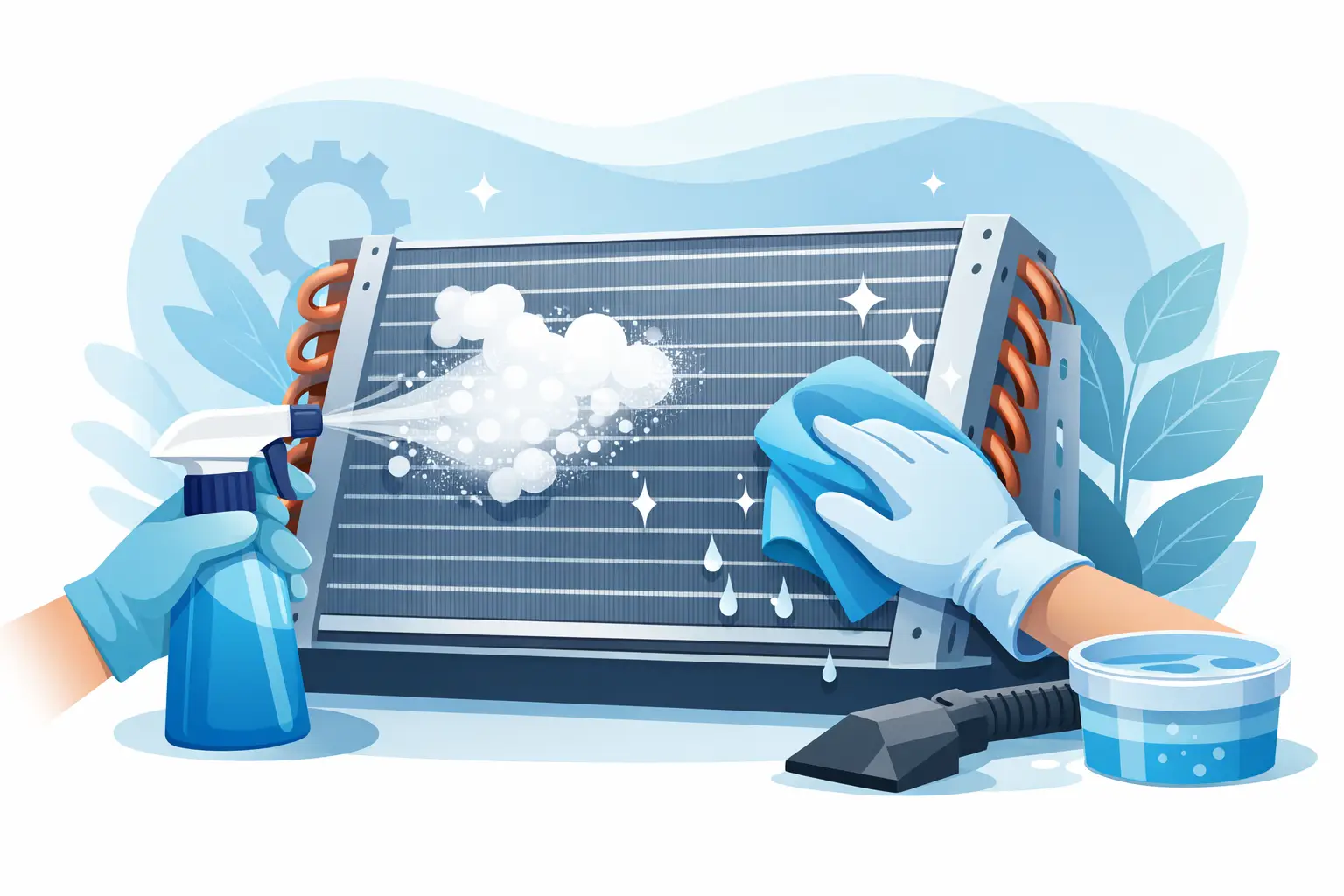
A New Orleans air conditioner can lose cooling capacity long before it stops running. One common reason is a dirty evaporator coil: the indoor coil that pulls heat and moisture from your air. Learning how to clean evaporator coils can help you spot basic maintenance needs, but this is one HVAC task where careful access and the right cleaning method matter as much as the cleaning itself.
In Southeast Louisiana, long cooling seasons, high humidity, pet hair, household dust, and occasional moisture problems can load up an indoor coil quickly. When airflow and heat transfer suffer, your system may run longer, struggle to lower indoor humidity, and put added strain on components that are costly to replace.
What an evaporator coil does
Your evaporator coil sits inside the indoor portion of a central air-conditioning system, usually above or beside the furnace or air handler. Refrigerant moves through the coil while the blower pulls warm return air across its thin aluminum fins. The coil absorbs heat from that air. It also condenses moisture, which should drain away through the condensate pan and drain line.
A clean coil gives heat a clear path into the refrigerant. A dirty coil acts like a blanket. Dust, lint, grease, pet dander, and biological buildup restrict airflow and insulate the metal surface. The result can be weak cooling, longer run times, higher electric bills, uneven temperatures, and humidity that stays uncomfortably high even when the AC is operating.
Dirt is not the only concern. If the coil freezes, the drain pan overflows, or mold-like growth is present inside the air handler, the cause may involve restricted airflow, a drain issue, duct leakage, insulation gaps, or a refrigerant problem. Cleaning the coil alone will not correct those underlying conditions.
Signs your coil may need attention
A dirty evaporator coil does not always produce one obvious symptom. Property owners often notice a combination of changes: less air coming from supply vents, cooling that takes longer than usual, rooms that feel clammy, rising utility costs, or a musty odor when the system starts.
Ice on the refrigerant line or indoor equipment is another warning sign. Turn the cooling system off if you see ice and allow it to thaw. Do not chip or scrape ice from the coil. A frozen coil can be caused by dirt, but it can also indicate a blower issue, a blocked filter, or low refrigerant. Continuing to run it can lead to water damage or compressor trouble.
For commercial properties, a decline in cooling performance may be harder to identify because schedules, occupancy, and internal heat loads vary. That makes routine HVAC maintenance especially valuable. Coil condition, drain performance, filters, blower operation, and refrigerant readings should be checked as part of a complete service visit.
How to clean evaporator coils safely
The first decision is whether the coil is truly accessible. In many systems, the evaporator coil is enclosed in a sealed cabinet or positioned where a homeowner cannot see both sides. Forcing panels open, bending refrigerant lines, or reaching into a tight cabinet can create a larger repair than the original maintenance need.
If your system has a service panel that can be removed without disturbing refrigerant piping or wiring, you may be able to perform a light surface cleaning. Start by turning off power to the HVAC equipment at the thermostat and the appropriate breaker or disconnect. Do not rely on the thermostat alone.
Remove the access panel carefully and set screws aside. Take a look before applying anything. A light coating of dry dust may be removed with a soft-bristle brush or a vacuum with a brush attachment. Use very light pressure and brush in the direction of the fins. Coil fins bend easily, and bent fins reduce airflow.
For heavier dirt, use a no-rinse evaporator coil cleaner specifically labeled for indoor HVAC coils. Follow the product directions exactly. These cleaners are designed to break down grime and drain away with normal condensate. Do not use household degreasers, bleach, dish soap, acidic cleaners, or high-pressure water. They can damage the aluminum fins, attack other materials in the cabinet, create irritating fumes, or cause residue to collect more dirt.
Protect nearby electrical components from overspray. Apply only enough cleaner to cover the coil surface, allow the stated dwell time, and let the cleaner drain into the pan. If the label calls for rinsing, use only the method and amount of water specified. Excess water inside an air handler can overflow the drain pan or damage electrical parts.
Before closing the cabinet, inspect the condensate pan and visible drain opening. Standing water, algae-like buildup, corrosion, or a pan full of debris should not be ignored. The coil may be clean, but a clogged drain can still create indoor water damage and moisture conditions that encourage microbial growth.
Reinstall the panel securely, restore power, and run the system. Listen for unusual noises and check for water around the unit over the next several hours. If airflow is still weak, the coil freezes again, or the system cannot control humidity, schedule professional service rather than repeatedly cleaning the equipment.
What not to do
There are a few shortcuts that create avoidable problems. Never use a pressure washer or compressed air at close range on indoor coil fins. The fins are thin and can flatten quickly. Avoid metal brushes, knives, screwdrivers, and improvised scraping tools.
Do not try to straighten badly crushed fins without a proper fin comb and a clear view of the coil. Likewise, do not disconnect refrigerant lines, remove a coil from its cabinet, or add refrigerant yourself. These tasks require trained, licensed HVAC professionals and specialized equipment.
It is also a mistake to clean only the coil while leaving a severely clogged filter in place. The filter protects the blower and coil from airborne debris. Replace disposable filters on the schedule recommended for your home, system, and household conditions. Homes with pets, renovation dust, or high occupancy may need more frequent changes.
When professional coil cleaning is the better option
Professional cleaning is the right call when the coil is heavily impacted, difficult to access, frozen, contaminated by a drain overflow, or located in a system with persistent performance problems. A technician can safely open the cabinet, inspect both sides of the coil, clean the blower compartment, verify drainage, check electrical operation, and measure cooling performance.
That broader inspection matters in Gulf Coast properties. High indoor humidity can come from more than a dirty coil. Oversized equipment may cool too quickly to remove enough moisture. Leaky ducts can pull humid attic or crawlspace air into the system. Missing insulation, air leakage, roof leaks, and drainage issues can all affect comfort and building conditions.
Air Tight Construction approaches HVAC maintenance with that full-property perspective. If a coil keeps getting dirty or the system cannot maintain comfort, the practical answer may include HVAC service, but it may also involve filtration, ductwork, insulation, air sealing, or moisture control.
Keep the coil cleaner between service visits
The most effective coil cleaning is the one you do not need often. Keep return grilles clear of furniture and avoid running the system with a missing or collapsed filter. Use the correct filter size and make sure it fits tightly in its rack so air cannot bypass it.
Keep the area around indoor equipment dry and accessible. A utility closet packed with boxes makes routine inspection harder, while stored chemicals or construction dust can introduce contaminants into the return-air path. During remodeling, ask contractors to protect HVAC returns and replace filters once dusty work is complete.
For most homes, a seasonal HVAC check before the peak cooling period is a sensible baseline. Properties with heavy use, pets, allergies, commercial occupancy, or known moisture issues may benefit from more frequent maintenance. The right interval depends on the equipment, indoor conditions, and how hard the system works.
A clean evaporator coil supports cooler air, lower humidity, and more efficient operation, but it should never be treated as an isolated fix. If your AC is showing signs of strain, addressing the coil, filter, drainage, and airflow together is the better way to protect comfort and the equipment that delivers it.

https://addlinks.pro/Ull1X