
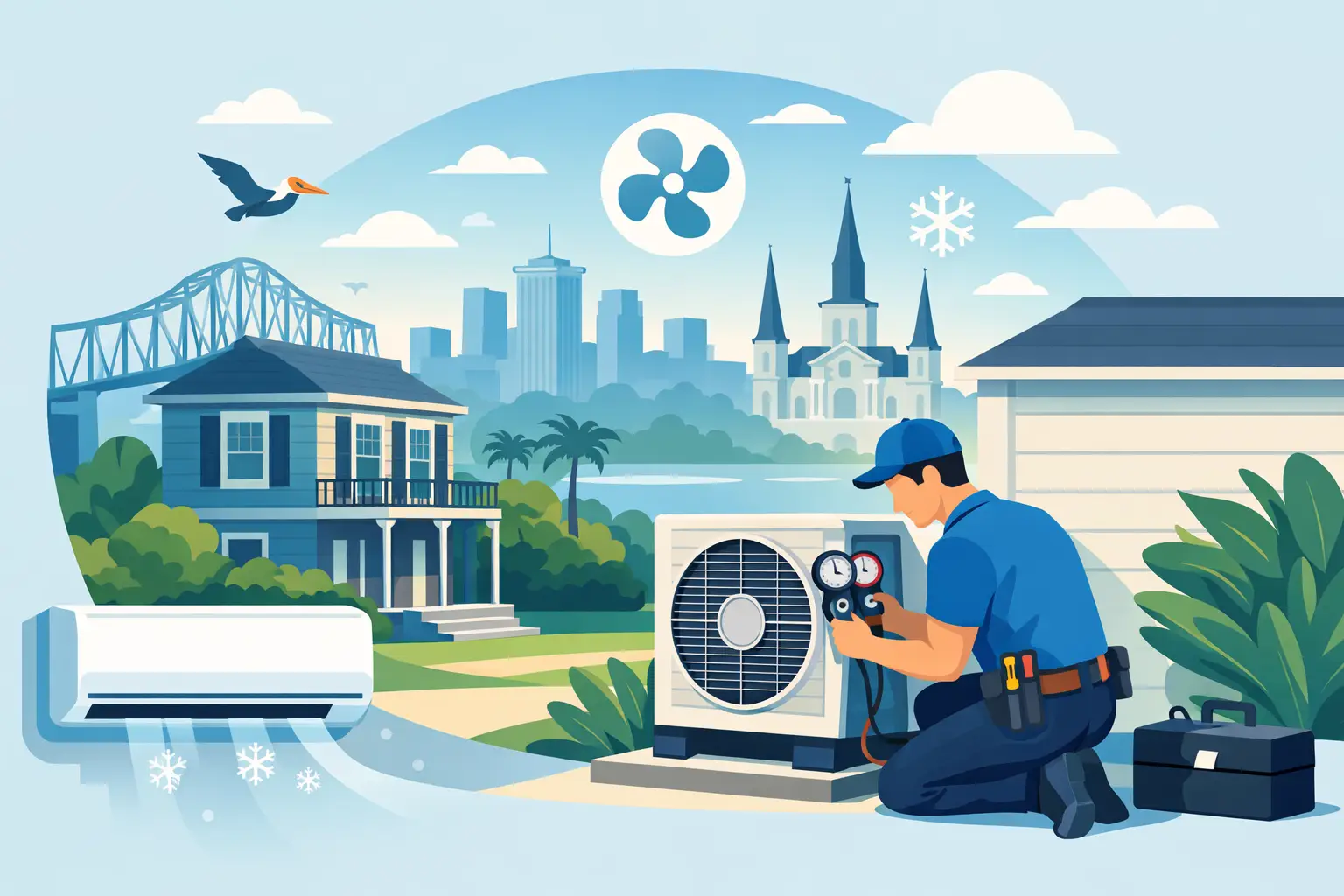
A New Orleans air conditioner rarely gets a quiet season. It runs through long stretches of high heat, pulls moisture from the air nearly nonstop, and may face power interruptions and wind-driven debris during storm season. Quality AC maintenance New Orleans property owners schedule before trouble starts is not simply a filter change. It is a practical inspection of the equipment, airflow, drainage, electrical components, and moisture conditions that determine whether a system can keep up.
For homes and commercial spaces across Southeast Louisiana, preventative service is one of the clearest ways to avoid an emergency repair during the hottest part of the year. It also gives a licensed technician time to find small issues before they become compressor damage, water leaks, mold concerns, or a complete loss of cooling.
Why New Orleans AC Maintenance Is Different
Air conditioners cool a building, but in this climate they also do essential dehumidification work. When humidity stays high, a system has to remove a large amount of water from indoor air while still moving enough cool air through the space. If the system is oversized, poorly maintained, short-cycling, or paired with leaky ductwork, it may cool the thermostat area without properly drying the building.
That is when a property can feel clammy even at a low temperature setting. Occupants may turn the thermostat down further, increasing energy use without solving the underlying problem. Moisture can also collect around supply vents, inside drain pans, and in poorly insulated areas of the building envelope.
New Orleans properties also deal with heavy pollen, construction dust, salt air in some areas, and storm debris. Outdoor condenser coils can become dirty enough to restrict heat transfer. Condensate drains can clog with algae and buildup. Electrical connections and capacitors work hard in persistent heat. None of these conditions automatically means a system is failing, but each deserves attention before peak summer demand.
What a Professional AC Maintenance Visit Should Cover
A thorough maintenance appointment starts with how the system is performing in the actual building. A technician should ask about uneven temperatures, rising utility bills, humidity, odors, water around the indoor unit, unusual noise, and recent breaker trips. Those details help identify issues that a quick visual check can miss.
The technician should inspect the indoor and outdoor equipment, test operating conditions, and verify that the system is producing an appropriate temperature difference. Refrigerant levels are not a routine item to “top off” without a reason. A properly sealed system should not regularly lose refrigerant. If readings suggest a problem, the next step is finding and repairing the cause rather than repeatedly adding refrigerant.
Airflow and filtration
A clean filter protects equipment and supports airflow, but the wrong filter can create its own restriction. High-efficiency filters can be useful when the system is designed to handle them. In other cases, an overly dense filter may reduce airflow, contribute to coil freezing, and leave rooms uncomfortable.
During maintenance, the technician should check the filter condition, blower operation, accessible duct connections, return-air pathways, and supply-air performance. Closed or blocked vents, a collapsed flex duct, a dirty evaporator coil, or an undersized return can all limit airflow. The right correction depends on the building and the equipment, not just the thermostat setting.
Condensate drainage and humidity control
Every cooling cycle creates condensate. In a humid Gulf Coast climate, that water must move reliably from the indoor coil through the drain system and out of the building. A partially clogged drain can lead to ceiling stains, overflow shutoffs, equipment shutdowns, and moisture that supports mold growth.
Maintenance should include checking the drain pan, condensate line, drain trap where applicable, and any safety switch. If recurring clogs are a problem, the solution may involve correcting drain slope, improving access, addressing a dirty coil, or installing appropriate protective components. Pouring chemicals into a drain without understanding the system can damage parts or create a temporary fix that does not address the source of the issue.
Coils, electrical parts, and outdoor equipment
The outdoor condenser releases heat from the building. When its coil is coated in dirt or debris, the system has to run harder to reject that heat. The indoor evaporator coil also needs adequate airflow and cleanliness to absorb heat and moisture effectively.
A maintenance visit should include an inspection of both coils, the outdoor fan, electrical wiring, contactor, capacitor, disconnect, and refrigerant line insulation. Technicians can identify worn electrical components before they fail on a 95-degree afternoon. They can also flag an outdoor unit that needs cleaning or has poor clearance because of landscaping, fencing, or stored materials.
How Often Should You Schedule Service?
For most New Orleans homes, an annual professional cooling-system maintenance visit is the minimum reasonable baseline. Scheduling in spring gives you time to address repairs before the system enters its longest and hardest operating period. Many property owners choose twice-yearly HVAC service, with one visit focused on cooling and another on heating and overall system condition.
Twice-yearly service can make particular sense for older equipment, homes with pets, properties with high indoor dust, rental units, restaurants, offices, and systems that run for extended hours. Commercial refrigeration and larger commercial HVAC equipment often need a more frequent, site-specific maintenance plan because a failure can disrupt inventory, operations, and occupant comfort.
Between visits, homeowners should check filters regularly, keep the area around the outdoor unit clear, and pay attention to changes. A filter may need replacement every one to three months, but the correct interval depends on the filter type, household activity, pets, and system runtime. A clean filter is helpful, yet it does not replace professional testing and inspection.
Signs Maintenance Should Not Wait
A maintenance appointment is preventative. If the system is showing a serious symptom, it may need diagnostic repair instead. Waiting can increase damage, particularly when the compressor, blower motor, or electrical system is under stress.
Call for service promptly if you notice water at the indoor unit, ice on refrigerant lines, a burning or electrical smell, loud buzzing or grinding, frequent breaker trips, weak airflow, warm air from supply vents, or a sharp increase in humidity indoors. A musty smell deserves attention as well. It may be related to drainage, a dirty coil, duct conditions, or moisture elsewhere in the building.
If one room is always hot while the rest of the home is comfortable, the answer is not always a larger AC unit. Duct leakage, attic heat gain, insulation gaps, poor return-air design, window exposure, and air infiltration may all contribute. This is where a building-performance approach is more useful than replacing equipment in isolation.
Maintenance Works Best With a Tighter Building
An air conditioner can only work with the building it serves. Conditioned air escaping through attic gaps, leaky ducts, poorly sealed penetrations, or insufficient insulation forces the equipment to run longer. In New Orleans, those gaps also let humid outdoor air enter, increasing the dehumidification load.
For some properties, maintenance reveals that the equipment itself is in good condition but the building envelope is undermining comfort. Improvements such as properly installed spray foam insulation, duct sealing, targeted air sealing, or repairs to water-damaged areas can reduce strain on the HVAC system. The right project scope depends on the age of the building, the condition of the ducts, attic configuration, moisture history, and budget.
Backup power also matters for properties that cannot tolerate long cooling interruptions. A generator will not correct an inefficient AC system, but appropriately planned backup power can keep critical cooling, refrigeration, sump equipment, and other essential loads operating during an outage. Capacity planning should be based on actual electrical loads and startup demands, not guesswork.
Protect Comfort Before the Heat Peaks
The least expensive AC breakdown is the one found during a scheduled visit, when there is time to make a measured decision instead of an emergency purchase. Air Tight Construction provides licensed HVAC service with attention to the connected conditions that affect cooling performance, including airflow, insulation, moisture, and power reliability.
If your system is running longer than usual, leaving rooms humid, or has not been inspected since last cooling season, schedule service before the next stretch of extreme heat turns a manageable issue into a no-cool call.

One thought on “AC Maintenance New Orleans Homeowners Need”