

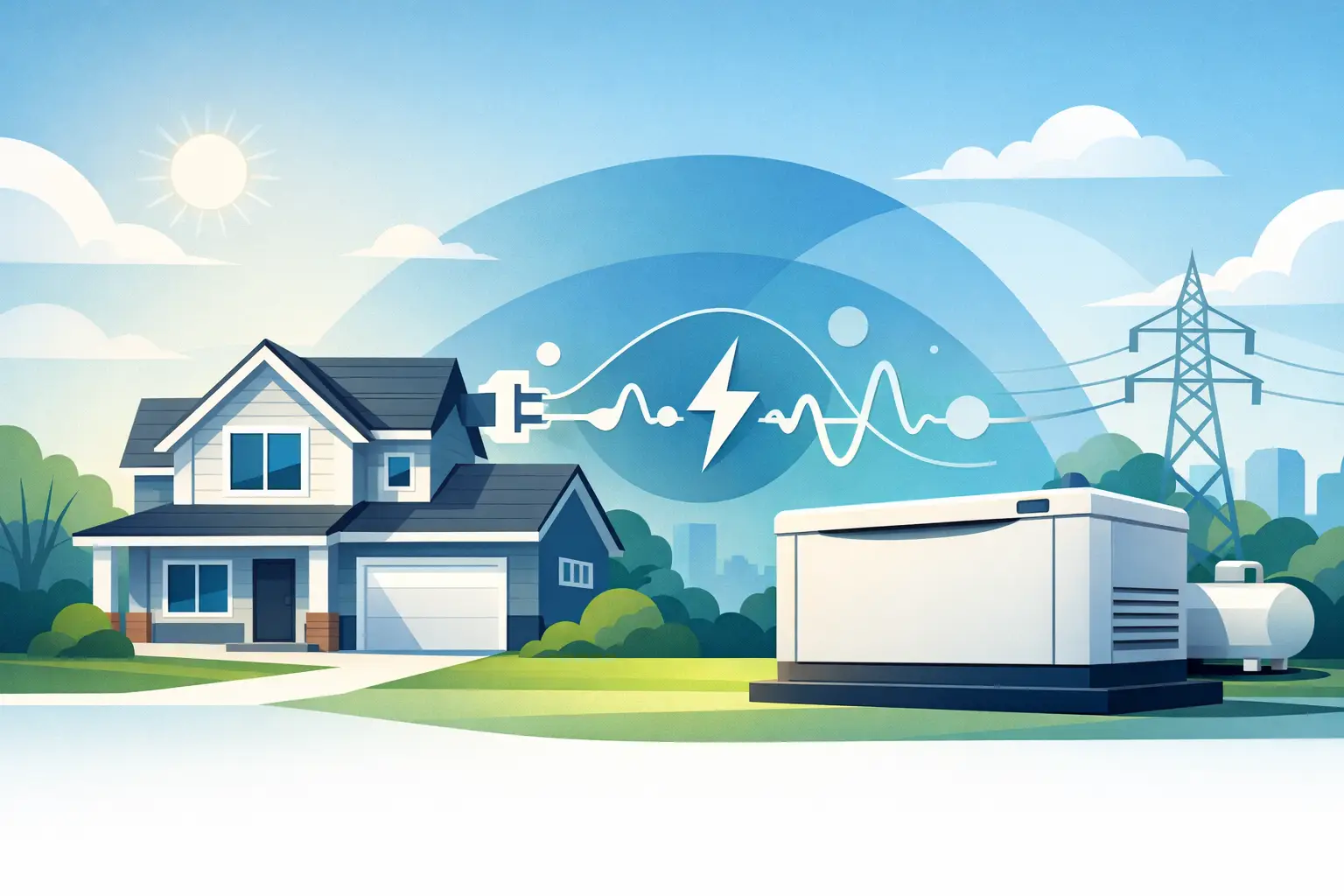
A power outage in Southeast Louisiana is not just an inconvenience. It can mean a hot, humid house, spoiled food, a disabled sump or condensate pump, lost security lighting, and no way to keep essential medical equipment operating. Choosing the right generator size for whole house use starts with a clear definition of what “whole house” means for your property – and which systems must stay on when utility power is out.
A standby generator should support the way you actually live and protect the systems that keep your home safe. For some households, that means one central air conditioner, refrigeration, lighting, internet, and a few outlets. For others, it means two HVAC systems, electric cooking, a well pump, pool equipment, and a home office. The square footage of the house matters, but the electrical loads inside it matter far more.
Generator Size for Whole House: Start With Your Loads
Generators are rated in kilowatts, or kW. One kilowatt equals 1,000 watts of electrical power. The right capacity is based on the total running load of the equipment you want to operate, plus the additional power certain motors need when starting.
That second part is where many estimates go wrong. A refrigerator, central air conditioner, freezer, pump, and some power tools can draw substantially more electricity for a few seconds as the motor starts. A generator that looks large enough based only on running watts may still struggle when the AC compressor cycles on.
A professional load calculation reviews your electrical panel, major appliances, HVAC equipment, and planned priorities during an outage. It should account for both normal operation and startup demand. It also identifies whether your home needs load management, which allows the generator to temporarily control lower-priority circuits so the most important equipment continues running.
For a typical home, the loads worth reviewing include:
- Central air conditioning or heat pump equipment
- Refrigerators, freezers, and kitchen circuits
- Lighting, internet equipment, security systems, and garage doors
- Well pumps, sump pumps, condensate pumps, and sewer lift pumps where applicable
- Water heaters, ranges, dryers, pool equipment, and electric vehicle chargers
Not every item needs to run during an outage. That decision is the foundation of good generator sizing.
Common Whole-House Generator Ranges
There is no single generator size that fits every house, but typical ranges can provide a useful starting point. A 10 to 14 kW unit may serve a smaller home with carefully selected essential circuits, especially when the home uses gas for heating, water heating, and cooking. It may not be enough to run a larger central AC system along with every appliance at once.
A 16 to 20 kW standby generator often works well for many New Orleans-area homes that want broader coverage. Depending on the home’s equipment and fuel source, this range may support a central AC unit, kitchen refrigeration, lighting, outlets, and several additional circuits. Load management may still be needed for electric dryers, ovens, or other high-demand equipment.
A 22 to 26 kW unit is commonly considered when a home has multiple air conditioning systems, a larger footprint, more electric appliances, or a stronger expectation that normal household routines will continue during an outage. Larger homes, all-electric homes, properties with pool equipment, and homes with significant pump loads may need more capacity or a managed approach to the loads.
More generator capacity is not automatically better. An oversized unit can cost more to install, consume more fuel, and create unnecessary expense. A unit that is too small can overload, shut down, or force you to turn off equipment when you need it most. The goal is an appropriately sized system, not simply the biggest unit available.
Air Conditioning Changes the Calculation
In Gulf Coast heat, homeowners understandably want their air conditioning to operate during an outage. Cooling is often the largest factor in determining generator size for whole house backup.
The tonnage listed on an AC system does not tell the full electrical story. The equipment’s data plate provides the electrical ratings needed for proper sizing, including running requirements and compressor startup demand. Older systems can have different demand characteristics than newer high-efficiency equipment. A two-system home should never assume that both units can run on a generator without verifying the actual loads.
A home with improved insulation, sealed attic areas, and properly maintained HVAC equipment may also hold comfortable temperatures longer when power is interrupted. That does not replace a generator, but it can reduce the urgency of running every system at maximum capacity. Building performance and backup power work together.
Electric Appliances Can Add Up Quickly
Electric resistance appliances create major demand. An electric water heater, clothes dryer, oven, cooktop, and electric heat strips can each change the generator size significantly. Running several of them with central AC can push a household beyond the capacity of a generator that otherwise seemed adequate.
That does not mean you must give up those appliances during an outage. It means the installation should include a plan. Some homeowners choose a generator and automatic transfer switch that supports the full panel with smart load management. Others select a smaller system designed around essential circuits. Both approaches can be effective when they match the property and the household’s expectations.
Fuel Supply Matters as Much as Generator Capacity
A standby generator is only useful as long as it has reliable fuel. Most residential standby systems run on natural gas or propane. Natural gas can be convenient where utility service is available, but the existing gas line must be properly sized for the generator’s demand. A line that is too small may limit performance, particularly when other gas appliances are operating.
Propane offers a dependable alternative for homes without natural gas service, but tank size and fuel planning matter. Longer outages require more stored fuel. The generator’s fuel consumption changes with the electrical load, so a system operating near capacity will use more fuel than one serving a lighter load.
Diesel generators are often considered for larger commercial applications and properties with specific fuel-storage requirements. Commercial generator sizing also requires attention to three-phase power, refrigeration loads, fire and life-safety equipment, and the operational cost of extended outages.
The Transfer Switch Is Part of the System
A generator cannot safely power a building by being connected directly to a wall outlet or panel without the correct equipment. A properly installed automatic transfer switch isolates the property from the utility grid before generator power is supplied. This protects utility workers, prevents dangerous backfeeding, and allows the generator to start automatically when power fails.
The transfer switch also affects what your generator can support. An essential-load panel powers selected circuits only. A whole-house transfer switch can cover the home’s main electrical panel, often with intelligent controls that prioritize critical loads. Your electrical service size, panel condition, and existing circuits all influence the best design.
Permits, code requirements, fuel connections, concrete pads, clearances, electrical work, and startup testing should be handled as one coordinated installation. In storm-prone areas, placement should also consider drainage, flood exposure, access for service, and safe clearance from doors, windows, and vents.
Why a Site Assessment Beats an Online Calculator
Online generator calculators can offer a rough estimate, but they cannot inspect your equipment or determine how your home is wired. They also cannot account for a recently added AC unit, a garage conversion, a pool pump, an electric range, or plans to add another load later.
A site assessment provides a more dependable answer. The installer can document the actual equipment ratings, review your service panel, discuss whether every circuit truly needs backup, and identify practical ways to control demand. This is especially valuable in older New Orleans-area homes, where electrical upgrades and building additions may have occurred over many years.
Air Tight Construction approaches backup power as part of the property’s overall performance. Generator capacity, HVAC demand, insulation, moisture conditions, and the electrical system should support each other rather than compete for attention.
Plan for the Outage You Are Most Likely to Face
Think beyond the first hour after the lights go out. Consider how your household operates after a full day without utility power in summer heat. Decide whether you need one air conditioner or all of them, whether cooking must remain electric, and whether pumps, refrigeration, medical equipment, or work equipment have to stay online.
The right generator should give you confidence without making promises the equipment cannot keep. A careful load assessment and professionally designed transfer system turn backup power from a temporary workaround into dependable property protection when the next outage arrives.

3 thoughts on “What Generator Size for Whole House Works?”