

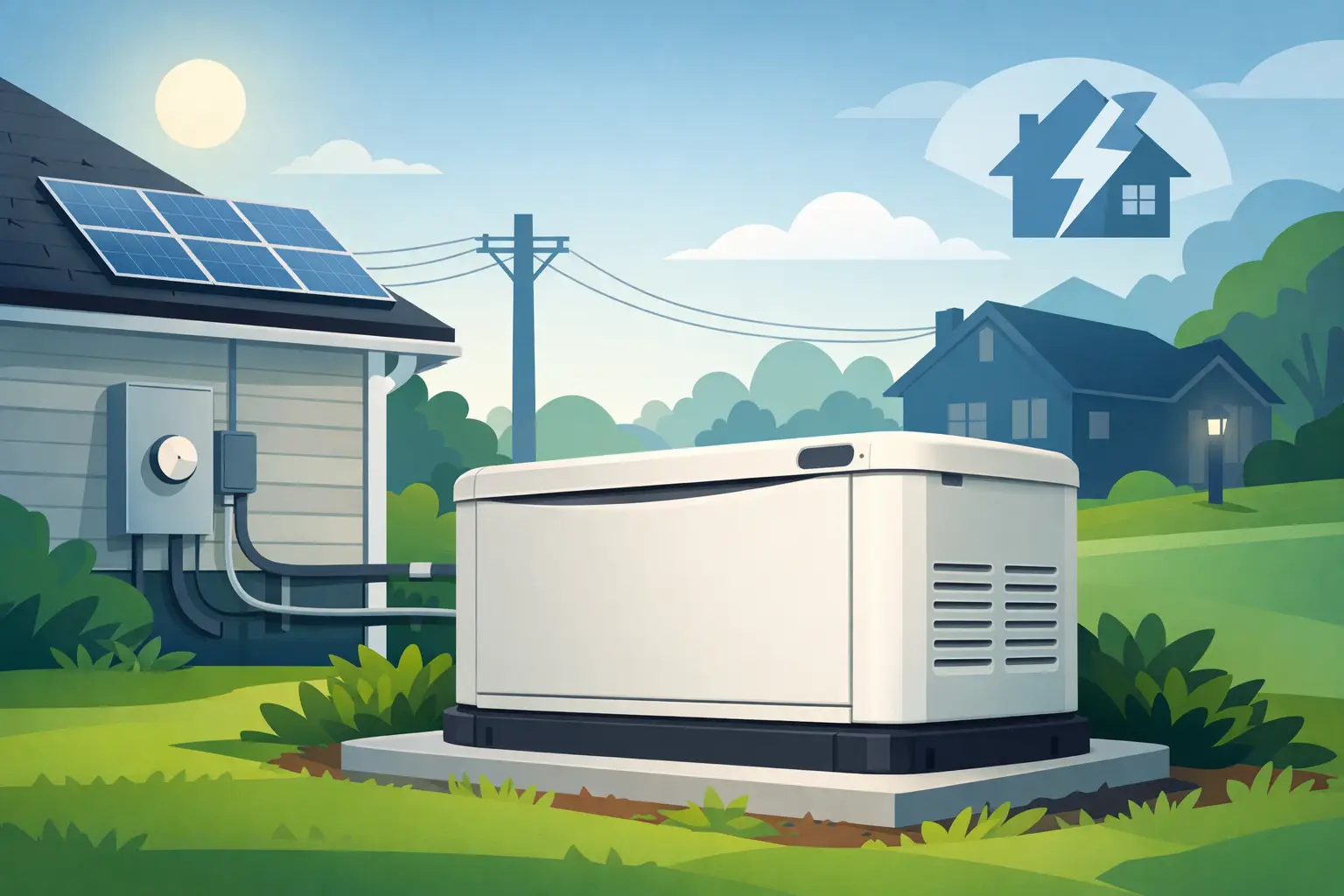
A power outage in Southeast Louisiana can turn into a property problem fast. Without air conditioning, humidity rises, refrigerators warm, sump pumps and security systems stop, and a short storm-related interruption can become a costly disruption. A whole house Generac generator installation gives your home or business a dependable source of automatic backup power when the utility grid goes down.
The right system does more than keep a few lights on. It is designed around the equipment your property depends on, the fuel available at the site, local permitting requirements, and the conditions that come with Gulf Coast storms. Proper planning is what separates a reliable standby generator from an expensive unit that cannot carry the loads that matter most.
What a Whole House Generac Generator Installation Does
A standby Generac generator is permanently installed outside the property and connected to an automatic transfer switch. When utility power fails, the transfer switch detects the outage, safely disconnects the building from the grid, and signals the generator to start. Within seconds, the generator begins supplying power to selected circuits or the entire electrical system, depending on the design.
When utility service returns, the transfer switch moves the property back to grid power and allows the generator to cool down before shutting off. The system can exercise itself on a scheduled basis, helping confirm it is ready before the next outage.
For homeowners, whole-house coverage may include central air conditioning, lighting, refrigeration, kitchen appliances, internet equipment, security systems, garage doors, and essential medical equipment. Commercial properties may prioritize refrigeration, communications, point-of-sale equipment, lighting, HVAC, pumps, or selected operational loads. The goal is not always to power every possible device at once. The goal is to protect the systems that keep the property safe, functional, and comfortable.
Generator Sizing Starts With Real Electrical Demand
Generator size is one of the most important decisions in the project. A system that is too small may struggle when major equipment starts, while an oversized system can add unnecessary equipment and fuel costs. The correct capacity depends on the property, the electrical loads, and how the generator will be used during an outage.
Central air conditioning is often a major factor for New Orleans-area homes. In high heat and humidity, homeowners understandably want their cooling system available, but air conditioners can require substantial power during startup. A professional load assessment reviews the electrical demand of the HVAC equipment, water heater, well or sump pump where applicable, refrigerator, appliances, lighting, and other priority circuits.
A smaller generator can be a practical choice when the plan is to power essential circuits only. A larger unit may support more of the home, multiple HVAC systems, larger appliances, or a broader commercial load. Some properties benefit from load-management equipment that prevents certain high-demand appliances from starting at the same time. This can allow a properly designed generator system to serve more of the property without automatically moving to the largest available unit.
Fuel type also affects the decision. Natural gas is convenient where reliable gas service is available because it does not require routine refueling during an extended outage. Liquid propane is another common option and can work well where natural gas is unavailable, though the tank size and fuel supply must be planned for expected runtime. The best choice depends on site conditions, local utility access, expected outage duration, and the equipment being supported.
Why Square Footage Is Not Enough
A large home does not always need a large generator, and a smaller home can have significant electrical demand. Square footage does not account for the number of air conditioning systems, electric appliances, pool equipment, refrigerators, pumps, or specialty equipment in the building.
An accurate installation begins with the actual electrical panel and the property’s operating needs. This is especially important after renovations, HVAC replacement, additions, or the installation of electric appliances. A generator plan should match the building as it operates now, not what it looked like years ago.
Site Planning Matters in Southeast Louisiana
Standby generators must be placed in a location that allows safe operation, proper airflow, service access, code-required clearances, and practical connection to electrical and fuel systems. In the New Orleans area, site planning also needs to account for heavy rain, drainage, wind-driven debris, and possible flood exposure.
The generator is generally installed on a stable pad, positioned away from building openings and other areas restricted by manufacturer instructions and applicable codes. A qualified installer evaluates setbacks, utility locations, gas piping routes, electrical-panel access, and the path for trenching or conduit where needed.
Drainage deserves particular attention. The equipment should not sit where water collects after heavy rain. Depending on the property, the installation may require grading adjustments, an elevated pad, or coordination with other exterior improvements. Keeping the generator accessible for service is equally important. A unit tucked into a tight, wet, or obstructed location may be difficult to maintain when it is needed most.
For commercial facilities, planning can be more involved. Generator placement, sound considerations, critical-load panels, fuel supply, and operational priorities may require coordination with facility managers, electricians, HVAC technicians, and construction teams. A phased approach can help keep essential operations running while the work is completed.
Permits, Electrical Work, and Fuel Connections
A standby generator is not a plug-in appliance. It is a permanently connected power system that must be installed correctly for safe operation. The project typically involves electrical work, transfer-switch installation, fuel piping, equipment placement, and permits or inspections required by the local authority having jurisdiction.
The transfer switch is the safety center of the system. It prevents generator power from feeding back into utility lines, which could endanger utility workers and damage equipment. It also manages the transition between utility and generator power. Proper wiring, grounding, overcurrent protection, and panel configuration are essential.
Fuel supply must be sized for the generator’s demand. A natural gas line that is adequate for existing appliances may not have enough capacity to support a generator under load. The fuel system should be evaluated rather than assumed. With propane, the tank capacity and supply arrangement should be selected with realistic outage durations in mind.
Permitting helps verify that the installation meets local requirements and that the system is safe to operate. It can feel like an added step, but it protects the property owner and helps avoid problems during inspections, insurance questions, future sales, or repairs.
A Clear Installation Process Prevents Surprises
A well-managed generator project begins with a site visit and load evaluation. The installer should discuss which systems need to run, identify the available fuel source, inspect the electrical service, and recommend an appropriate generator and transfer-switch configuration.
Once the scope is established, the work can be planned around equipment lead times, permits, site preparation, electrical modifications, and fuel connections. Property owners should receive a clear explanation of what will be installed, where it will be placed, what disruptions may occur, and what equipment will be covered during an outage.
Installation day may involve setting the generator pad and unit, running conduit and electrical wiring, installing the transfer switch, connecting the fuel supply, and completing required testing. The final startup should include a review of automatic operation, basic owner controls, maintenance expectations, and the circuits or loads included in the design.
At Air Tight Construction, generator planning can also be viewed alongside HVAC, insulation, roofing, and moisture-control needs. That matters because backup power is part of a larger property-performance plan. A generator can keep cooling equipment operating during an outage, but efficient equipment, a well-sealed building envelope, and proper humidity control reduce strain on that system before and during an emergency.
Maintenance Keeps Backup Power Ready
A standby generator needs regular attention even when it has not been called into service. Scheduled exercise runs help verify basic operation, but they do not replace professional maintenance. Oil, filters, battery condition, electrical connections, fuel supply, enclosure condition, and error codes should be checked on a routine schedule.
After a long outage, the system should also be inspected before the next storm season. Extended run time can reveal fuel-delivery issues, battery weakness, or maintenance needs that are not apparent during a short exercise cycle. Keeping vegetation, stored materials, and debris away from the generator helps maintain safe airflow and service access.
A generator is most valuable when no one has time to troubleshoot it. Planning the system before hurricane season, maintaining it through the year, and testing it after installation gives your property a better chance of staying safe and usable when the grid cannot.