

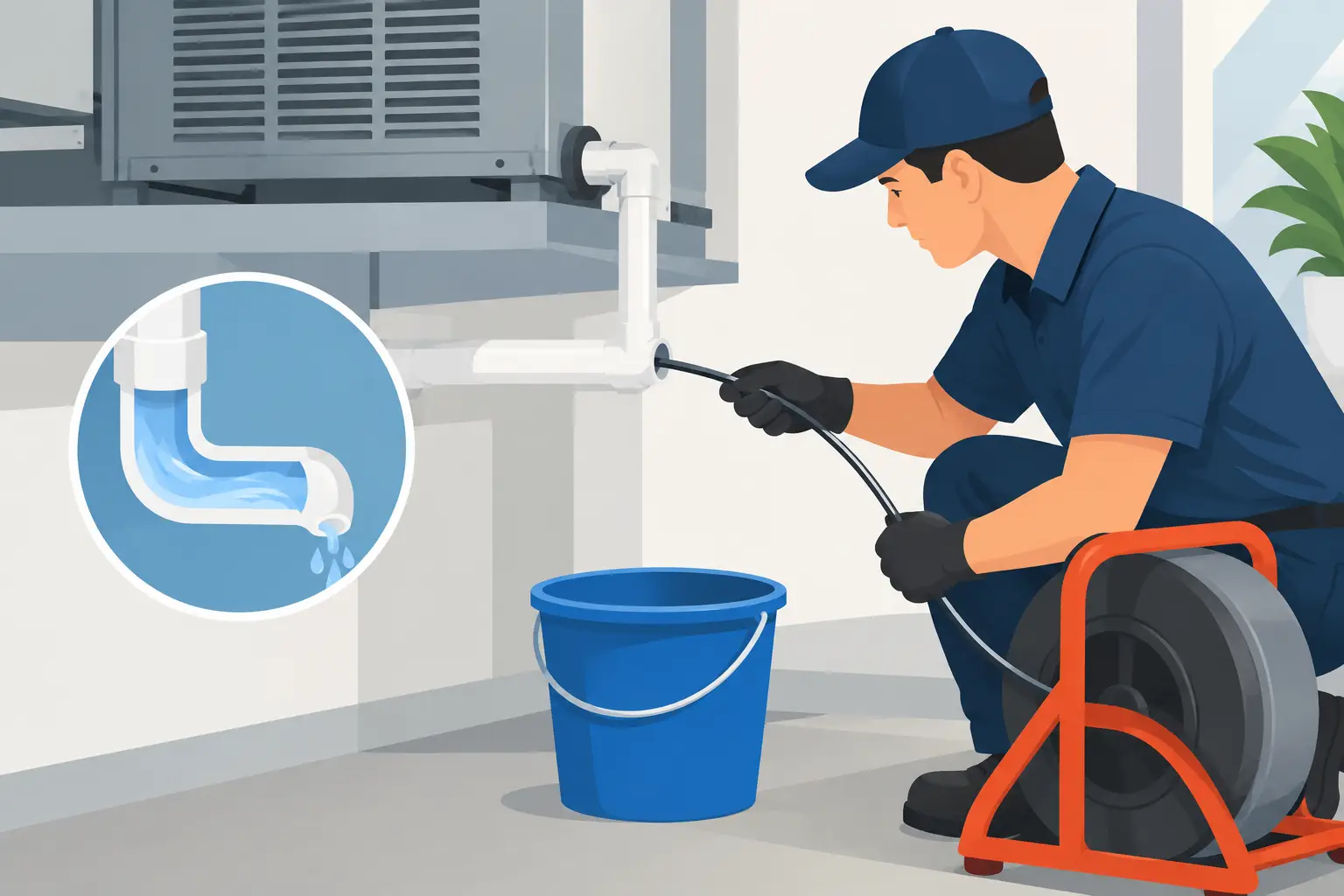
A puddle around an indoor AC unit is rarely just a housekeeping problem in Southeast Louisiana. During a long cooling season, your system removes a significant amount of moisture from indoor air. That water has to leave through a small condensate drain line. When the line clogs with algae, slime, dust, or debris, water can back up into a drain pan, ceiling, wall, or equipment cabinet. Knowing how to clear condensate drain problems early can help protect your cooling equipment and reduce the moisture conditions that encourage mold growth.
A simple clog is often manageable for a homeowner. But if there is standing water, a ceiling stain, repeated shutdowns, or an attic air handler, take a more careful approach. The goal is to restore drainage without damaging the line, contaminating the system, or overlooking the reason it clogged in the first place.
What a Condensate Drain Does
Your air conditioner cools air by moving it across a cold evaporator coil. Humidity in that air condenses on the coil and drips into a pan below it. From there, a PVC drain line carries the water to an approved discharge point outside, at a plumbing drain, or through a condensate pump.
New Orleans-area homes place unusual demands on this small drainage system. High outdoor humidity, long run times, warm attic conditions, and biological growth inside wet drain lines can turn a minor buildup into a blockage quickly. A properly installed trap, clean drain line, and working safety switch all matter because they work together to keep water moving where it belongs.
Signs Your Condensate Drain May Be Clogged
The most obvious sign is water around the indoor unit, but it is not the only one. Some systems shut off when a float switch detects high water in the drain pan. If the thermostat calls for cooling but the indoor equipment will not start, a tripped condensate safety switch may be the reason.
Other warning signs include a musty odor near vents or the air handler, water stains below an attic unit, gurgling at the drain line, unusually high indoor humidity, or water dripping from a secondary drain outlet. A secondary outlet is a warning path, not normal drainage. When it is dripping, the primary line likely needs attention.
Do not assume every water issue is a clogged drain. A frozen evaporator coil, damaged drain pan, disconnected pipe, poor drain-line slope, or failed condensate pump can create similar symptoms. If you see ice on refrigerant tubing or the coil, turn the cooling system off and arrange service rather than trying to flush the drain and restart it.
How to Clear a Condensate Drain Safely
Before working on the line, turn off the thermostat and shut off power to the indoor unit at its service switch or breaker. This prevents the system from starting while the drain is open and reduces the risk of water reaching electrical components.
Start by locating the PVC condensate line near the indoor air handler or furnace cabinet. Many systems have a capped vertical access point close to the unit. You may also find the line’s discharge end outside the home, often near the outdoor condenser or at another visible termination point. In some properties, the line runs to a plumbing connection or a pump, making the work less straightforward.
If there is water in the pan or line, use a wet/dry vacuum at the outdoor drain termination. Create as good a seal as practical around the pipe opening with a rag, then run the vacuum for two to three minutes. This method pulls out loose sludge and organic buildup without forcing debris deeper into the line. Check the vacuum tank afterward. Dark water or gelatinous material is common in a clogged condensate drain.
Next, return to the indoor access point. Remove the cap carefully and inspect for visible blockage. Pour a small amount of warm water through the opening and confirm that it flows freely to the discharge point. Use only enough water to test the line. If it backs up, stop adding water so you do not overflow the pan.
If the line is draining again, flush it with a condensate-drain cleaner approved for HVAC use, following the product directions. Distilled white vinegar is commonly used for light maintenance in accessible PVC lines, but it may not clear a heavy clog. Avoid bleach, drain opener, and harsh acids. These products can damage components, create fumes, react with other cleaners, or cause problems if the drain connects to plumbing.
Replace the cap and restore power only after the line drains normally. Then run the system and check the drain outlet and the area around the air handler for several minutes. A clear line should produce a steady, controlled discharge while the system is actively cooling in humid weather.
What Not to Do
Do not use a garden hose to blast water into the indoor access point. Excess pressure can separate a fitting, flood the equipment, or push debris into a trap where it becomes harder to remove. Compressed air can create the same problem, especially on older PVC or lines with glued connections that are not easily visible.
Do not probe deeply with wire, coat hangers, or rigid tools. A puncture or disconnected fitting inside a wall or attic can create a larger water-damage repair than the original clog. If suction and a gentle flush do not restore drainage, the line may need to be disassembled, re-pitched, or professionally cleaned.
When the Drain Trap or Pump Is the Problem
Many air handlers use a P-trap in the condensate line. The trap helps overcome the pressure conditions created by the blower. If it is missing, improperly installed, or full of debris, water may not drain correctly even when the rest of the pipe is open. This is one reason a drain line that looks clear outside can still back up at the unit.
Systems with a condensate pump need a separate check. The pump reservoir can fill with sludge, its float can stick, or its discharge tube can clog. If you hear the pump humming but no water is leaving, shut the equipment down and have the pump and tubing inspected. Pump failures can flood closets, utility rooms, and commercial mechanical spaces quickly.
A float safety switch should also be tested during professional maintenance. It is designed to shut down cooling before an overflowing pan damages ceilings or equipment. Bypassing that switch to get the AC running may trade a comfort issue for a costly moisture problem.
Preventing the Next Clog
Preventive maintenance is more effective than waiting for a drain backup on a 95-degree afternoon. For most homes, the line should be checked during seasonal AC maintenance and monitored during peak cooling months. Properties with heavy runtime, attic equipment, pets, construction dust, or recurring algae buildup may need more frequent attention.
Keep the area around the indoor unit clean, replace filters on schedule, and make sure the outdoor drain termination stays visible and unobstructed. If the drain line repeatedly clogs, the answer may not be more cleaner. The line could have poor slope, an oversized or improperly installed trap, a sag that holds water, or an unprotected outlet that collects debris.
For commercial properties, drain problems deserve prompt attention because multiple systems, ceiling-mounted units, refrigeration equipment, and occupied spaces increase the cost of a leak. A maintenance plan should include drain-pan condition, safety switches, pump operation, line flushing, and inspection of insulation around cold components that may sweat.
When to Call an HVAC Professional
Call for service if water has reached electrical parts, the ceiling or wall is wet, the drain clogs again shortly after cleaning, or the system still will not run after the line appears clear. Also call if you cannot safely access an attic unit, cannot find a cleanout or discharge point, or suspect a frozen coil or failed pump.
A licensed HVAC technician can clear the drain, inspect the pan and trap, verify the float switch, and identify installation issues that cause repeat backups. For properties affected by a leak, moisture should be addressed promptly before staining, damaged insulation, or mold conditions spread. Air Tight Construction can coordinate HVAC diagnosis with moisture-control and repair work when the issue extends beyond the drain line.
A condensate drain is a small part of the AC system, but in Gulf Coast humidity it protects much more than comfort. Paying attention to the first slow drain, musty smell, or safety-switch shutdown gives you the best chance to solve the problem before water finds its way into your property.

One thought on “How to Clear Condensate Drain Lines Safely”