
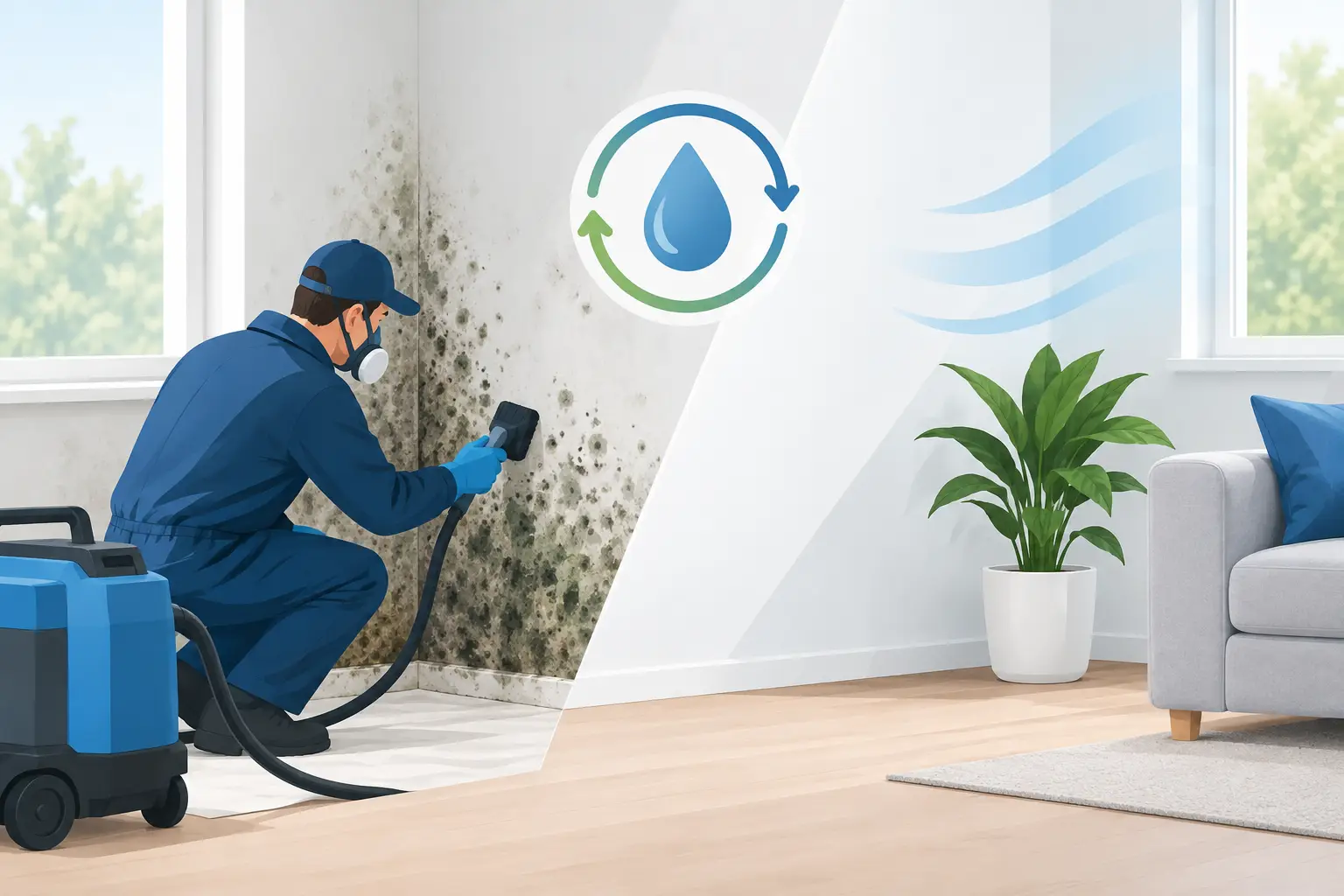
A dark spot on drywall, a musty odor after a storm, or mildew returning around an AC vent can point to a larger building issue. Professional mold remediation is not simply cleaning what is visible. It is a controlled process for addressing mold growth, containing affected areas, removing damaged materials when necessary, and correcting the moisture conditions that allowed the problem to develop.
That distinction matters in New Orleans and across Southeast Louisiana. Long cooling seasons, high outdoor humidity, heavy rainfall, roof leaks, plumbing failures, and storm-related water intrusion can create ideal conditions for mold inside homes and commercial buildings. A surface treatment may make an area look better for a while, but mold can return if humidity, leaks, or air-conditioning performance are left unresolved.
Mold Remediation Is Not a Promise to Remove Every Spore
Mold spores occur naturally indoors and outdoors. No contractor can truthfully promise to remove every spore from a property. The goal of mold remediation is to return mold levels to normal, natural conditions while eliminating active growth and the moisture source feeding it.
This is why the phrase “mold removal” can be misleading. If a contractor focuses only on spraying, wiping, or painting over an affected surface, the underlying conditions may remain untouched. Moisture can continue behind walls, beneath flooring, inside ductwork, or in an attic. The visible stain disappears, but the building still has a moisture problem.
A proper scope depends on the location and extent of the growth. A small area caused by a one-time plumbing leak may need limited material removal and repair. Widespread growth in an attic, crawlspace, wall cavity, or commercial mechanical room requires a more deliberate containment and cleaning process. The right approach should follow the actual conditions, not a one-size-fits-all package.
What Professional Mold Remediation Looks Like
A reliable remediation project begins with identifying where water is entering or where humidity is accumulating. That may involve checking roof penetrations, exterior drainage, plumbing, window and door seals, air-conditioning condensate lines, insulation gaps, duct leakage, and ventilation. In many Gulf Coast properties, the source is not one dramatic event. It can be a slow combination of warm, humid air and cold indoor surfaces that creates condensation over time.
Inspection and a Clear Scope of Work
The first step is to assess the affected materials and the likely moisture source. Drywall, insulation, carpet, ceiling tile, wood framing, and contents can all respond differently after water exposure. Porous materials with established mold growth often cannot be reliably cleaned and may need removal. Nonporous or semi-porous surfaces may be cleaned and treated when structurally sound.
For property owners, clarity is critical. You should understand what is affected, what will be removed, how the area will be isolated, what repairs are needed afterward, and whether the moisture source has been corrected. On commercial properties, the plan should also account for occupant safety, access, business operations, and coordination with facility staff.
Containment Before Disturbing Materials
Disturbing moldy drywall or insulation without containment can spread spores and debris into clean parts of the building. Professional remediation uses physical barriers and, when appropriate, controlled air management to keep the work area separated from occupied spaces.
Containment is especially important when the affected space connects to a return-air path, an open attic, a shared hallway, or a commercial area with regular foot traffic. The objective is straightforward: remove contaminated material without creating a bigger cleanup problem elsewhere.
Removal, Cleaning, and Drying
Once the area is contained, damaged materials are carefully removed as needed. Remaining structural surfaces are cleaned using methods appropriate to the material and level of contamination. The area must then be dried completely. Cleaning a wet wall cavity without correcting the water source or drying the framing is not remediation. It is a temporary pause before mold returns.
Drying can involve dehumidification, controlled airflow, repairs to leaks, and adjustments to HVAC operation. In a humid climate, simply opening windows is often the wrong answer because outdoor air can introduce more moisture. The best drying strategy depends on the weather, the construction type, and whether the property is occupied and conditioned.
Repairing the Building, Not Just the Surface
After remediation, the property may need drywall replacement, insulation repair, painting, trim work, roof repair, plumbing repair, or HVAC service. This is where coordinated building services can save time and reduce confusion. The crew addressing the affected material should not ignore the failed condensate drain, leaky roof flashing, inadequate attic insulation, or air leak that helped create the problem.
Air Tight Construction approaches these conditions as connected building-performance issues. Moisture control, air sealing, insulation, HVAC operation, and exterior maintenance all affect the indoor environment. Correcting them together helps protect the repair and improve comfort after the work is complete.
Common Moisture Problems Behind Mold Growth
In Southeast Louisiana, mold often follows a predictable pattern. An air conditioner may be running but not removing enough humidity because it is oversized, short-cycling, poorly maintained, or struggling with airflow. Cold supply ducts or registers may sweat in an unconditioned attic. A clogged condensate drain may overflow slowly. A small roof leak can wet insulation long before a ceiling stain appears.
Bathrooms, laundry rooms, kitchens, crawlspaces, attics, and closets along exterior walls deserve close attention. These spaces may have restricted airflow, hidden plumbing, or temperature differences that allow moisture to collect. Commercial buildings can face similar issues around refrigeration equipment, mechanical rooms, flat roofs, exterior wall assemblies, and areas affected by repeated door openings.
After a hurricane or major rain event, do not wait for a musty smell to become obvious. Wet materials should be assessed and dried quickly. The first 24 to 48 hours can make a meaningful difference, but each situation is different. Materials that look dry on the surface may still hold moisture behind finishes or under flooring.
Why HVAC and Humidity Control Matter After Remediation
A mold-free-looking room is not necessarily a stable room. Indoor humidity is a major part of preventing recurrence, particularly during long stretches of hot, wet weather. Air-conditioning systems do more than lower temperature. When operating correctly, they also remove moisture from indoor air.
If a system has poor airflow, dirty components, refrigerant issues, duct leaks, an improperly sized replacement unit, or a drainage problem, humidity control can suffer. Likewise, gaps around penetrations, poorly insulated ductwork, and unsealed attic access points can bring humid outdoor air into conditioned spaces.
The practical target is not to make a building airtight at the expense of proper ventilation. It is to control uncontrolled air leakage, manage fresh-air needs appropriately, maintain equipment, and keep indoor humidity at a reasonable level. What that looks like varies by property age, construction type, occupancy, and use. A raised historic home, a newer slab-on-grade house, and a commercial storefront will not have identical solutions.
Warning Signs That Deserve a Prompt Inspection
Visible staining is one sign, but it is not the only one. Pay attention to persistent musty odors, bubbling paint, warped baseboards, repeated condensation on vents or windows, unexplained allergy-like irritation when indoors, ceiling discoloration, and AC drain overflows. A sudden increase in indoor humidity can also indicate that an HVAC system needs service before a moisture issue spreads.
Avoid tearing into a large affected area without a plan. Opening walls or removing wet insulation can release debris and expose hidden damage. It is also wise to be cautious with bleach as a catch-all solution. It may have limited value on certain hard, nonporous surfaces, but it does not correct moisture, and it is not a reliable answer for porous materials or concealed growth.
Protect the Property by Fixing the Cause
The value of mold remediation is not limited to a cleaner wall or a fresher-smelling room. Done correctly, it protects building materials, supports healthier indoor conditions, and helps avoid repeated repair costs. The lasting result comes from pairing careful remediation with moisture control, timely repairs, and dependable HVAC performance.
If you notice signs of water intrusion, persistent humidity, or suspected mold growth, act before the affected area expands. A clear inspection and a practical repair plan can turn an uncertain property problem into a manageable one.