
A roof in Southeast Louisiana has to do more than keep out rain. It must handle intense sun, high humidity, wind-driven storms, airborne debris, and long cooling seasons without creating leaks or overheating the attic. When comparing metal roofing versus asphalt shingles, the best choice depends on your property, budget, roof design, insurance requirements, and how long you plan to own the building.
For some New Orleans-area owners, asphalt shingles are the sensible, cost-effective replacement. For others, metal roofing offers the longer service life and storm-focused performance that justify a higher initial investment. The right decision starts with looking past material price alone.
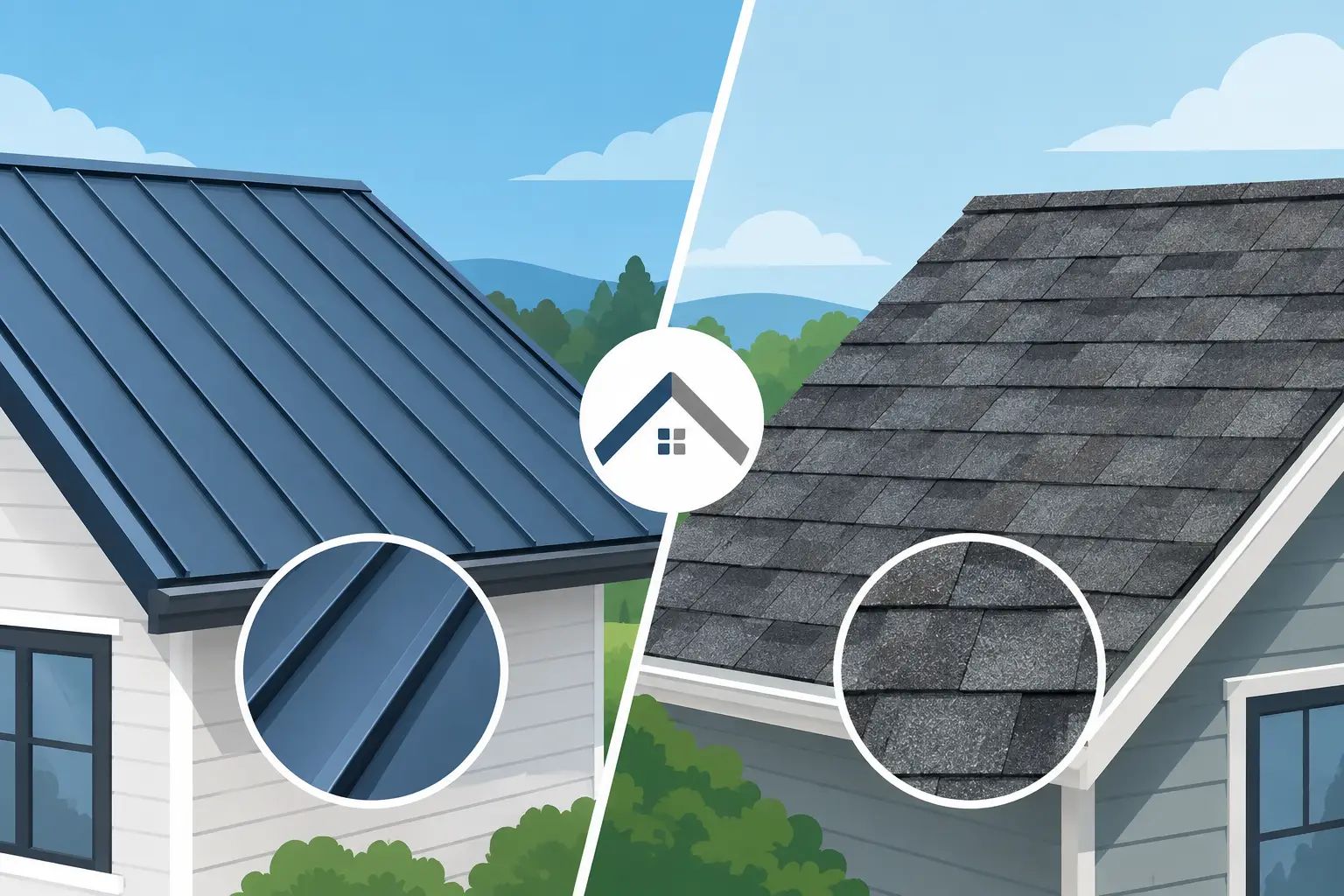
Metal Roofing Versus Asphalt Shingles: The Main Difference
Asphalt shingles are the most common roofing material on residential properties because they are familiar, widely available, and generally less expensive to install. They come in many colors and profiles, including architectural shingles that provide a thicker, more dimensional appearance than basic three-tab products.
Metal roofing is available in standing-seam panels, exposed-fastener panels, metal shingles, and other profiles. Standing-seam systems are often chosen for homes and commercial buildings because the fasteners are concealed and the raised seams help manage water runoff. Metal can also work well on lower-slope roofs where shingle systems may not be appropriate.
The biggest practical distinction is service life. A properly installed asphalt shingle roof may last roughly 15 to 30 years, depending on product grade, weather exposure, ventilation, and maintenance. A quality metal roof can often last 40 to 70 years or more. Coastal conditions, installation quality, and material selection still matter. No roof material is maintenance-free, especially near the Gulf.
Upfront Cost and Long-Term Value
Asphalt shingles usually win on initial cost. They require less material expense and installation labor than many metal systems, making them a practical option when a roof needs replacement now and the budget is limited.
Metal roofing typically costs more upfront, sometimes substantially more depending on the panel type, roof complexity, underlayment, trim details, and structural repairs needed beneath the old roof. A simple roof with broad, accessible planes is less expensive to cover than one with multiple valleys, dormers, skylights, penetrations, or steep sections.
However, comparing only the replacement quote can be misleading. A metal roof may outlast two asphalt shingle roofs. It can also reduce some ongoing maintenance needs and may be attractive to future buyers. That does not mean metal is automatically the better financial decision. If you expect to sell within a few years, an architectural shingle roof with strong wind ratings may provide the return you need without paying for decades of life you will not personally use.
For rental properties and commercial buildings, the calculation often centers on disruption. A longer-lasting roof can mean fewer replacement projects, fewer tenant interruptions, and less exposure to water damage caused by aging materials.
Storm Resistance Matters in Southeast Louisiana
Wind resistance is a serious consideration throughout the New Orleans metro area. Asphalt shingles can perform well in high winds when the system is designed correctly, installed to manufacturer specifications, and secured with the right fastening pattern. Quality shingles rated for higher wind speeds can be a strong choice for many homes.
Metal roofing can offer excellent wind performance, particularly when panels, clips, fasteners, edge details, and decking are installed as a complete engineered system. The roof is only as dependable as its weakest component. Loose decking, inadequate flashing, poorly installed penetrations, or damaged fascia can compromise either roofing material.
Impact resistance is more nuanced. Metal may resist some debris impacts better than standard shingles, but hail or falling branches can dent metal panels. Asphalt shingles can lose granules, crack, tear, or lift in severe weather. Neither material makes a property immune to storm damage.
A Fortified Roof approach may be worth discussing for properties where resilience is a priority. This focuses on how the entire roof system is strengthened, including deck attachment, sealed roof deck protection, edge reinforcement, and opening protection where applicable. The material matters, but system details often determine how a roof performs when conditions turn severe.
Heat, Cooling Costs, and Attic Moisture
Metal roofs are often associated with lower cooling costs because many finishes reflect more solar radiation than dark asphalt shingles. That can reduce heat absorbed at the roof surface. Lighter-colored or reflective shingle options can also help, and the real energy outcome depends on the complete building envelope.
In a hot, humid climate, attic insulation, air sealing, ventilation design, duct condition, and HVAC performance can have as much impact on comfort as the roofing material. A new reflective roof will not solve high utility bills if conditioned air is escaping through attic penetrations or poorly sealed ductwork.
Moisture control deserves equal attention. Roof leaks, wet insulation, condensation, and poor attic airflow can contribute to wood deterioration and mold conditions. During a roof replacement, it is smart to inspect decking, flashing, penetrations, attic insulation, and ventilation paths instead of treating the roof covering as an isolated project.
Air Tight Construction approaches exterior improvements as part of overall building performance. A roofing project can be a useful opportunity to identify air leaks, insulation gaps, moisture concerns, and mechanical issues that affect the comfort and durability of the property.
Appearance, Noise, and Everyday Maintenance
Asphalt shingles offer a traditional appearance that suits many Louisiana homes. They are easy to match with common exterior styles, and repairs can be relatively straightforward when replacement shingles are available.
Metal roofing has expanded far beyond the old agricultural look. Standing seam offers clean, modern lines, while metal shingles and textured panels can provide a more traditional look. Color choice matters in our climate as well as for curb appeal, since lighter finishes may reduce heat gain at the roof surface.
A common concern is rain noise. On a properly installed residential roof with solid decking, underlayment, attic insulation, and finished ceilings, metal is usually not dramatically louder indoors than shingles. An open structure, poorly insulated attic, or exposed metal installation can make rain more noticeable.
Both roof types need periodic inspection. Clear leaves and debris from valleys and gutters, check flashing around vents and chimneys, and address loose trim or damaged sealant promptly. Metal roofs need attention around fasteners and panel details, particularly on exposed-fastener systems. Shingle roofs should be checked for missing tabs, lifted edges, granule loss, and soft spots that may point to deck damage.
Which Roofing Material Fits Your Property?
Asphalt shingles are often the right fit when initial cost is the deciding factor, the property has a conventional roof design, and a quality architectural shingle system meets the owner’s goals for appearance and wind resistance. They remain a dependable choice when installed correctly and maintained over time.
Metal roofing may be the stronger choice when long service life, reduced replacement frequency, high-wind performance, or solar reflectivity are priorities. It can be especially appealing for owners planning to stay in the property for decades, as well as commercial owners who want to minimize future roofing disruptions.
Before selecting either material, have the roof structure and existing conditions evaluated. Ask about deck repairs, underlayment, flashing, ventilation, wind-rated installation details, drainage, and whether a fortified roofing standard fits the project. A lower quote that leaves out critical system components can become expensive after the first major storm.
The most useful next step is not choosing a material from a brochure. It is getting a clear assessment of what your roof, attic, drainage, and building envelope need to stay dry, efficient, and dependable through another Louisiana storm season.