

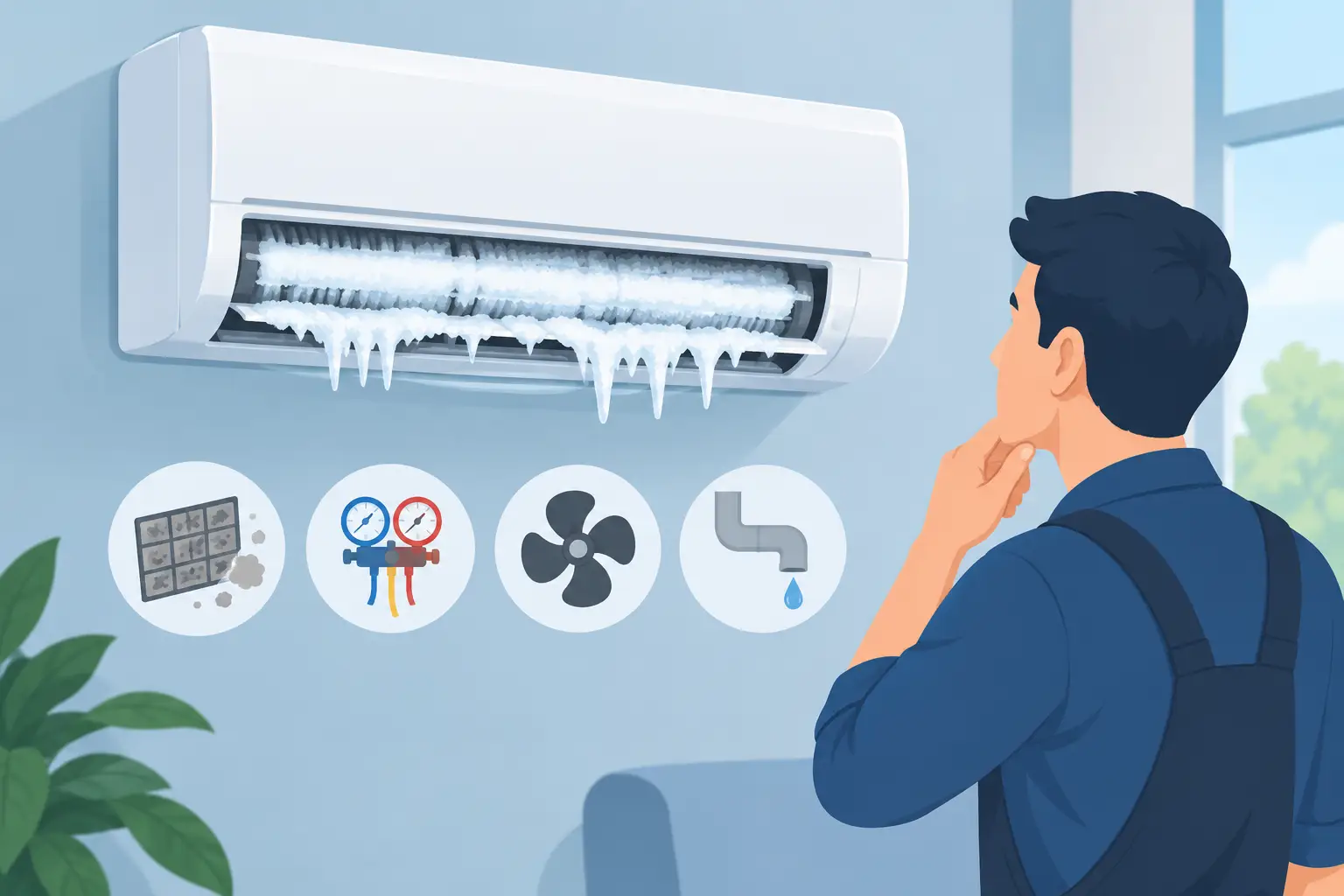
A frozen indoor coil can turn a hot New Orleans afternoon into a comfort emergency fast. If you are asking why air conditioner freezes, the short answer is that the evaporator coil has become colder than 32 degrees while moisture is present. That moisture turns to ice, blocks airflow, and prevents the system from cooling your property properly.
The ice is the symptom, not the root problem. In Southeast Louisiana, where air conditioners work hard against intense heat and humidity, a frozen system should be taken seriously. Continuing to run it can strain the compressor, cause water damage as the ice melts, and turn a manageable repair into a more expensive one.
Why an Air Conditioner Freezes
Your air conditioner removes heat and humidity from indoor air. Warm air passes over the evaporator coil inside the air handler or furnace cabinet, and refrigerant inside that coil absorbs the heat. Under normal operating conditions, the coil stays cold enough to cool and dehumidify the air, but not cold enough to freeze the condensation forming on it.
Freezing occurs when the balance between airflow, refrigerant pressure, and heat load is disrupted. The most common causes are restricted airflow, low refrigerant caused by a leak, or a mechanical issue that keeps the coil operating too cold.
Restricted airflow over the indoor coil
A dirty air filter is one of the simplest and most common causes of a frozen air conditioner. When too little air moves across the coil, there is not enough heat available to keep the coil above freezing. Ice begins to form, and the restriction gets worse as frost builds up.
A clogged filter is not the only airflow problem. Dirty evaporator coils, blocked return vents, closed supply registers, damaged ductwork, a failing blower motor, or an incorrectly sized blower can all reduce airflow. In older New Orleans-area homes, duct leaks and poorly insulated attic ductwork can also contribute to uneven performance and excessive system runtime.
Low refrigerant from a leak
Refrigerant is not a fuel that an air conditioner normally uses up. If a system is low, it usually has a leak. Low refrigerant pressure can make the evaporator coil colder than it should be, allowing moisture on the coil to freeze.
Adding refrigerant without locating and repairing the leak is not a lasting solution. A licensed HVAC technician should identify the source, make the appropriate repair, test the system, and charge it to the manufacturer’s specifications. Refrigerant work requires specialized equipment and should not be treated as a homeowner repair.
A dirty coil or outdoor-unit problem
The indoor evaporator coil can collect dust, pet hair, and other buildup over time, especially when filtration has been neglected. That layer acts like a blanket, reducing heat transfer and restricting airflow through the coil.
The outdoor condenser also matters. If its coil is heavily soiled or its fan is not operating correctly, the system may have trouble releasing heat outdoors. Electrical issues, failing capacitors, damaged contactors, and compressor problems can affect refrigerant pressures and cooling performance in ways that may contribute to icing.
Controls, drainage, and unusual operating conditions
A malfunctioning thermostat, sensor, or control board can keep an AC running when it should cycle off. In commercial spaces, an improperly configured thermostat schedule or equipment running during low-occupancy periods can create unusual load conditions.
Running central air conditioning when outdoor temperatures are unusually mild can also lead to coil freezing in some systems. This is less common during a typical Louisiana summer, but it can occur during cooler evenings or shoulder seasons. Refrigeration equipment has its own operating requirements and should be evaluated separately from comfort cooling equipment.
What to Do When Your Air Conditioner Freezes
The first priority is preventing further damage. Turn the cooling system off at the thermostat. Do not keep lowering the thermostat in an attempt to force cooler air out. That only encourages more ice buildup.
Let the system thaw completely before restarting it. Depending on how much ice has accumulated, this may take several hours or longer. Place towels near the indoor unit if water could spill as the ice melts, and check for an overflowing drain pan. Water around electrical components, ceiling stains below an attic air handler, or a drain pan that is already full should be treated as a prompt service call.
There are a few safe checks a property owner can make:
- Replace a visibly dirty filter with the correct size and type.
- Make sure return grilles and supply registers are open and not blocked by furniture, rugs, or stored items.
- Confirm that the outdoor unit has clear space around it and is not packed with leaves or debris.
- Look for obvious water leakage around the indoor equipment, but do not remove access panels or touch electrical parts.
- Note when the freezing began, whether airflow was weak, and whether you heard unusual noises before the problem started.
Do not chip ice off the coil with a tool, pour hot water into the equipment, or use a hair dryer inside the air handler. Coil fins and refrigerant lines are easy to damage. Do not restart the system until the ice has melted and the likely airflow issue has been addressed.
When a Frozen AC Needs Professional Service
If a clean filter and open vents do not solve the problem, schedule HVAC service before putting the system back into regular operation. Repeated freezing is a clear sign that the system needs diagnosis, not another thermostat adjustment.
A technician can measure airflow, inspect the blower assembly, check the coil condition, test electrical components, inspect the condensate drain, and evaluate refrigerant pressures. Those steps matter because several problems can produce the same visible ice. For example, weak airflow and low refrigerant can both freeze a coil, but the repairs are entirely different.
Call promptly if the system freezes again after thawing, the indoor unit is leaking water, airflow is very weak, the outdoor unit runs but the home does not cool, or you notice hissing, bubbling, burning odors, or breaker trips. Commercial property owners should also act quickly when comfort cooling affects tenants, equipment rooms, inventory, or humidity-sensitive operations.
Air Tight Construction approaches these calls with the full property in mind. HVAC performance is connected to insulation, duct condition, moisture control, and the building envelope. A system that runs excessively because cooled air is escaping through attic leaks or poorly insulated areas may face more wear than the equipment alone suggests.
Preventing AC Freezing in Louisiana Homes and Businesses
Preventative maintenance is the best defense against an iced-up air conditioner. During a maintenance visit, the system can be cleaned, tested, and adjusted before peak summer demand exposes a small problem.
For most residential systems, check the filter monthly during heavy cooling season and replace it as needed. The right interval depends on filter type, pets, occupants, and indoor air conditions. A heavily restrictive filter can create problems if the system was not designed for it, so use the filter specification recommended for your equipment.
Keep the outdoor unit clear of grass clippings, shrubs, and storm debris. After severe weather, inspect the area around the condenser without opening the unit. In hurricane-prone Southeast Louisiana, branches, windblown debris, and standing water can all affect equipment operation.
Humidity control also deserves attention. An air conditioner should remove moisture as it cools, but excessive indoor humidity can signal airflow problems, oversized equipment, duct leakage, inadequate insulation, or moisture entering through gaps in the structure. Addressing these conditions can improve comfort while reducing strain on the HVAC system.
A frozen air conditioner is rarely something to ignore until the next heat wave. Shut it down, let it thaw, handle the simple airflow checks safely, and arrange professional diagnosis if the problem returns. Restoring the right balance of airflow, refrigerant, and moisture control helps protect both your equipment and the comfort of the property it serves.