

A power outage in Southeast Louisiana is rarely just an inconvenience. It can mean rising indoor temperatures, spoiled food, a sump or drainage pump that cannot run, interrupted refrigeration, lost security systems, and business downtime. The right generator options depend on what your property needs to keep operating, how long outages typically last, and whether you want a manual backup plan or automatic protection.
For many properties, the best answer is not simply buying the largest generator available. Generator selection works best when it is coordinated with the electrical panel, HVAC equipment, fuel supply, building layout, and the loads that matter most during an outage.
Generator Options: Portable, Standby, and Commercial Systems
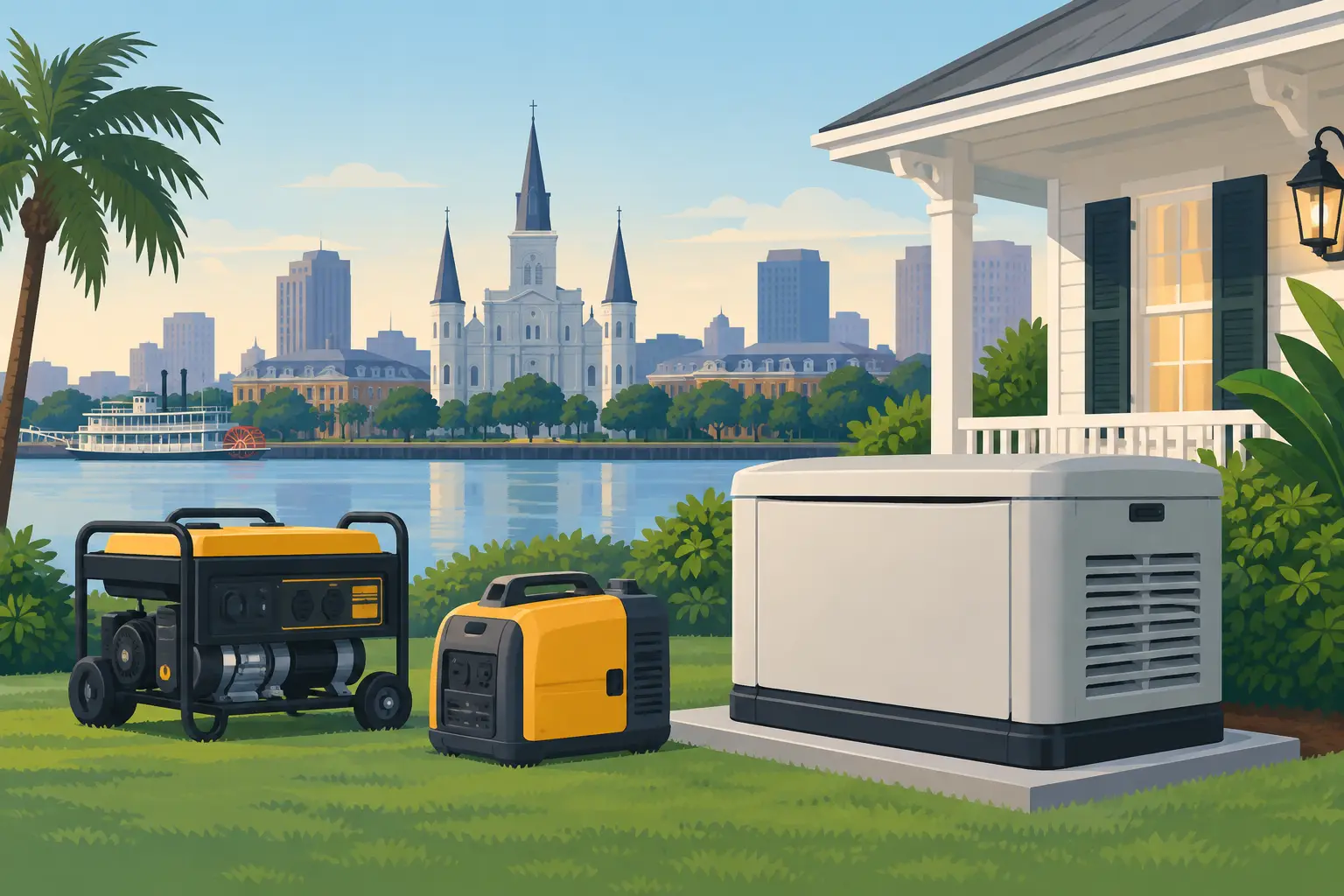
Generator systems generally fall into three categories: portable generators, residential standby generators, and commercial standby systems. Each has a different role, cost range, installation requirement, and level of protection.
Portable generators for limited, temporary power
A portable generator can be a practical solution for a homeowner who needs to run a refrigerator, a few lights, internet equipment, chargers, or a small window air conditioner during a short outage. Inverter-style portable units are often quieter and produce cleaner power for electronics than conventional portable models.
Their limitations matter. A portable unit requires manual setup, fuel storage, outdoor operation, and careful extension-cord or inlet-box planning. It will not automatically start when utility power fails. It may also be too small to operate a central air-conditioning system, electric water heater, range, or other high-demand equipment.
Never operate a portable generator in a garage, carport, enclosed patio, crawlspace, or near open windows and doors. Carbon monoxide can build up quickly and become deadly. The unit must remain outdoors, positioned away from the structure, and protected from standing water without restricting ventilation.
A properly installed power inlet and transfer equipment can make portable generator use much safer and more convenient. It allows selected circuits to be powered without running multiple cords through doors or windows. That is a better approach than attempting to backfeed power through an outlet, which is dangerous and can injure utility workers.
Whole-house standby generators for automatic protection
A permanent standby generator is designed to start automatically when utility power goes out. Connected through an automatic transfer switch, it can restore power to selected circuits or to much of the home within seconds of detecting an outage.
For New Orleans-area homes, this is often the preferred option for owners who want to maintain comfort and protect essential systems during hurricanes, severe thunderstorms, and extended grid interruptions. Depending on the system size and load-management design, a standby generator may support central cooling, refrigeration, lighting, security, internet, well or pump equipment, and other priority loads.
Most residential standby units use natural gas or propane. Natural gas offers the convenience of a continuous fuel source where service is available, but a site evaluation should confirm gas capacity and local utility considerations. Propane can provide dependable independent fuel storage, although the tank must be sized for expected runtime and refilled as needed.
A whole-house system is not always necessary. Many homeowners choose an essential-load generator that powers the circuits they rely on most. This can reduce equipment and installation costs while still keeping the refrigerator, key lighting, outlets, garage door, security equipment, and a properly selected cooling solution available.
Commercial generator systems for continuity
Commercial properties need a more detailed approach. A small office, retail space, restaurant, multifamily property, medical-related facility, or warehouse may have very different priorities during an outage. Emergency lighting and fire-life-safety equipment may be required by code, while refrigeration, communications, servers, access controls, pumps, and critical HVAC may be operational priorities.
Commercial standby generators are commonly fueled by natural gas, propane, or diesel. Diesel systems can be especially appropriate for larger loads and applications requiring substantial on-site fuel capacity. They also require disciplined maintenance, fuel management, and periodic exercise testing.
Scalability is a major consideration for businesses. A generator that covers current needs but leaves no capacity for a planned addition, new refrigeration equipment, or increased occupancy can become an expensive limitation. On the other hand, oversized equipment can increase upfront cost and may not operate as efficiently under light loads. A load assessment gives the project a sound starting point.
Start With the Loads You Cannot Afford to Lose
Generator sizing is based on electrical demand, not square footage alone. A 2,000-square-foot home with gas appliances and one high-efficiency HVAC system may have a different backup-power need than a smaller all-electric home with multiple air handlers.
Start by identifying what must remain powered during an outage. For a residence, that may include refrigeration, lighting, communications, a security system, medical equipment, pumps, and one or more air-conditioning systems. For a commercial property, it may include refrigeration, point-of-sale equipment, servers, emergency circuits, loading equipment, and climate control for occupied or temperature-sensitive areas.
Motor-driven equipment needs special attention. Air conditioners, refrigerators, pumps, and some commercial equipment draw a higher amount of power when starting than when running. A generator that appears large enough based on running watts alone may struggle if several motors start at the same time.
Load-management controls can help. These systems prioritize critical equipment and temporarily delay lower-priority loads when demand is high. That may allow a property to use a smaller, more cost-effective generator without sacrificing the systems that matter most.
Fuel, Placement, and Installation Are Part of the Decision
Generator equipment is only one part of a dependable backup-power system. Fuel availability, equipment location, electrical integration, and access for maintenance determine whether the system will perform when needed.
Permanent generators must be placed with proper clearances from the building, openings, combustible materials, and property boundaries. The location should allow safe airflow, service access, and protection from likely flooding or pooling water. In South Louisiana, site drainage and elevation deserve real attention. A generator placed where stormwater regularly collects may be unavailable at the exact moment it is needed.
The installation also requires properly sized electrical connections, transfer equipment, permits, and code-compliant fuel work. Professional coordination matters because a generator touches multiple systems: the electrical service, gas or propane supply, concrete or mounting base, exterior layout, and sometimes HVAC or other high-demand appliances.
Air Tight Construction approaches generator projects as part of the property’s overall performance plan, helping owners consider backup power alongside cooling, insulation, moisture conditions, and storm readiness.
Do Not Overlook Maintenance and Testing
A standby generator is not a set-it-and-forget-it appliance. It needs periodic exercise, inspection, battery checks, oil and filter service, and attention to fuel and electrical connections. Many systems run a scheduled self-test, but that does not replace professional maintenance.
After a major storm season or a long outage, schedule an inspection if the generator showed warning codes, ran under heavy load, or did not perform as expected. A small issue, such as a weak battery, deteriorated fuel component, loose connection, or blocked airflow path, can prevent startup later.
Portable generators also need maintenance. Fuel can degrade, carburetors can gum up, batteries can fail, and extension cords can become damaged. Test the unit before storm season, not when weather alerts are already issued.
Questions That Lead to a Better Generator Choice
Before selecting a system, consider these practical questions:
- Which appliances, circuits, and business functions must remain available?
- Do you need automatic startup, or is manual operation acceptable?
- How long might you need to operate during an outage?
- Is natural gas available and adequately sized, or is propane or diesel a better fit?
- Can the equipment be installed above drainage concerns with required clearances?
- Are future renovations, added HVAC equipment, or business expansion likely?
Clear answers help prevent two common mistakes: paying for far more capacity than the property needs or installing a system that cannot support critical equipment when the outage lasts longer than expected.
The most useful generator is the one planned for your real conditions, tested before storm season, and installed so it can protect the systems you depend on when the power stays off longer than anyone hoped.