

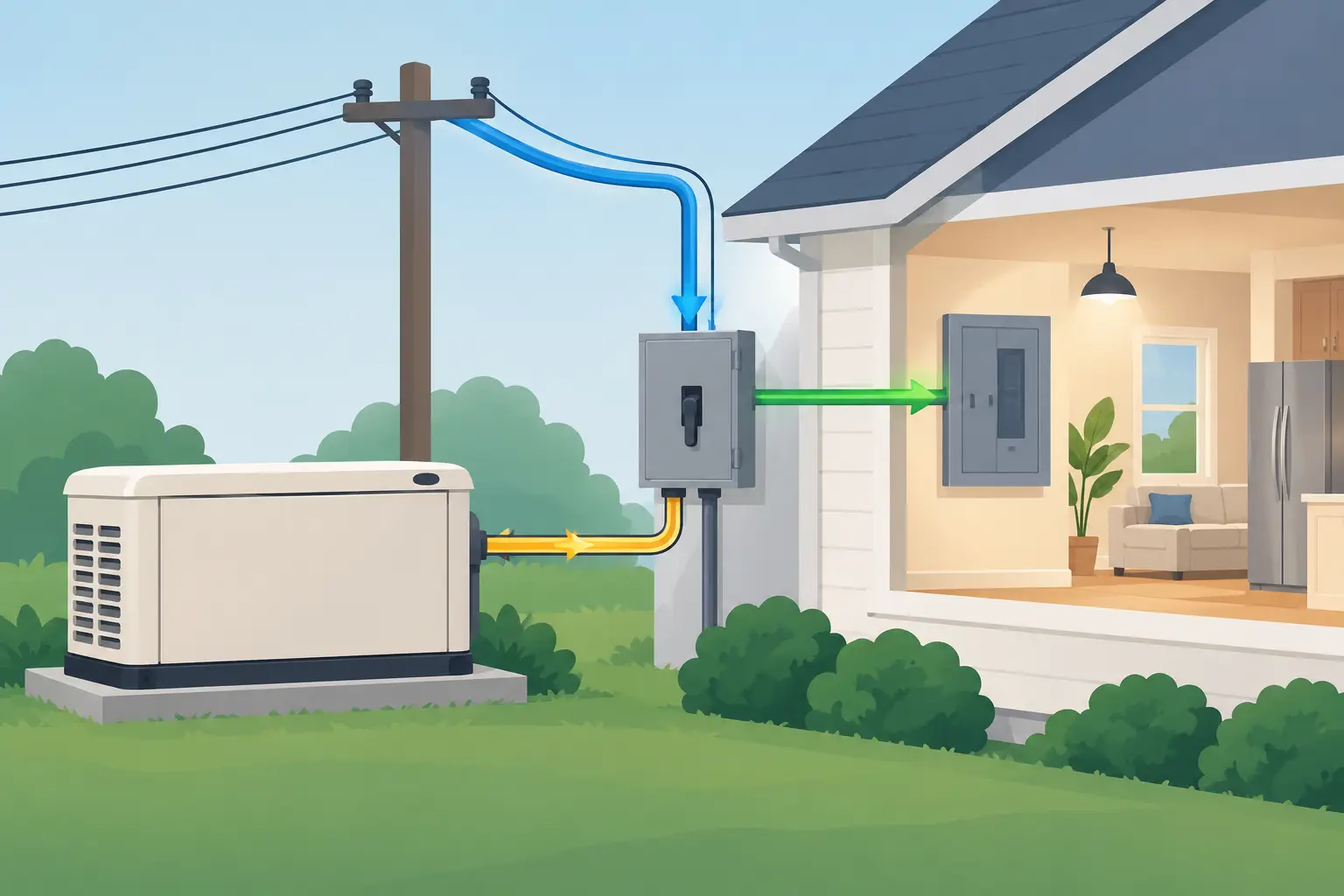
When the utility power drops in Southeast Louisiana, a generator can keep critical systems running. But generator transfer switches are the component that makes backup power safe, controlled, and useful. They direct electricity from either the utility or the generator into the building – never both at the same time – so your home or facility can operate through an outage without creating a dangerous condition for occupants, equipment, or utility workers.
For properties that rely on air conditioning, refrigeration, well pumps, security systems, medical equipment, or sump pumps, a properly selected transfer switch is not an accessory. It is part of the backup-power system’s foundation.
What a Transfer Switch Does
A transfer switch is an electrical device installed between the utility service, the generator, and the building’s electrical panel. During normal conditions, it allows power from the utility to serve the property. When an outage occurs, it separates the building from the utility source before allowing generator power to feed selected circuits or the full electrical system.
That separation is essential. Without it, generator power can backfeed into utility lines. Backfeeding can seriously injure line workers, damage electrical equipment, and create fire hazards. It can also expose a generator to utility power when service is restored.
A correctly installed switch provides an orderly handoff. Depending on the system, the transfer may happen automatically within seconds or manually after the owner confirms that the generator is running and ready. When utility service returns, the switch returns the property to normal power and, on automatic systems, signals the generator to cool down and shut off.
The switch does not create electricity or increase generator capacity. Its job is to manage the source of power safely. That distinction matters when planning a system for a home, restaurant, office, rental property, or commercial facility.
Automatic vs. Manual Generator Transfer Switches
The best choice depends on how quickly backup power is needed, how often the property is occupied, and which systems must remain online.
Automatic transfer switches
An automatic transfer switch, often called an ATS, continuously monitors incoming utility power. When it detects a qualifying outage, it starts a compatible standby generator, waits for the generator to stabilize, and transfers the electrical load. When utility power returns and remains stable, it transfers the load back.
This is usually the right approach for whole-house standby generators, commercial generators, refrigeration loads, and buildings where an outage can cause damage before someone arrives. A homeowner away during a storm may want an automatic system to keep a refrigerator, security equipment, dehumidification, and essential cooling operating. A business may need automatic transfer to protect inventory, communications, or critical operations.
Automatic operation adds equipment cost and requires careful coordination between the generator, switch, service equipment, and electrical loads. The payoff is dependable response when no one is available to connect or start portable equipment.
Manual transfer switches
A manual transfer switch requires a person to start the generator and move the switch from utility power to generator power. It is commonly used with portable generators and smaller, selected-load setups.
Manual systems can be a practical option for a homeowner who wants to power a refrigerator, lights, a few outlets, a gas furnace blower, or a small window unit during an outage. They generally cost less than a whole-house standby system, but they do require someone to be present and comfortable following the operating procedure.
A manual switch is not simply a cheaper version of an automatic system. It serves a different use case. If your property may be vacant during storm season or your equipment cannot tolerate much downtime, automatic transfer is usually the more appropriate investment.
Whole-Home Power or Essential Circuits
Transfer switch planning starts with a load assessment, not a guess about generator size. A generator must handle the running load and the starting demand of certain equipment, especially central air conditioning, pumps, compressors, refrigeration equipment, and motors.
A whole-home system can support most or all household circuits, depending on the generator’s capacity and the electrical design. This approach is convenient, but it needs thoughtful load management. A 24-kilowatt generator, for example, may support a large portion of a home, yet it cannot run every high-demand appliance at once without a plan.
Load-management modules can temporarily prevent selected equipment from starting while higher-priority loads are operating. This may allow a properly sized generator to support central cooling, refrigeration, lighting, internet equipment, and other essentials without overloading. The exact arrangement depends on the property’s electrical usage and the owner’s priorities.
An essential-circuits system uses a smaller transfer switch or dedicated emergency panel. It feeds only the circuits chosen for outages. This can be an efficient fit for smaller homes, rental properties, or buildings where the main goal is maintaining basic comfort and preventing loss of food or equipment.
For commercial properties, the conversation may include three-phase power, larger service sizes, diesel generators, refrigeration loads, fire and life-safety equipment, or phased backup strategies. There is no universal transfer switch for every building. The switch must match the generator voltage, phase, amperage, service configuration, and intended loads.
Why Installation Details Matter in Louisiana
New Orleans-area properties face a combination of heat, humidity, heavy rain, storms, and periods of extended power interruption. That makes generator location, electrical protection, fuel supply, and transfer-switch installation especially important.
The switch and related equipment need to be installed in an appropriate location with correct clearances and protection for the environment. Outdoor-rated components may be needed, while indoor equipment must be placed where it remains accessible for service and is not exposed to moisture risks. Coastal and humid conditions can accelerate corrosion, so quality equipment and proper installation practices matter over the life of the system.
Permitting and code compliance are equally important. Generator work may involve electrical permits, gas piping permits, site requirements, utility coordination, and inspections. A professional installation team should evaluate the existing service panel, grounding and bonding, available fuel capacity, generator pad location, and the route for control wiring and power conductors before work begins.
For homes with central HVAC, the generator plan should account for the air conditioner or heat pump rather than treating it as an afterthought. Cooling is often a priority during a Louisiana outage, but it is also one of the largest electrical loads in the building. Options may include selecting a larger generator, using load management, adding a soft-start device where appropriate, or choosing which HVAC areas receive backup power.
Common Mistakes to Avoid
The most dangerous mistake is attempting to power a building by plugging a portable generator into a wall outlet or dryer outlet. This is illegal, unsafe, and can energize utility lines unexpectedly. A generator should connect through approved equipment designed for generator use.
Another common problem is sizing the generator based only on wattage labels without considering starting loads and real operating patterns. Central air, refrigerators, freezers, pumps, and commercial equipment do not behave like simple light bulbs. An accurate assessment looks at what must run, what can wait, and what may start at the same time.
Property owners also sometimes overlook fuel supply. A standby generator powered by natural gas or propane needs enough available fuel capacity to run under expected load. A generator that starts successfully but cannot sustain operation during a prolonged outage does not provide the protection the property needs.
Finally, do not treat installation as the last step. The transfer switch, generator, panel capacity, fuel system, and critical loads must be planned together. Air Tight Construction approaches backup power as part of the building’s larger performance system, especially where cooling, moisture control, and emergency power are connected.
Testing and Maintenance Keep the System Ready
A transfer switch should be tested as part of regular generator maintenance. Automatic standby generators typically perform scheduled exercise cycles, but an exercise cycle does not always verify that the switch transfers the building load correctly. Periodic load testing confirms that the generator starts, the switch transfers, priority circuits operate as expected, and the system returns to utility power properly.
Owners should also keep the generator area clear, watch for warning lights or fault messages, and schedule professional service according to the manufacturer’s recommendations. For portable-generator systems, inspect the inlet box, cord, and manual switch before storm season, then review the startup and shutdown procedure with the people who may need to operate it.
A power outage is the wrong time to learn that a critical circuit was left off the transfer panel or that the generator cannot carry the air conditioner. Planning the system around how the property actually operates gives you a better chance of staying safe, comfortable, and productive when the grid is down.

One thought on “How Generator Transfer Switches Protect Your Home”