

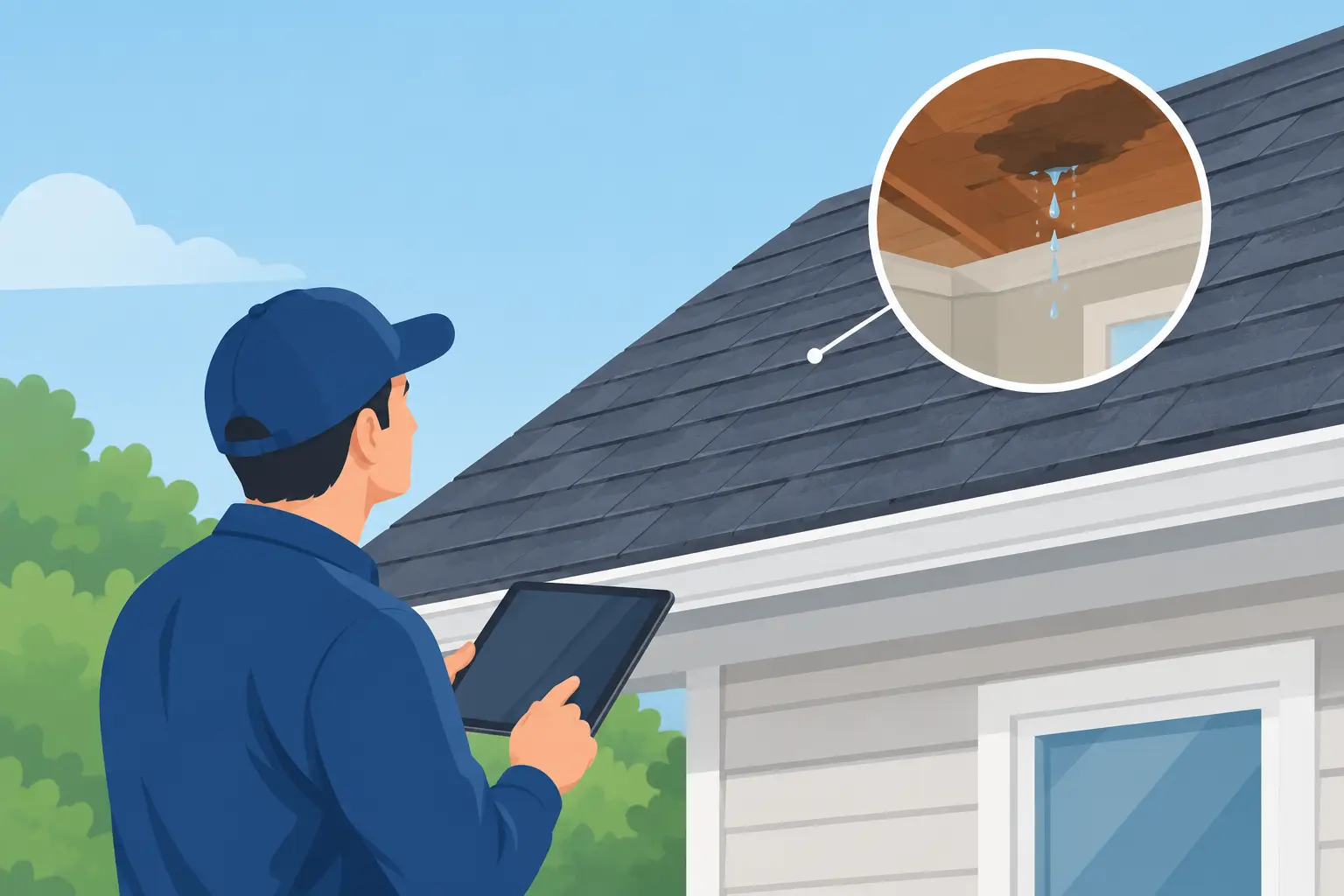
A roof leak rarely announces itself with a steady drip in the middle of the floor. In Southeast Louisiana, water can enter during a wind-driven storm, move along roof decking or framing, and show up days later as a faint ceiling stain. Knowing how to spot roof leaks early helps protect insulation, framing, indoor air quality, and the cooling system working hard inside your property.
Roof leaks deserve prompt attention because our heat, humidity, heavy rain, and hurricane-season winds create the conditions for minor openings to become larger moisture problems. A small damaged flashing detail, lifted shingle, or worn roof penetration can allow water into hidden areas where mold and rot begin before visible damage looks serious.
Start Inside: The Early Signs of a Roof Leak
The attic and upper floors usually provide the first useful clues. After a strong rain, look at ceilings near exterior walls, around chimneys, and below roof valleys. A yellow, brown, or gray stain may be dry by the time you see it, but it is still evidence that moisture entered the building.
Fresh stains often have a darker edge or an irregular ring. Paint may bubble, drywall may soften, and textured ceilings can begin to sag. Do not assume the stain marks the exact leak location. Water follows gravity, roof decking, wiring, pipes, and framing members before it reaches the ceiling surface.
A musty smell is another warning sign, especially in a closed room, closet, attic, or top-floor hallway. Humidity is part of life in the New Orleans area, but a persistent odor after rain can indicate wet insulation, damp drywall, or hidden microbial growth. If the ceiling feels soft, is actively dripping, or has begun to bow, keep people clear of the area and arrange for professional assessment quickly.
Check the Attic After Rainfall
If your attic is safely accessible, inspect it with a flashlight shortly after rainfall. Look for damp roof decking, darkened wood, wet insulation, rusty nail tips, or water trails on rafters. Pay close attention to areas around vents, plumbing stacks, skylights, chimneys, and attic fans.
Condensation can sometimes resemble a leak, particularly where warm, humid air reaches a poorly sealed attic or meets cold HVAC equipment. The difference is timing and pattern. Roof leaks often worsen after a specific storm and appear near roof details. Condensation may be more widespread and tied to poor ventilation, air leakage, insulation gaps, or sweating ductwork. Both issues require correction, but the repair approach is different.
How to Spot Roof Leaks From the Outside
An exterior inspection can reveal the source before water becomes visible indoors. Inspect from the ground first, using binoculars if necessary. Never walk on a wet, steep, brittle, or storm-damaged roof. A damaged roof surface can be unsafe, and foot traffic can cause further damage.
Look for missing, cracked, curling, or lifted shingles. In Louisiana, wind can break the seal between shingles even when they have not blown completely away. Exposed nail heads, worn granules collecting in gutters, and uneven roof lines can also point to aging materials or water-related deterioration.
Flashing deserves close attention. Flashing is the metal or membrane material that directs water away from vulnerable transitions, including chimneys, wall intersections, vent pipes, skylights, and valleys. A roof can have shingles that appear intact while failed flashing allows water underneath them.
For low-slope and commercial roofs, standing water that remains long after a storm is a concern. Ponding water adds stress to the roof system and may expose weak seams, drains, penetrations, or membrane blisters. Check whether roof drains and scuppers are blocked by leaves, sediment, or storm debris. A drainage issue is not always a leak, but it can create one if left unaddressed.
Pay Attention to What Happens During a Storm
The timing of a leak tells you a great deal. If water appears only during wind-driven rain, the issue may be on the windward side of the roof, near a wall transition, or around flashing. If it occurs during long, soaking rainfall, a slow failure in a valley, low-slope section, or drainage area may be more likely.
Take clear photos of stains, drips, and exterior damage when it is safe to do so. Note the date, weather conditions, and which rooms are affected. This information helps a roofing professional trace the water path and distinguish a roof issue from a plumbing leak, condensation problem, or HVAC drain failure.
Do not wait for a second or third storm to see whether the problem returns. The first visible sign may follow weeks or months of hidden moisture exposure. Wet insulation loses performance, which can raise cooling costs and make upper floors less comfortable. Moisture in enclosed building materials can also support mold growth and damage wood components.
Rule Out Other Sources of Water
Not every ceiling stain comes from the roof. Plumbing supply lines, drain lines, water heaters, upstairs bathrooms, and HVAC condensate drains can all cause water damage that looks similar at first glance. Before scheduling a roof repair, consider what sits above the affected area.
A stain directly below a bathroom, kitchen, or mechanical closet may be related to plumbing or HVAC. A leak that develops while the air conditioner runs, even without rain, could be a clogged condensate drain or damaged drain pan. Water around ceiling registers or near ductwork may indicate condensation caused by insulation or air-sealing problems.
Still, rain-related moisture should not be dismissed. Roof systems, attic ventilation, insulation, and indoor humidity work together. That is why an integrated inspection is valuable when the cause is unclear. The goal is to fix the actual source of moisture rather than cover the stain and hope it stays dry.
What to Do When You Find a Leak
Move furniture, electronics, and other valuables away from the affected area. If water is dripping, place a container underneath and protect surrounding flooring with towels or plastic sheeting. When a ceiling is bulging with trapped water, do not puncture it unless you understand the risks and can safely manage the water. A ceiling can fail suddenly, and electrical fixtures in the area increase the hazard.
If water is near outlets, light fixtures, or electrical panels, avoid the area and contact a qualified professional. Do not climb into an attic during active lightning, high winds, or severe weather. Emergency tarping and storm repairs should be handled by properly equipped personnel.
Once conditions are safe, document the damage and arrange an inspection. Temporary measures can limit additional water entry, but they are not a substitute for repairing failed materials, drainage details, flashing, or roof penetrations. If building materials have remained wet, the affected area may also need drying and mold remediation work.
Prevent Small Roof Problems From Becoming Major Repairs
Roof maintenance is especially practical before hurricane season and after major storms. Keep gutters, roof drains, and downspouts clear so water has a defined path away from the roof and foundation. Trim branches that scrape the roof or drop heavy debris into valleys and drains.
Schedule periodic roof inspections, particularly for older roofs and properties with frequent tree debris. Have damaged shingles, loose flashing, cracked sealant, and failing pipe boots repaired promptly. For commercial facilities, regular inspection of seams, drains, rooftop equipment curbs, and penetrations can help prevent downtime and interior damage.
A fortified roofing approach can also improve resilience where it makes sense for the building. Details such as stronger attachment methods, properly installed underlayment, and protected roof edges matter during high-wind weather. The right solution depends on the existing roof type, roof age, building design, and budget.
At Air Tight Construction, roof concerns can be evaluated with the rest of the building in mind, including attic insulation, moisture conditions, HVAC performance, and any remediation needs after water intrusion. That coordinated view helps property owners avoid treating connected problems as separate repairs.
A new water stain may look minor, but it is a useful signal from the building. Address it while the affected area is small, dry the materials properly, and protect the roof before the next Gulf Coast storm puts the same weak point to the test.