
A dark patch on drywall, a musty odor after a storm, or mildew around an AC vent can make property owners ask for “mold removal.” But mold removal vs mold remediation is not just a difference in wording. It changes what work is performed, how the moisture source is handled, and whether the problem is likely to return.
For homes and commercial properties in the New Orleans area, that distinction matters. High humidity, heavy rain, storm damage, plumbing leaks, roof issues, crawl space moisture, and air-conditioning problems can all create conditions where mold grows. A lasting solution requires more than cleaning what is visible.
What Is Mold Removal?
“Mold removal” is a common phrase, but it can create an unrealistic expectation. Mold spores occur naturally indoors and outdoors. No contractor can guarantee that every mold spore has been removed from a building, nor is that the practical goal.
In everyday use, mold removal usually means physically taking mold-contaminated material out of an area. That may include removing damaged drywall, insulation, carpet, ceiling tile, baseboards, or other porous materials that cannot be effectively cleaned. It can also refer to cleaning visible growth from nonporous or semi-porous surfaces when the material can be saved.
Removal is often one part of the job. The issue is that removal alone does not explain what caused the growth or what is being done to prevent it from coming back. If wet insulation is replaced but a roof leak remains active, or if a wall is cleaned while indoor humidity stays high, mold can return to the same area or appear somewhere nearby.
What Is Mold Remediation?
Mold remediation is the broader process of correcting a mold condition and returning indoor mold levels to normal natural levels. It includes removing or cleaning affected materials when necessary, but it also addresses containment, moisture control, cleaning methods, and verification that the work area is safe to reoccupy.
A proper remediation plan starts with the building, not just the stain. The goal is to identify how moisture entered or stayed in the space. In Southeast Louisiana, the answer may be a slow plumbing leak, a failed flashing detail, wind-driven rain, condensation on ductwork, inadequate attic ventilation, a clogged condensate drain, or humid outdoor air leaking into the building envelope.
That building-performance approach is especially useful because indoor air, insulation, HVAC operation, and construction details are connected. A cooling system that does not remove enough humidity can contribute to moisture problems. Leaky ductwork in a hot attic can create condensation. Poorly sealed penetrations can allow humid outside air into wall cavities. Remediation should account for those conditions instead of treating mold as an isolated cleaning project.
Mold Removal vs Mold Remediation: The Practical Difference
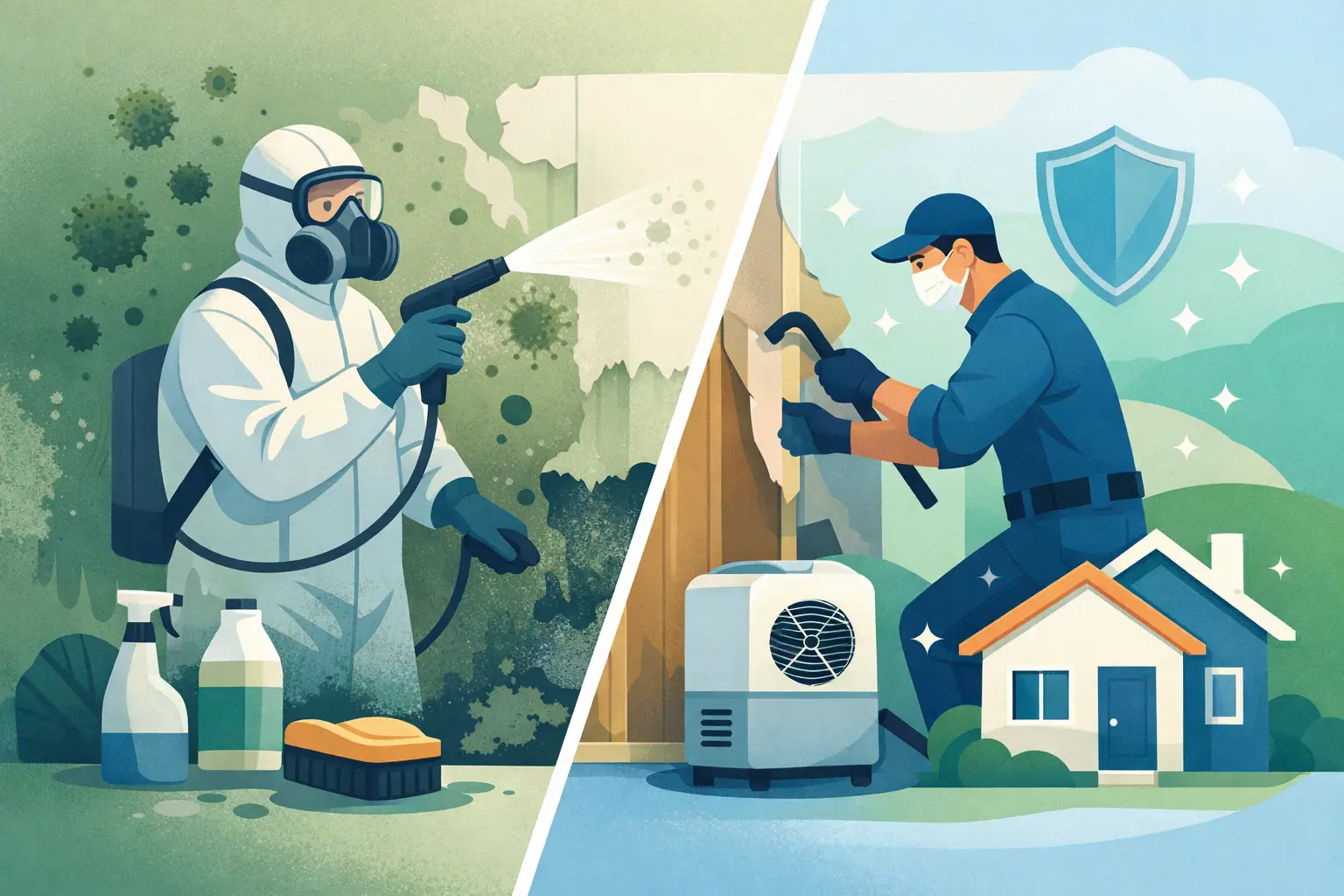
The simplest way to understand the difference is this: mold removal focuses on the affected material, while mold remediation focuses on the affected material, the conditions that caused the growth, and the steps needed to prevent recurrence.
A small amount of surface growth from a one-time spill may only require careful cleaning and drying. A larger problem following a roof leak, flood, long-term AC drain failure, or hidden pipe leak is different. It may require containment to keep spores and debris from spreading during work, removal of damaged porous materials, HEPA vacuuming, detailed cleaning, and correction of the moisture source before repairs begin.
The right scope depends on the size of the affected area, the materials involved, how long they were wet, and who uses the building. A nursery, medical office, occupied apartment, restaurant, or office with sensitive employees may require more careful scheduling and containment than a vacant storage area. Property owners should be cautious of any proposal that promises to “kill mold” with a spray and considers the job complete. Sprays may have a role in certain cleaning methods, but they do not fix wet building materials or a continuing moisture problem.
What a Professional Remediation Process Looks Like
A professional mold remediation project is organized to protect the rest of the property while the source and affected materials are addressed. The details vary by building, but the process generally follows a clear sequence.
Inspection and moisture investigation
The first step is identifying visible damage, musty odors, moisture readings, and likely water pathways. This may involve checking ceilings below roof areas, plumbing locations, exterior walls, HVAC equipment, supply and return ducts, condensate lines, attics, and crawl spaces. The visible mold is not always the full extent of the issue.
Source correction and drying
Stopping the water or humidity problem is essential. That could mean repairing a pipe, correcting a roof leak, servicing an air-conditioning system, improving drainage, sealing air leaks, or replacing damaged building components. Wet materials must also be dried appropriately. Rebuilding too early can trap moisture inside walls, ceilings, or floors.
Containment and controlled removal
For more significant contamination, the work area may be isolated with plastic barriers and negative air equipment. This helps limit the movement of dust and spores into clean areas of the home or business. Workers remove unsalvageable materials carefully and package debris for disposal rather than carrying exposed contamination through the property.
Cleaning and detailed treatment
Remaining structural surfaces are cleaned using methods appropriate for the material and condition. HEPA vacuuming and damp wiping are common parts of this stage. The goal is not to leave a surface looking clean while contamination remains in dust, framing joints, or nearby contents.
Repair and prevention
Once the area is clean and dry, repairs can begin. This may include new insulation, drywall, trim, flooring, paint, duct repairs, or roof and exterior corrections. Prevention may also involve improving dehumidification, air sealing, insulation, ventilation, or HVAC performance. These are not optional add-ons when they are directly tied to the original moisture condition.
When Cleaning May Be Enough and When It Is Not
A small, isolated area of mold on a nonporous surface may be manageable if the moisture source is obvious, has been corrected, and the material is fully dry. For example, a small amount of mildew on a bathroom surface can often be cleaned safely with proper ventilation and personal protection. The key is making sure the bathroom exhaust system works and that the room is not staying damp for hours after use.
Professional help is a better choice when mold keeps returning, covers a larger area, follows water damage, appears inside walls or ceilings, affects HVAC components, or is accompanied by a persistent odor. It is also appropriate when drywall, carpet, insulation, or other porous materials have remained wet. Those materials can hold moisture and contamination where surface cleaning cannot reach.
Commercial properties should act early. A small leak above a ceiling grid can turn into damaged insulation, stained tiles, odor complaints, and disruption for tenants or staff. Addressing the source and remediation scope before the issue spreads generally protects both operations and repair budgets.
Why Humidity Control Matters in Southeast Louisiana
Mold needs moisture to grow, and Gulf Coast humidity provides plenty of it. Many indoor mold problems begin when humid air reaches a cold surface, such as a supply duct, register, exterior wall cavity, or poorly insulated section of ceiling. Condensation can be gradual enough that property owners do not notice it until staining or odor appears.
Air-conditioning is part of moisture management, not just temperature control. An oversized system can cool a space quickly but may not run long enough to remove sufficient humidity. A neglected drain line, frozen evaporator coil, duct leak, or airflow issue can also create water problems. Likewise, gaps in the building envelope can allow humid outdoor air to enter spaces that should remain conditioned and dry.
For that reason, mold prevention often overlaps with HVAC maintenance, insulation improvements, air sealing, roof repairs, and drainage work. Air Tight Construction evaluates these connected conditions so a remediation project can address the reason mold developed, not only the evidence it left behind.
Questions to Ask Before Approving Mold Work
Before choosing a contractor, ask what caused the moisture problem and how it will be corrected. Ask which materials can be cleaned, which must be removed, and how the work area will be contained. You should also understand the plan for drying, cleanup, repairs, and final walkthrough.
Be wary of vague scopes that only say “treat mold” or “apply antimicrobial.” A clear proposal should explain the affected area, the work sequence, the expected repairs, and any conditions that could change the scope once materials are opened. This is particularly important in older homes and commercial buildings, where hidden moisture paths can extend beyond the first visible stain.
The right response to mold is practical: stop the moisture, remove or clean affected materials correctly, dry the structure, and restore the space with prevention in mind. That approach protects comfort, indoor air quality, and the long-term condition of the property.

2 thoughts on “Mold Removal vs Mold Remediation Explained”