

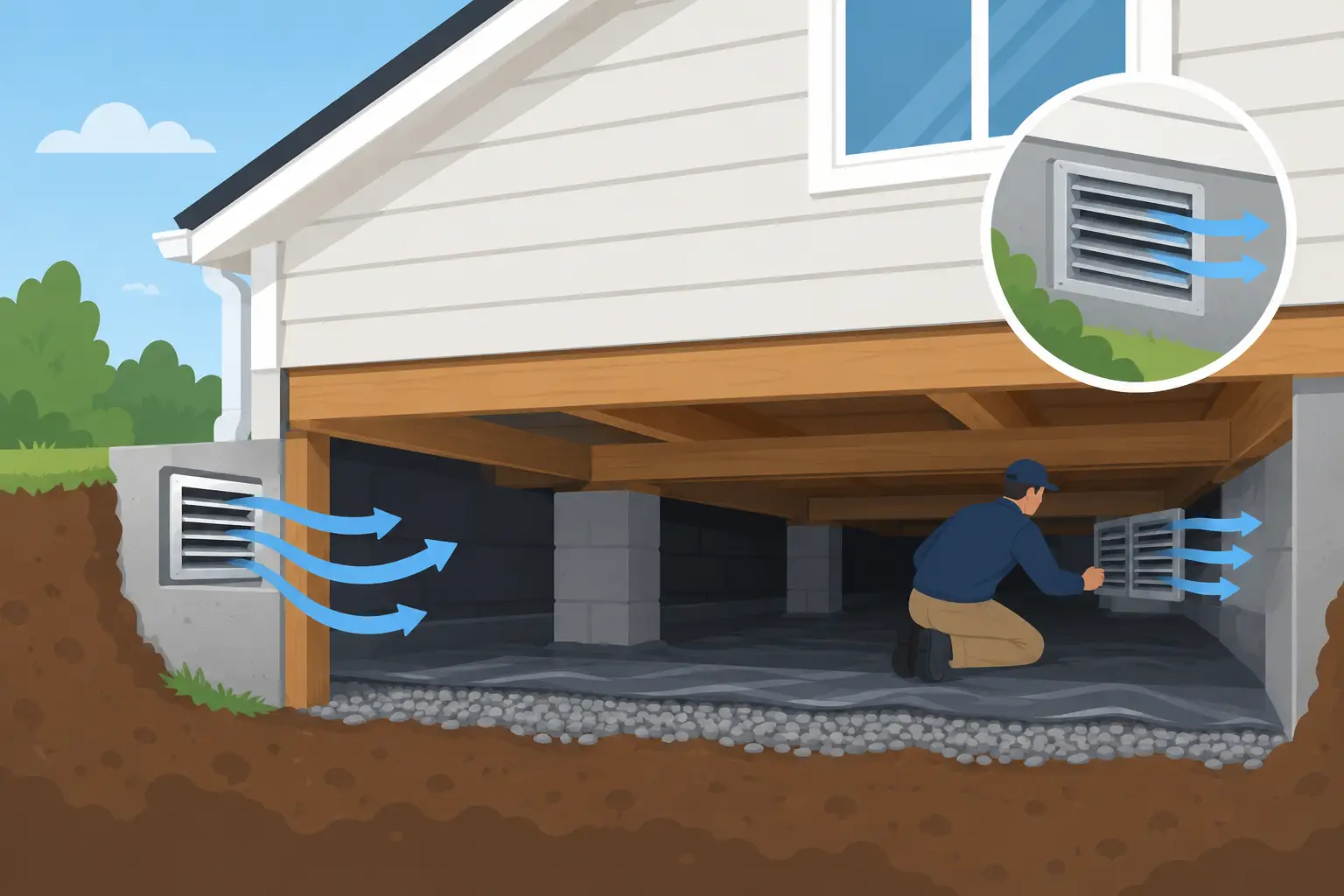
A crawlspace can look dry during a quick visit and still be creating problems above it. In Southeast Louisiana, warm outdoor air, wet soil, leaking plumbing, and undersized HVAC systems can turn the area beneath a home into a steady source of humidity. Knowing how to improve crawlspace ventilation starts with one key question: does your crawlspace actually need more outside air, or does it need better moisture control?
That distinction matters. Traditional vented crawlspaces were designed to move outside air under the home. In a hot, humid climate, that outdoor air often carries more moisture than the crawlspace air it replaces. When it contacts cooler framing, ductwork, or surfaces, condensation can follow. More vents are not automatically a better answer.
Start With a Crawlspace Moisture Inspection
Before adding vents, fans, or insulation, identify where moisture is entering. A crawlspace system works best when the ground, drainage, foundation openings, plumbing, ductwork, and HVAC equipment are evaluated together.
Look for standing water, wet soil, mildew odor, rusted metal, sagging insulation, dark staining on joists, condensation on ducts, and damaged or missing vent screens. Check plumbing lines and drain connections for slow leaks. Also look outside: gutters that discharge near the foundation, low grading, and downspouts that stop too close to the home can send rainwater directly toward the crawlspace.
For homes near New Orleans, seasonal storms and high groundwater can make drainage just as important as airflow. If water is entering from below or along the foundation, ventilation alone will not solve the problem. The moisture source has to be addressed first.
How to Improve Crawlspace Ventilation Without Adding Humidity
The right approach depends on whether the crawlspace is vented, sealed, or somewhere in between. A building-performance assessment can determine which option makes sense for the home’s construction and existing moisture conditions.
Keep Existing Vents Clear and Properly Sized
If your home has a vented crawlspace, start by making sure the current vents can actually function. Remove leaves, soil, mulch, stored items, and debris blocking openings. Repair bent louvers and install durable screens that keep out rodents and insects without restricting airflow excessively.
Do not assume that cutting more foundation vents is the next step. Adding openings can invite humid air, wind-driven rain, pests, and cold-weather drafts. It can also make floors feel less comfortable and increase the moisture load on insulation and HVAC ducts.
A professional should verify whether vents are correctly placed and whether the crawlspace has a clear path for air movement. One vent hidden behind landscaping or a deck may contribute little. However, even well-positioned vents may be the wrong moisture strategy for a Gulf Coast property.
Use Mechanical Ventilation Carefully
A crawlspace exhaust fan can help in certain conditions, but it is not a universal fix. Fans create negative pressure, which pulls replacement air in through vents, gaps, and unsealed penetrations. If that replacement air is hot and humid, the fan may pull more moisture into the crawlspace rather than drying it out.
Mechanical ventilation is most effective when it is designed around measured humidity levels, outdoor conditions, and a clear source of makeup air. Humidistats, timers, and properly selected equipment are preferable to a fan that runs continuously without regard to conditions. A poorly installed fan can waste electricity while increasing condensation risk.
For many enclosed crawlspaces, a dedicated dehumidifier provides more dependable humidity control than outside-air ventilation. It removes water vapor rather than exchanging crawlspace air for humid outdoor air.
Seal Ground Moisture With a Vapor Barrier
Bare soil releases moisture continuously. Covering the ground with a properly installed vapor barrier is often one of the most effective ways to reduce crawlspace humidity, especially after rain or during long humid summers.
The material should cover the full crawlspace floor, overlap at seams, and be sealed where appropriate. It should extend up foundation walls according to the selected crawlspace design. Thin plastic laid loosely on the ground can help somewhat, but it is easily torn and often leaves gaps that allow moisture through.
A vapor barrier does not correct flooding, plumbing leaks, or poor grading. It works as one part of a complete moisture-control plan. When water is present, drainage repairs, a sump system, or exterior water management may be needed first.
Consider Crawlspace Encapsulation
For many Louisiana homes, encapsulation is a stronger long-term option than increasing natural ventilation. An encapsulated crawlspace is intentionally separated from humid outdoor air with sealed foundation vents, a continuous ground vapor barrier, sealed penetrations, and controlled conditioning or dehumidification.
This approach can reduce musty odors, protect floor framing, lower the risk of mold growth, and help keep ductwork and insulation dry. It may also improve comfort when HVAC ducts run beneath the home, because the equipment is no longer operating in an extremely hot, humid environment.
Encapsulation is not simply closing vents. Closing vents without controlling ground moisture, air leaks, and humidity can trap a problem inside. The crawlspace needs a planned drying method, usually a properly sized dehumidifier or a small, controlled supply of conditioned air when appropriate for the home and local requirements.
The trade-off is upfront cost. A full encapsulation project involves materials, sealing work, drainage considerations, and humidity-control equipment. But for properties with recurring moisture, damaged insulation, mold concerns, or high cooling costs, it can be more durable than repeatedly repairing the effects of a damp crawlspace.
Protect Ductwork, Insulation, and Wood Framing
Crawlspace moisture does not stay below the floor. It can affect the indoor environment, cooling performance, and structural materials throughout the property.
Ductwork in a humid crawlspace is especially vulnerable. If duct insulation is damaged or ducts leak, humid air can condense on cold metal surfaces. The result may be dripping water, wet insulation, mold growth, and lost conditioned air. Sealing duct connections and insulating ducts correctly helps protect both the HVAC system and the crawlspace.
Floor insulation should also be inspected. Fiberglass batts that are wet, compressed, or falling away from the subfloor do not perform as intended. In some cases, spray foam insulation applied as part of a properly designed crawlspace strategy can help control air movement and improve thermal performance. The right insulation choice depends on whether the crawlspace remains vented or is being brought into the conditioned building envelope.
Wood framing deserves close attention as well. Persistent high humidity can lead to fungal growth and wood deterioration over time. If visible mold is present, the underlying moisture condition must be corrected along with appropriate remediation. Surface cleaning without moisture control is not a lasting repair.
Watch for Signs the Problem Is Getting Worse
A crawlspace should be checked regularly, not only after a major storm or when a musty odor appears indoors. Pay attention to uneven or bouncy floors, doors that begin sticking, rising indoor humidity, recurring HVAC issues, peeling floor finishes, and an increase in insects or pests near the foundation.
Commercial properties and raised residential buildings may have additional concerns, including larger duct systems, plumbing runs, equipment supports, and areas that are difficult to access. These spaces benefit from a coordinated inspection rather than isolated repairs by separate trades.
Humidity readings can provide useful direction. A crawlspace that remains above roughly 60% relative humidity for long periods has conditions that can support mold growth. Readings should be considered alongside temperature, visible moisture, and the source of water. One dry-day reading is less meaningful than consistent monitoring through wet weather.
When to Bring in a Professional
Call for a crawlspace evaluation when there is standing water, visible mold, damaged framing, recurring condensation, wet insulation, or a persistent musty smell. Professional help is also appropriate before sealing vents, installing exhaust fans, adding spray foam, or purchasing a dehumidifier. These choices affect the building envelope, HVAC performance, and moisture movement across the entire property.
Air Tight Construction approaches crawlspace concerns as connected building-performance issues. That means looking beyond the vent opening to assess drainage, insulation, ductwork, air leakage, humidity, and remediation needs together. A clear plan can prevent spending money on an improvement that treats only one symptom.
A dry, controlled crawlspace protects more than the area beneath the floor. It helps preserve the structure, supports efficient cooling, and gives your home a better chance of staying comfortable through Louisiana’s long humid season.