

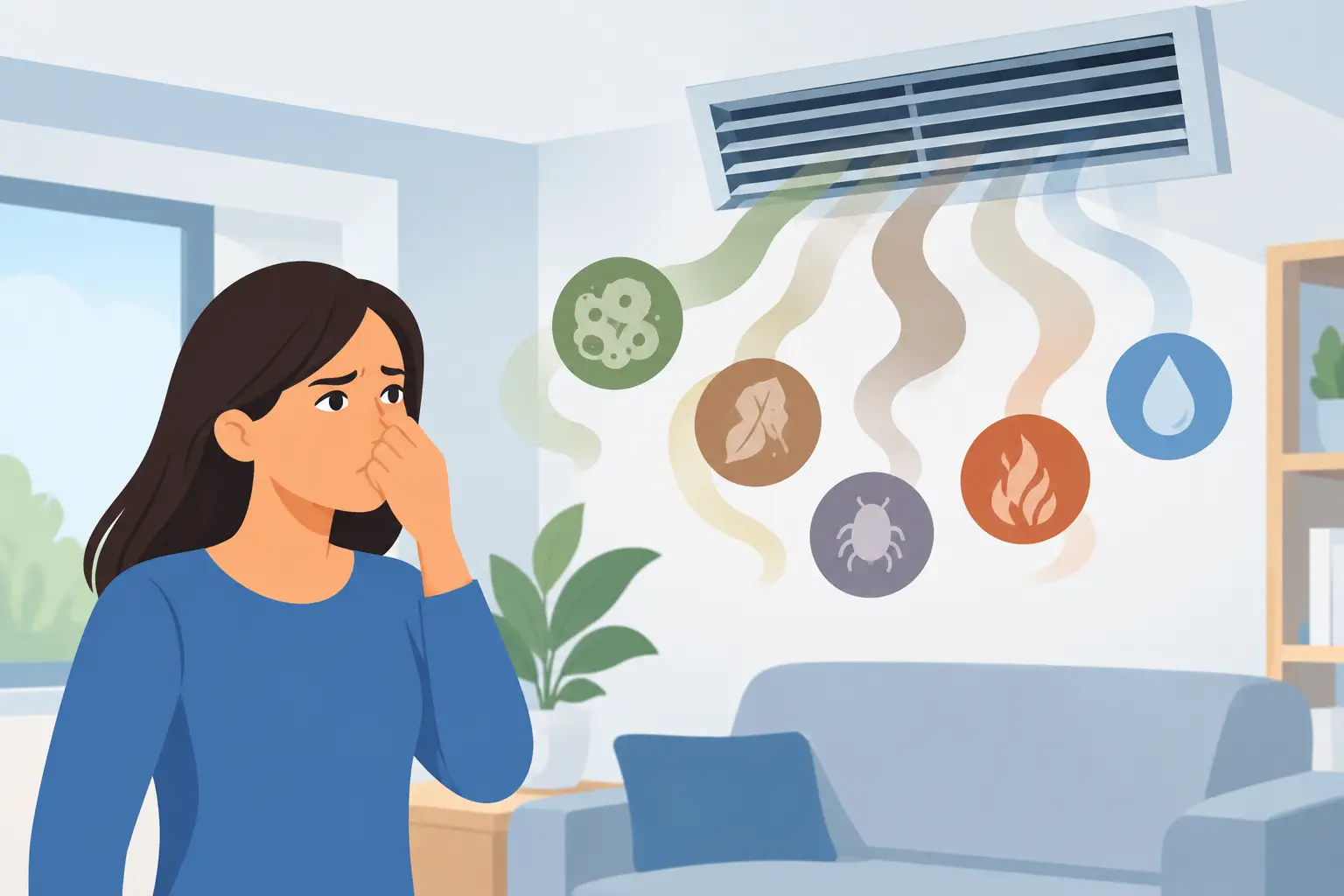
A sour or musty smell that starts when the AC comes on is more than an annoyance during a New Orleans summer. It can point to moisture sitting where it should not, organic growth in the system, a drainage problem, or an air-quality issue elsewhere in the building. That is why HVAC smells deserve attention, especially in Southeast Louisiana, where high humidity can turn a small moisture issue into a larger property concern.
The smell itself is a useful clue, but it is not a complete diagnosis. Odors can travel through ductwork from an attic, crawlspace, wall cavity, drain line, or neighboring area of a commercial property. The timing matters too: an odor that appears only at startup has different likely causes than one that continues all day or gets worse when the system runs.
Why HVAC Smells in Hot, Humid Properties
An air-conditioning system does more than lower the temperature. It removes moisture from indoor air, creating condensation at the indoor evaporator coil. Under normal conditions, that water drains through a condensate line and out of the building. When the coil, drain pan, line, filter, or nearby insulation stays damp and dirty, odors can develop and move into occupied spaces.
In older homes and commercial buildings around the New Orleans area, duct leaks and gaps in the building envelope can add to the problem. Return ducts may pull humid attic air, crawlspace air, or odors from unconditioned spaces into the HVAC system. Poor insulation, water intrusion, and an oversized AC unit that cools quickly without running long enough to control humidity can also contribute.
A quick air freshener may cover the smell for an hour, but it will not correct the moisture source, contamination, electrical concern, or air leak behind it. The right repair depends on identifying where the odor begins and how the entire property handles heat, humidity, and airflow.
What Common HVAC Odors Can Indicate
Musty, Mildewy, or Dirty-Sock Smells
Musty odors are common in Gulf Coast properties because they usually involve moisture. A dirty evaporator coil, clogged condensate drain, wet insulation, microbial growth in a drain pan, or damp ductwork can all create this smell. Some heat pumps develop a recurring “dirty sock” odor when bacteria collect on the coil and become noticeable during certain operating cycles.
The issue may be limited to coil cleaning and drain service, but it can also reveal a larger condition. A backed-up drain line can cause water damage. Leaky ducts can pull damp air into the system. If there has been a roof leak, plumbing leak, or flooding event, the odor may be connected to moisture in building materials rather than the HVAC equipment alone.
Do not assume every musty smell means mold in the ducts. Mold assessment and remediation should be based on the actual moisture condition and affected materials, not a guess from an odor. Still, persistent mustiness is a good reason to schedule a professional inspection before the issue spreads.
Burning, Smoky, or Hot-Plastic Smells
A brief dusty smell the first time a heating system runs after a long period can be normal. Dust settles on heating components during the cooling season and burns off as the system warms up. That smell should fade quickly.
A sharp electrical smell, hot-plastic odor, repeated burning smell, visible smoke, or a smell that becomes stronger while equipment operates is different. It can indicate overheated wiring, a failing blower motor, a damaged capacitor, a control-board issue, or another electrical component under stress. Turn the system off if it is safe to do so and arrange service promptly. Continuing to run equipment with an electrical fault can damage the unit and create a safety risk.
For commercial facilities, this also applies to refrigeration equipment, rooftop units, and electrical controls. A unit that is still cooling is not necessarily operating safely.
Rotten Egg, Sulfur, or Sewage Odors
A sulfur or rotten-egg smell can have several sources, and the response should be cautious. Natural gas is treated with a distinct odor so leaks can be noticed. If you suspect a gas leak, do not operate switches, light matches, or use equipment that could create a spark. Leave the area and contact the gas utility or emergency services from a safe location.
Not every rotten-egg odor is a gas leak. Dry plumbing traps, sewer-gas issues, dead animals near ductwork, or contaminated drain areas can produce similar smells. Because the consequences of a gas leak are serious, it is better to treat an unexplained sulfur odor as urgent until the source is confirmed.
Chemical, Sweet, or Solvent-Like Smells
A chemical smell near an HVAC unit may come from cleaning products, paint, stored fuels, pest-control materials, or other items whose vapors are being pulled into the return air path. It may also indicate an issue with electrical components or refrigerant-related equipment, though refrigerant does not always have an obvious smell.
Move chemicals, gasoline, and solvents away from air handlers, return grilles, and mechanical rooms. If the odor appears suddenly, causes eye or throat irritation, or is paired with poor cooling, shut the system down and have it evaluated. Technicians can inspect for leaks, airflow problems, damaged insulation, and other conditions that should not be handled as a do-it-yourself repair.
Dead Animal or Decaying Odors
Small animals can enter attics, crawlspaces, and duct chases, particularly after storms or exterior damage. A decaying odor that appears when the blower starts may mean the return side of the system is pulling air from the affected area. The solution is not simply spraying the ducts. The source must be removed, the affected area cleaned as needed, and the entry point or duct leak corrected.
When the Smell May Be Coming From Outside the HVAC System
Your AC may be distributing an odor without creating it. This distinction matters because replacing an HVAC component will not solve a roof leak, wet attic insulation, unsealed crawlspace, plumbing vent problem, or mold-affected wall cavity.
Watch for patterns. If the odor is strongest near one return grille, one room, or one air handler, that narrows the investigation. If it gets worse after heavy rain, when the attic is hot, or when indoor humidity rises, moisture intrusion and duct leakage become more likely. If odors appear only after a generator runs, after exterior work, or near a garage, combustion fumes and stored chemicals should be considered.
Carbon monoxide has no smell, so never rely on odor alone for combustion safety. Buildings with gas appliances, fireplaces, attached garages, generators, or fuel-burning equipment should have properly placed, working carbon monoxide alarms. Generators must operate outdoors and away from doors, windows, and air intakes.
What You Can Check Before Calling for HVAC Service
Start with the simple, safe checks. Replace a visibly dirty filter with the correct size and type. Look for standing water around the indoor unit, a full secondary drain pan, water stains, or a clogged condensate line outlet. Check whether return grilles are blocked by furniture or whether chemicals, paint, or fuel containers are stored near the air handler.
You can also note when the odor occurs, how long it lasts, and whether it is limited to cooling, heating, or fan operation. That information helps a technician diagnose the issue more efficiently. Avoid opening electrical panels, using harsh chemicals in the drain line, or attempting to clean internal coils without the proper equipment. Those shortcuts can damage equipment, create drainage problems, or expose occupants to contaminants.
When to Stop the System and Call for Help
Turn the system off and seek prompt professional service for burning odors that do not disappear, smoke, repeated electrical smells, suspected gas odors, strong chemical fumes, water leaking from the unit, or odors accompanied by headaches, dizziness, or breathing irritation. If there is an immediate gas or fire concern, leave the building and contact the appropriate emergency resource first.
For a persistent musty odor, timely service is still worthwhile. A licensed HVAC inspection can check the coil, blower, drain system, duct condition, humidity levels, and return-air pathways. If the source extends beyond the equipment, a coordinated approach may include moisture control, insulation improvements, duct sealing, repairs, or targeted remediation. Air Tight Construction approaches these connected conditions as building-performance issues, not isolated odors.
A comfortable building should smell neutral when its system starts and runs. If yours does not, pay attention to the pattern and address the source early. In a humid climate, a small odor is often the first sign that moisture, airflow, or equipment maintenance needs attention.