

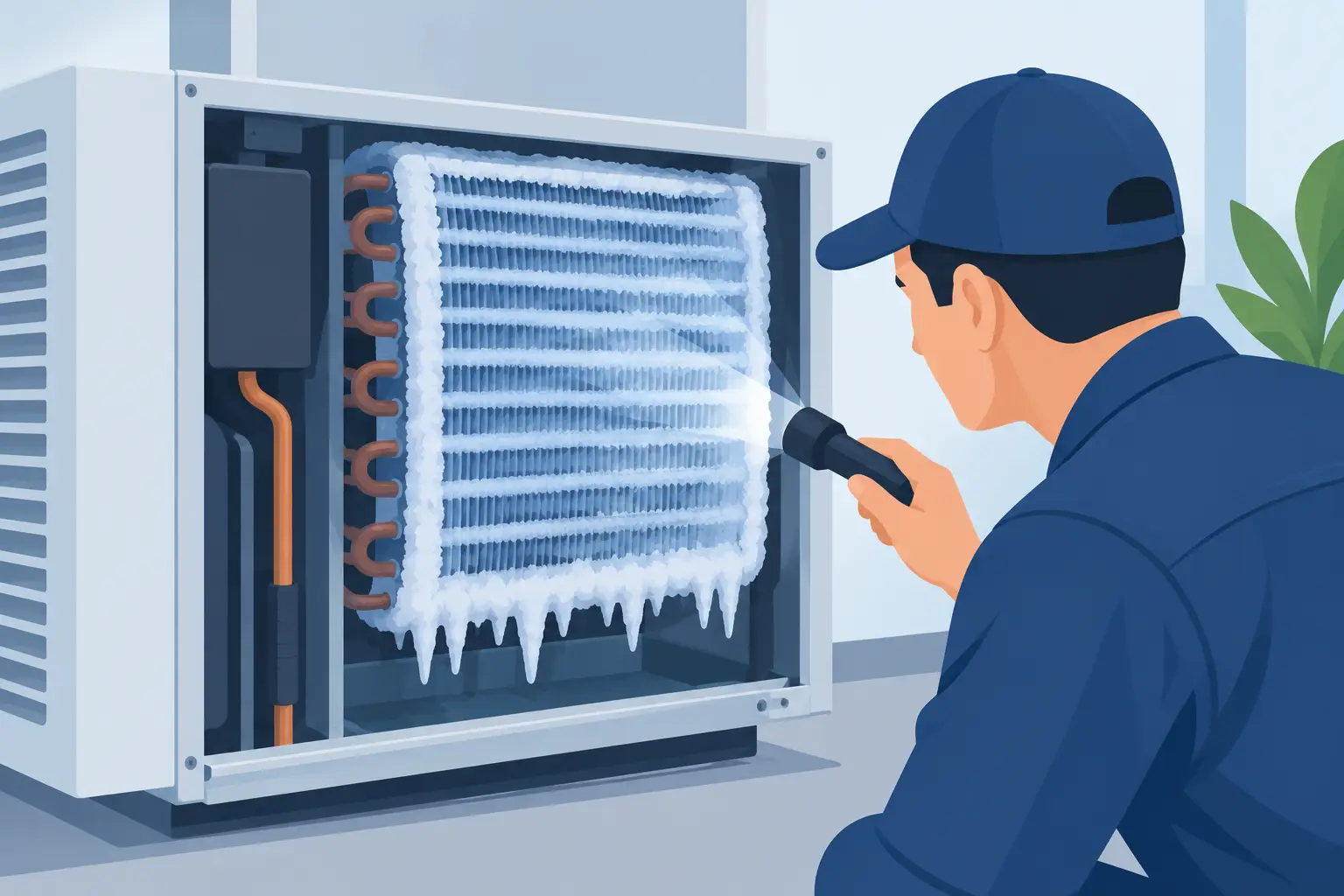
A frozen indoor evaporator coil can turn a hot New Orleans afternoon into a comfort emergency fast. The system may still be running, but airflow drops, rooms stay warm, and water may appear around the air handler as the ice begins to melt. Knowing how to troubleshoot frozen evaporator problems can help you prevent additional strain on the equipment and recognize when a licensed HVAC technician is needed.
The key is to treat a frozen coil as a symptom, not the whole problem. Ice forms when the coil gets colder than freezing while moisture from indoor air continues to collect on it. Restricted airflow, dirty equipment, low refrigerant, and control problems can all create those conditions.
First, Protect the System and Let the Coil Thaw
If you see ice on the refrigerant lines, indoor coil cabinet, or air handler, turn the thermostat from Cool to Off. Then set the fan to On, if your thermostat allows it. Moving room-temperature air across the coil can speed thawing without running the compressor.
Do not chip ice off the coil with a screwdriver, knife, or other sharp tool. Evaporator fins bend easily, and a punctured coil can turn a manageable repair into a major refrigerant leak and replacement expense. Do not keep lowering the thermostat in an attempt to make the space cooler, either. That only gives the system more time to freeze.
A heavily frozen coil can take several hours to thaw completely. Place towels around the air handler if water may overflow, and watch the condensate drain area. In Southeast Louisiana, high humidity means a thawing coil can produce a surprising amount of water. If the drain pan is full, the drain line is clogged, or water is reaching ceilings, walls, or flooring, shut the system off and arrange service promptly.
How to Troubleshoot a Frozen Evaporator Coil Safely
Once the ice has melted, start with the issues a property owner can check without opening electrical panels or handling refrigerant. A clean filter and adequate airflow solve some freeze-ups, but repeated icing should never be ignored.
Check the air filter and return vents
A clogged filter is one of the most common causes of a frozen evaporator coil. When the blower cannot pull enough return air through the system, the coil temperature drops too low and moisture freezes instead of draining away.
Remove the filter and inspect it in good light. If it is gray, coated in dust, bowed inward, or visibly packed with debris, replace it with the correct size and airflow rating. A filter that is too restrictive can also reduce airflow. High-efficiency filters can be useful, but the right choice depends on the blower capacity and duct design. More filtration is not always better if it chokes the system.
Make sure return grilles are not blocked by furniture, rugs, boxes, or closed interior doors. Check that supply registers are open as well. Closing multiple vents to force more cooling into one room often creates airflow problems elsewhere and can contribute to coil icing.
Look for airflow warning signs
After the system has thawed and a clean filter is installed, restore cooling and pay attention to airflow at the supply vents. Weak airflow, unusual blower noise, or a system that runs continuously without properly cooling may point to a dirty evaporator coil, blower wheel buildup, a failing blower motor, damaged ductwork, or a duct restriction.
These issues are especially common in older homes and commercial spaces where additions, renovations, or equipment changes were made over time. A new outdoor unit cannot compensate for undersized returns, leaking ducts, or an air handler that cannot move the airflow the system requires.
The indoor coil itself may be dirty even when the filter looks acceptable. Dust, pet hair, insulation fibers, and microbial buildup can coat the coil and restrict heat transfer. Because accessing the coil often requires removing cabinet panels and working near electrical components, this is generally a job for a licensed HVAC professional.
Check the condensate drain without forcing it
A blocked condensate drain does not usually cause the first freeze-up, but it can make the aftermath much worse. Look for standing water in the drain pan, water near the air handler, or a safety float switch that has shut the system down.
If you can safely see that the drain outlet is blocked by obvious exterior debris, clear only what is readily accessible. Avoid pouring harsh chemicals into the drain line or forcing objects through it. Improper cleaning can damage fittings, push a clog farther into the line, or create a leak inside a wall or ceiling. A technician can clear the drain correctly and check whether the trap, drain slope, and condensate pump are working as intended.
Notice when and how the freezing happens
The timing of the problem gives a technician useful clues. If the coil freezes after the system runs all day during extreme heat, airflow restriction or equipment capacity may be involved. If it freezes even on mild days, refrigerant charge, control issues, or a blower problem become more likely.
A coil that ices up shortly after every thaw is not a normal maintenance concern. It needs diagnosis. Repeated thaw-and-restart cycles can stress the compressor, and compressor repairs are among the costliest HVAC repairs a property owner can face.
When Low Refrigerant Is the Likely Cause
Refrigerant does not get used up like fuel. If an AC system is low on refrigerant, there is typically a leak somewhere in the sealed system. Low refrigerant reduces pressure in the evaporator coil, which lowers its temperature enough for condensation to freeze.
Common signs include ice on the larger insulated refrigerant line, reduced cooling, longer run times, hissing sounds near the equipment, and higher utility bills. Those signs can overlap with airflow problems, so they are not proof by themselves.
Do not use a refrigerant can or sealant product as a shortcut. Adding refrigerant without locating the leak can overcharge the system, mask a failing coil, and leave the underlying issue unresolved. A licensed technician should measure operating pressures, inspect for leaks, verify airflow, and confirm that the refrigerant charge matches the manufacturer’s requirements.
Why Frozen Coils Matter More in Southeast Louisiana
Our climate puts air-conditioning systems under a demanding combination of high heat and heavy humidity. Your AC does more than lower the temperature. It removes moisture from indoor air, supports better comfort at a reasonable thermostat setting, and helps limit the conditions that can contribute to mildew and mold growth.
When a frozen coil interrupts that process, indoor humidity can climb quickly. The result may be clammy rooms, condensation on surfaces, musty odors, and moisture around ductwork or air handlers. For rental properties, offices, restaurants, and other commercial spaces, downtime can also affect tenants, customers, inventory, and operations.
The best long-term response may involve more than repairing the coil. Duct leakage, attic heat gain, poor insulation, oversized equipment, and building-envelope gaps can all make an HVAC system work harder than it should. An integrated assessment can identify whether the freeze-up is isolated or part of a larger airflow, moisture, or energy-efficiency issue.
When to Call for HVAC Service
Call for professional service if the coil freezes again after you replace a dirty filter and confirm vents are open. You should also call if airflow is weak, the breaker trips, water is leaking, the blower is not running, or you suspect a refrigerant leak.
For commercial refrigeration equipment, treat evaporator icing with added urgency. Product temperatures, food safety requirements, and equipment uptime can be affected quickly. Keep doors closed as much as possible, protect temperature-sensitive inventory according to your operating procedures, and have the system evaluated before the issue escalates.
Air Tight Construction can inspect the full cooling system, including airflow, coil condition, drain performance, refrigerant operation, and related building conditions. The goal is not simply to melt the ice. It is to correct the reason it formed and help your property return to dependable cooling and humidity control.
A frozen evaporator coil is one of those problems that gets more expensive when it is repeatedly reset instead of properly diagnosed. Shut the cooling off, let the coil thaw, handle the simple airflow checks, and get qualified help if the system freezes again. That approach protects the equipment, your comfort, and the moisture-sensitive parts of your property.