

A walk-in cooler that runs a few degrees warm can spoil inventory long before it appears to have failed. A reach-in freezer with a worn door gasket can waste energy every hour of the day. In Southeast Louisiana, heat, humidity, heavy kitchen use, and power interruptions put commercial refrigeration equipment under constant strain. This refrigeration maintenance guide focuses on the routine care that helps property owners and facility managers avoid expensive disruptions.
Refrigeration maintenance is not only about keeping equipment cold. It protects food safety, product quality, operating costs, and the useful life of compressors, fans, controls, and condensers. A small issue caught early is usually a straightforward service call. Left alone, it can become a failed compressor, a flooded prep area, or lost inventory during a busy service period.
Why Refrigeration Maintenance Matters in Southeast Louisiana
Commercial refrigeration systems move heat out of a cooler or freezer and release it elsewhere, usually through an outdoor or remote condenser. That process becomes harder when the surrounding air is hot, airflow is blocked, coils are dirty, or moisture is constantly entering through leaking doors.
New Orleans-area properties face all of those conditions. Outdoor condenser coils collect dust, pollen, grease, cottonwood, and debris. Indoor evaporator coils can ice over when doors are left open, gaskets fail, drain lines clog, or defrost components are not working correctly. High humidity also means warm, moist air entering a refrigerated space creates condensation and forces the system to work longer.
Regular service helps keep temperatures stable and energy use under control. It also gives a licensed technician the opportunity to identify electrical wear, refrigerant concerns, drainage problems, and airflow restrictions before they interrupt your operation.
Refrigeration Maintenance Guide: What Staff Can Check
Daily and weekly checks do not replace professional maintenance, but they are one of the best ways to spot trouble early. Assign these checks to a trained manager, maintenance employee, or opening and closing shift team member, and document temperature readings rather than relying on a quick look at the display.
Start with cabinet, cooler, and freezer temperatures. Compare the equipment display with an independent thermometer placed in the refrigerated space. For food-service operations, follow applicable health-code requirements and your product-specific storage standards. A display reading can be inaccurate, and a temperature issue may first show up in one area of a walk-in rather than throughout the space.
Pay attention to how doors close. Door gaskets should be clean, flexible, and fully seated against the frame. Torn, flattened, or loose gaskets allow humid air inside, which drives up runtime and can create frost or water around the opening. Hinges, latches, and door closers also need attention. A door that does not close on its own is not a minor inconvenience in a busy kitchen or stock room.
Keep the area around refrigeration equipment clean and clear. Boxes, shelving, storage supplies, and trash should not block grilles or airflow paths. For outdoor condensing units, remove leaves and loose debris from around the equipment while avoiding damage to coil fins or electrical components. If a condenser is in a grease-heavy area, it may require more frequent professional cleaning than a unit in a clean retail setting.
Look for warning signs during normal operations: unusual buzzing or grinding, excessive frost, water on the floor, frequent cycling, warm spots, damaged insulation, or a door frame that feels unusually hot. These conditions deserve prompt attention, especially when temperatures are already drifting.
The Maintenance Tasks That Need a Technician
A scheduled professional visit goes beyond a visual inspection. Refrigeration systems contain electrical components, pressurized refrigerant, moving parts, and controls that require qualified service. Trying to correct a refrigerant charge, bypass a safety control, or force a defrost cycle without proper training can damage the equipment and create a larger problem.
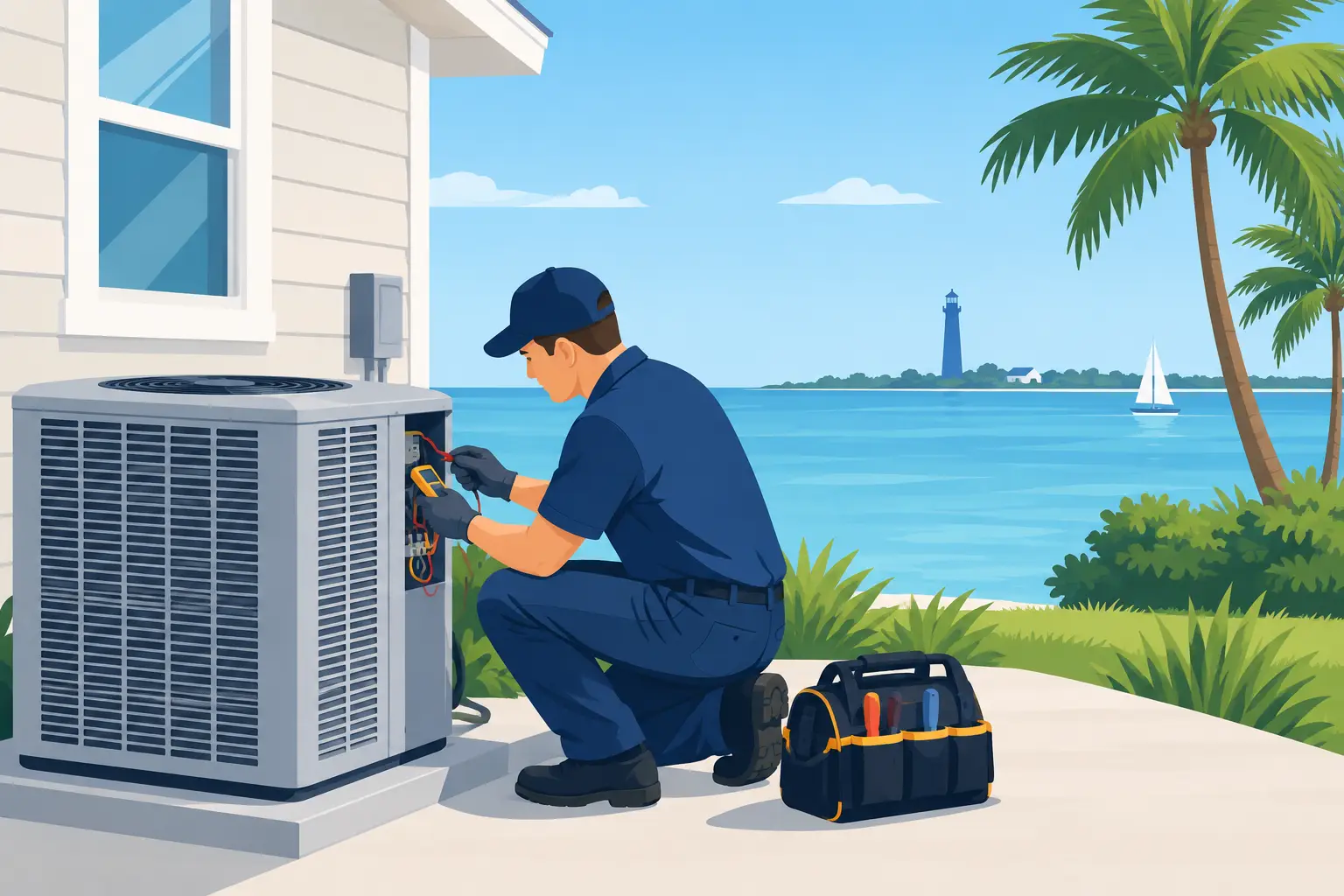
During planned service, a technician should inspect and clean condenser and evaporator coils as needed, verify airflow, inspect fan motors and blades, and assess belts where applicable. Coil cleaning is especially valuable because dirty coils trap heat. When heat cannot leave the system efficiently, the compressor runs harder, power use rises, and component wear accelerates.
The visit should also include checking electrical connections, contactors, capacitors, relays, wiring condition, and control operation. Refrigeration equipment often gives subtle electrical warnings before a complete failure. A weak capacitor, loose connection, or worn contactor can cause hard starting, intermittent operation, or compressor damage.
Drain pans, drain lines, and condensate pumps require attention as well. In a humid climate, clogged drains can quickly lead to water leaks, odors, ceiling damage, and moisture conditions that support mold growth. The right repair depends on the equipment and location. A recurring drain problem may call for cleaning, insulation correction, a pump repair, or a closer look at the defrost cycle.
A qualified technician can also evaluate refrigerant circuit performance. Low refrigerant is not normal operating wear. It can indicate a leak, and simply adding refrigerant without finding the cause is not a lasting repair. Pressure readings, temperature differentials, superheat, subcooling, and system design all help determine whether the issue is refrigerant-related or caused by airflow, controls, or another mechanical concern.
Set a Schedule Based on Your Equipment and Use
There is no single maintenance interval for every property. A lightly used office break-room refrigerator does not need the same level of attention as a restaurant walk-in, floral cooler, grocery display case, or medical-storage unit.
For most commercial refrigeration equipment, professional maintenance at least twice a year is a practical starting point. High-use kitchens, equipment located near grease-producing operations, and units exposed to outdoor debris may need quarterly service. Businesses that cannot tolerate product loss often benefit from a preventive maintenance agreement with scheduled inspections and priority response when an urgent issue occurs.
Timing matters. Schedule service before the hottest part of the year, when equipment will face its greatest load. A second visit before or during the cooler season can address buildup, drainage, defrost performance, and wear that developed during peak operation. If hurricane season or frequent power interruptions are a concern, include refrigeration equipment in your emergency-power planning.
Protect Refrigeration During Power Interruptions
A generator can protect critical refrigeration, but it must be sized and configured correctly. Refrigeration compressors have startup demands that can be significantly higher than their normal running load. A generator that appears large enough on paper may still struggle if several compressors start at once along with air conditioning, lighting, kitchen equipment, or other building loads.
Work with a qualified provider to identify which coolers, freezers, ice machines, and controls are essential during an outage. Load management, startup sequencing, transfer equipment, and fuel capacity all affect the final plan. For commercial properties, protecting refrigeration may be part of a larger continuity strategy that includes lighting, security, ventilation, and critical communications.
During an outage, keep doors closed as much as possible, avoid placing warm product into cold storage, and document temperatures. Do not assume food is safe based only on how cold the room feels after power returns. Follow your food-safety procedures and product requirements.
Know When Maintenance Has Become a Repair or Replacement Decision
Preventive maintenance extends equipment life, but it cannot make every aging system economical to keep. Repeated compressor failures, chronic refrigerant leaks, obsolete parts, unstable temperatures, and steadily increasing energy costs are signs that a repair-versus-replacement review is warranted.
The right choice depends on equipment age, repair history, product risk, downtime exposure, and available budget. A less expensive repair can make sense for a newer unit with an isolated issue. Replacement may be the better long-term investment when major components are failing repeatedly or the equipment no longer matches the needs of the operation.
Air Tight Construction can coordinate licensed refrigeration service with related HVAC, insulation, moisture-control, and backup-power needs. That broader view matters when a refrigeration issue is connected to hot mechanical spaces, poor ventilation, water intrusion, or unreliable emergency power.
Consistent temperature logs, clean airflow paths, working door seals, and timely professional service will not eliminate every breakdown. They will give your equipment its best chance to perform when your business and your inventory depend on it.