

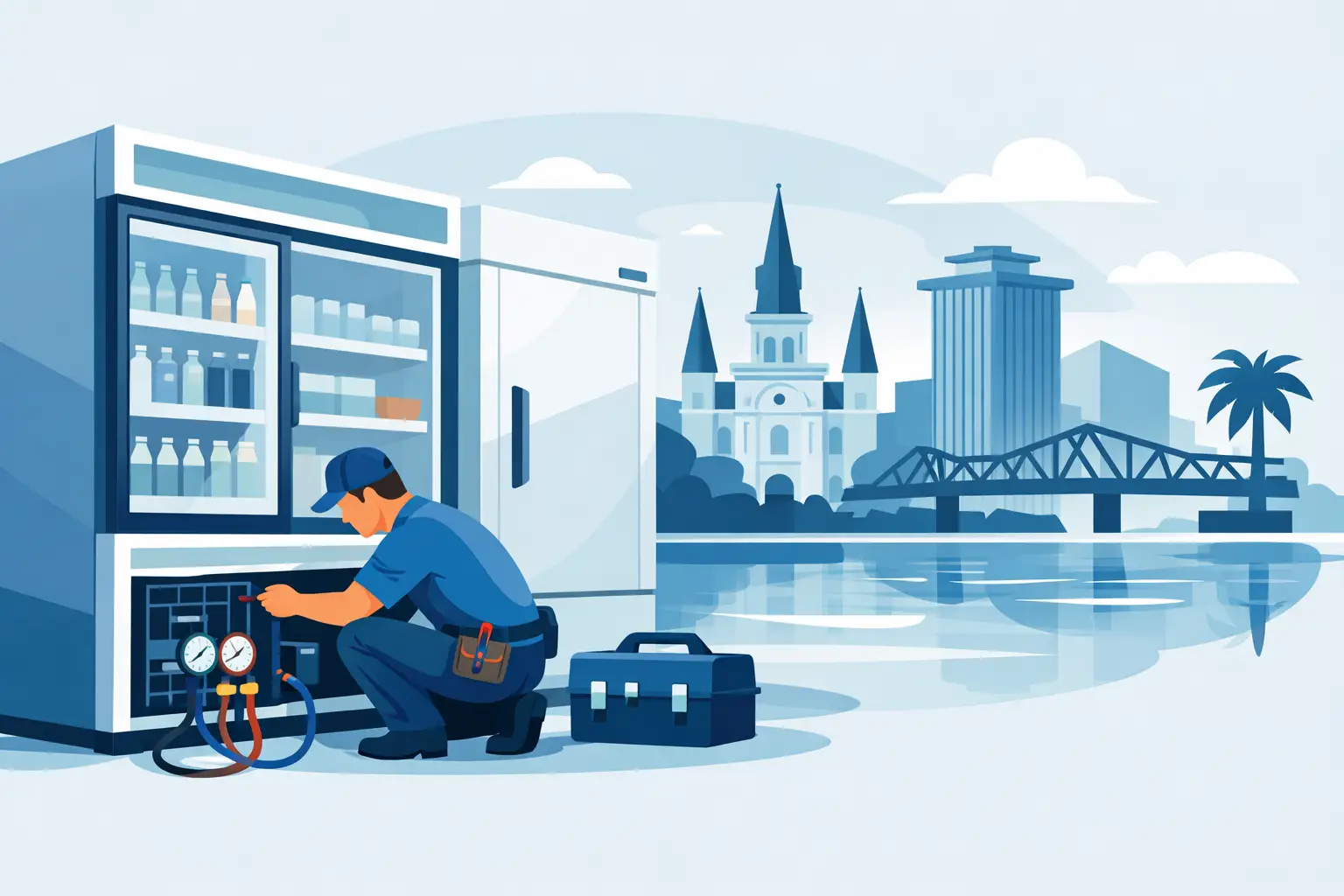
A walk-in cooler that climbs a few degrees overnight can turn into lost inventory, interrupted service, and a difficult health-code conversation by morning. Commercial refrigeration repair New Orleans businesses need is not just about getting cold air back. It is about finding the cause, protecting products, and keeping a hard-working system dependable in Southeast Louisiana heat and humidity.
Restaurants, groceries, bars, seafood markets, convenience stores, florists, and medical facilities all depend on refrigeration that holds a stable temperature under real operating conditions. A unit may look like it is running normally while quietly losing capacity, using too much energy, or allowing excess moisture into the box. Prompt diagnostics help limit those risks before a small repair becomes an equipment failure.
When Commercial Refrigeration Needs Immediate Attention
Some refrigeration issues cannot wait until the next scheduled service visit. If a walk-in cooler or freezer will not maintain its set temperature, move temperature-sensitive inventory according to your food-safety or product-handling plan and arrange service as soon as possible. Repeated temperature alarms, standing water, frost buildup, unusual noises, burnt electrical odors, and a compressor that runs continuously are all signs the equipment needs attention.
An iced-up evaporator coil is another common concern. The issue may be a failed defrost component, a door that is not sealing, restricted airflow, or a refrigerant-related problem. Simply chipping away ice may get the unit running briefly, but it does not correct the condition that caused the ice to form.
A refrigerant leak also requires proper diagnosis and repair. Adding refrigerant without locating the leak can create repeat failures, higher operating costs, and unnecessary product risk. Licensed technicians should evaluate pressures, electrical components, airflow, coil condition, controls, and the refrigeration circuit before recommending a repair.
What Makes Refrigeration Repairs Different in New Orleans
Commercial refrigeration already operates under demanding conditions. New Orleans adds high outdoor temperatures, persistent humidity, heavy rainfall, storm exposure, and long cooling seasons. Condensers work harder when heat cannot move away efficiently, while humid air entering a cooler can create condensation, frost, and extra load on the equipment.
Door habits matter more than many operators realize. A walk-in door left open during deliveries, a torn gasket, or a closer that does not pull the door shut can bring warm, wet air into the box all day. The equipment then has to remove both heat and moisture, which increases run time and can strain compressors, fans, and defrost systems.
The condition of the surrounding building also affects refrigeration performance. Poor insulation, air leaks around penetrations, drainage issues, and inadequate ventilation near condensing equipment can all contribute to higher load and shorter equipment life. That is why an integrated building-performance perspective is useful: the refrigeration unit is essential, but it does not operate separately from the space around it.
A Practical Commercial Refrigeration Repair Process
Effective repair begins with the symptoms your team has observed. A technician will want to know when temperatures started changing, whether the issue is constant or intermittent, what alarms appeared, whether doors have been damaged, and whether recent storms or power interruptions occurred. Those details can shorten the diagnostic process.
The inspection should then move beyond the thermostat setting. Technicians typically check temperature performance, airflow, coils, fans, electrical connections, contactors, capacitors, controls, defrost operation, drain lines, door gaskets, and refrigerant-system readings. The exact approach depends on the equipment type and the failure symptoms.
Once the cause is identified, the right next step depends on the condition and age of the unit. Replacing a failed fan motor, relay, gasket, sensor, or defrost component may be a sensible repair when the rest of the equipment is in good condition. If the compressor has failed on an older, inefficient unit with recurring leaks or major corrosion, replacement may offer better long-term value. The lowest immediate price is not always the lowest operating cost over the next several years.
Clear communication matters during this decision. Property owners and facility managers should understand what failed, what repair is recommended, whether other worn components may need attention, and how the work affects operations. For larger replacements or renovations, planning for equipment access, electrical requirements, drainage, ventilation, permits, and cleanup helps prevent avoidable delays.
Preventive Maintenance Protects Inventory and Equipment
Emergency repairs are sometimes unavoidable, but routine maintenance reduces the chance that a preventable issue catches a business during a busy service period. A maintenance plan should be based on the equipment, its age, product load, operating hours, and environment. A high-volume kitchen near the coast has different needs than a lightly used storage cooler.
Regular service commonly includes cleaning condenser coils, checking evaporator coils and fans, inspecting door seals and hinges, clearing drain lines, testing defrost operation, verifying control settings, checking electrical components, and looking for signs of refrigerant loss. Coil cleaning is especially important. Dirt, grease, and debris restrict heat transfer, forcing the system to run longer and raising energy use.
Staff can support this work between visits. Keep condenser areas clear of stored items, report water or frost early, avoid blocking evaporator airflow, and make sure doors close fully after deliveries. Temperature logs and alarm records are also valuable. They help show whether a problem is sudden, gradual, or connected to a particular time of day or operating event.
Power Interruptions and Refrigeration Planning
Power outages are a serious refrigeration concern in storm-prone Southeast Louisiana. Even when power returns quickly, an outage can reveal weak controls, restart problems, or equipment that was already near its capacity limit. For businesses that store perishable food, pharmaceuticals, flowers, or other temperature-sensitive materials, backup-power planning deserves careful consideration.
A generator solution must be sized for the actual load and the way equipment starts. Compressors can draw more power at startup than during normal operation, and not every system should come back online at the same moment. A qualified assessment can help determine which refrigeration equipment, lighting, ventilation, and critical building systems should be supported during an outage.
Backup power is only one part of the plan. Businesses should also have clear procedures for monitoring temperatures, limiting door openings, documenting product conditions, and deciding when products must be moved or discarded. Good preparation protects inventory and gives staff a practical response when conditions are changing quickly.
Choosing a Commercial Refrigeration Service Provider
The best provider is not necessarily the one that promises the fastest guess. Look for licensed HVAC and refrigeration service, a methodical diagnostic process, and recommendations that account for the age, condition, and operating demands of your equipment. Commercial clients also benefit from a provider that understands how refrigeration relates to electrical capacity, ventilation, insulation, moisture control, construction access, and emergency power.
Air Tight Construction serves New Orleans-area commercial properties with refrigeration support and broader building-system services, helping owners coordinate related needs without managing a separate vendor for every issue. That coordination can be particularly helpful when a refrigeration problem is tied to an equipment replacement, a damaged roof penetration, a moisture condition, or a backup-generator project.
Keep Small Problems From Becoming Product Loss
Commercial refrigeration equipment rarely fails without giving some warning. A longer run cycle, a door that no longer seals, light frost on a coil, or water beneath a unit may seem minor, but each is worth addressing before inventory and operations are affected. Fast attention, accurate diagnosis, and scheduled maintenance give your refrigeration system its best chance to perform when your business needs it most.

2 thoughts on “Commercial Refrigeration Repair New Orleans”