

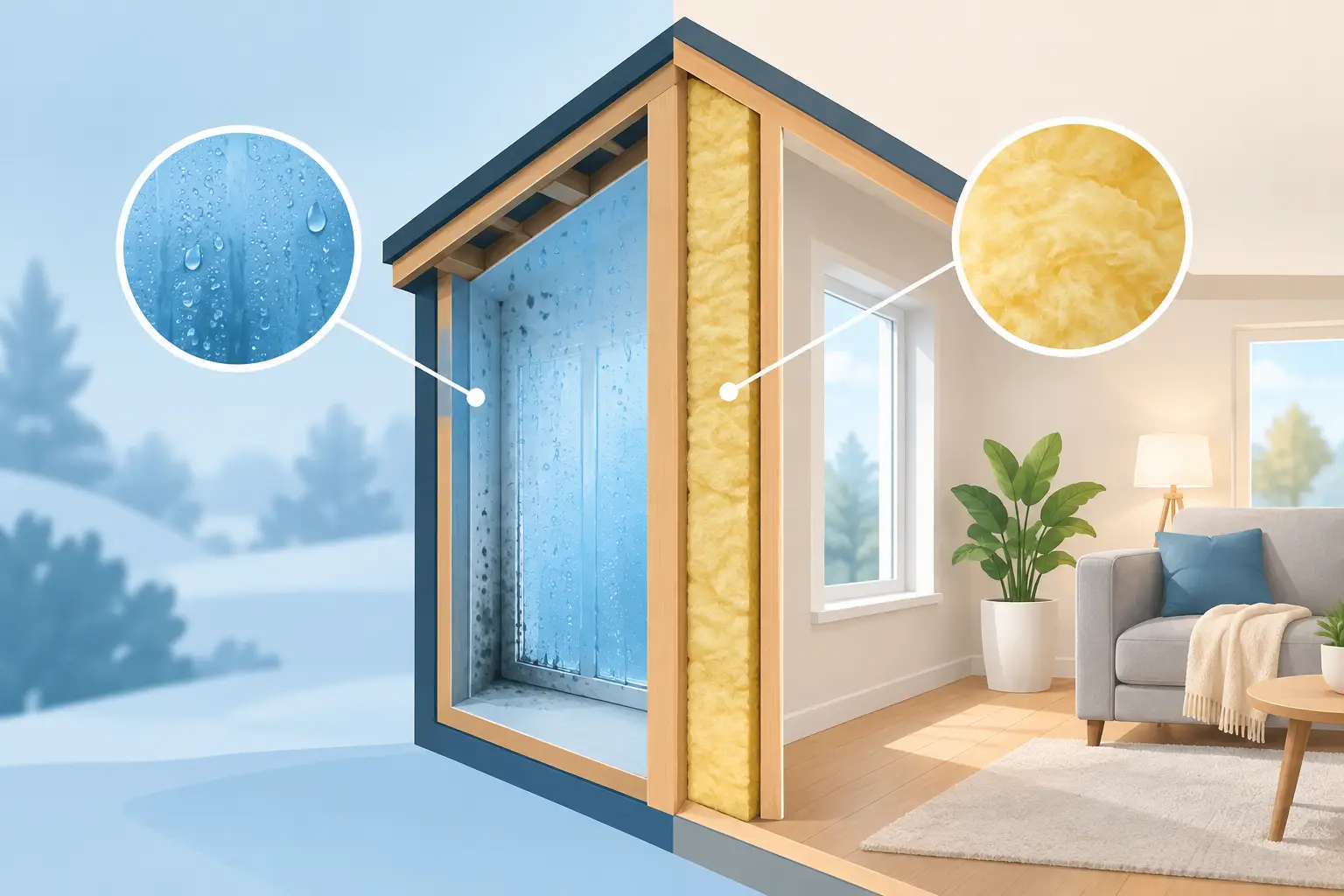
A sweating supply vent, damp attic decking, or water beading on a bedroom window is not just a nuisance in Southeast Louisiana. It can signal a moisture condition that raises cooling costs and creates the right environment for mold. So, can insulation stop condensation? Often, yes – but insulation works best as part of a complete moisture-control plan that also addresses air leaks, indoor humidity, ventilation, and HVAC performance.
Condensation happens when warm, moisture-heavy air reaches a surface that is cold enough to bring that moisture out of the air as liquid water. In a Gulf Coast property, that may mean humid outdoor air entering an air-conditioned attic, crawl space, wall cavity, or duct system. The goal is not simply to add more material. It is to control where humid air travels and keep surfaces above the dew point when possible.
Can Insulation Stop Condensation?
Insulation can reduce or prevent condensation by keeping interior surfaces warmer and separating cold, conditioned spaces from warm, humid areas. For example, properly insulated ductwork is less likely to sweat because the insulation slows the heat and moisture exchange between the cold duct surface and hot attic air. Insulation in walls and ceilings can also reduce cold spots where indoor moisture may collect.
However, insulation alone does not stop humid air from moving through gaps. Air can bypass fiberglass batts through openings around plumbing penetrations, recessed lights, attic hatches, wall penetrations, and poorly sealed duct connections. If humid air reaches a cool surface behind the insulation, condensation can still occur out of sight.
This is why the right question is usually: Is the property insulated, air sealed, and controlling humidity? Each part supports the others. A well-insulated building with uncontrolled humidity can still have moisture problems. A tightly sealed building with an oversized or poorly operating AC system may also struggle because it does not remove enough moisture from the air.
Why Condensation Is Common Around New Orleans Properties
New Orleans-area homes and commercial buildings operate in a climate where outdoor humidity stays high for long stretches of the year. Air conditioning creates cooler surfaces inside the building envelope, including ducts, registers, windows, pipes, and occasionally wall or ceiling surfaces. When humid air contacts those surfaces, water can form.
The source is not always obvious. A damp ceiling near a vent could be a roof leak, a plumbing issue, a disconnected duct, inadequate attic insulation, or condensation caused by air leakage. Treating every moisture stain as the same problem can lead to an expensive repair that misses the actual cause.
Properties with vented attics, older duct systems, additions, converted garages, crawl spaces, and aging windows deserve particular attention. These areas often have breaks in the thermal or air barrier. Storm damage and roof repairs can also change how an attic ventilates or how water moves through the structure.
Insulation Helps by Changing Surface Temperatures
Condensation is driven by temperature and humidity. Insulation slows heat transfer, which helps keep a surface from becoming cold enough for water vapor to condense. In an air-conditioned building, that can mean insulating ductwork so the metal does not sweat, or improving attic insulation so ceiling surfaces remain more stable.
Spray foam insulation can be especially useful when the project requires both insulation and air sealing. Applied correctly, it conforms around irregular framing and penetrations that are difficult to address with loose-fill or batt insulation alone. It may be used in attics, wall cavities, rim areas, and other locations where uncontrolled air movement is part of the problem.
That does not make spray foam the automatic answer for every property. The appropriate insulation type, thickness, and installation method depend on the assembly, roof design, existing ventilation, budget, and whether the area contains HVAC equipment. A building-performance assessment should come before a one-size-fits-all recommendation.
Air Sealing Is the Missing Piece in Many Repairs
Insulation slows heat flow. Air sealing limits the movement of humid air. Both are needed because air carries a great deal more moisture into a building cavity than vapor diffusion through intact building materials.
Common leakage points include gaps around attic access panels, open chases for wiring and plumbing, unsealed top plates, gaps around duct boots, disconnected return ducts, and openings where exterior walls meet the roofline. These leaks may be small individually, but together they can pull humid attic or outdoor air into conditioned areas.
A contractor can identify the likely pathways by inspecting insulation coverage, duct condition, attic penetrations, moisture patterns, and HVAC operation. In some cases, a targeted repair such as sealing a duct connection and insulating a short run is enough. In others, the issue reflects a broader problem with the attic, building envelope, or cooling system.
When Insulation Will Not Solve the Problem Alone
Adding attic insulation will not correct a leaking roof. Nor will wall insulation resolve a refrigerant issue, a clogged condensate drain, or an AC system that is short-cycling and failing to dehumidify the home. Condensation should always be separated from liquid-water intrusion before work begins.
Indoor humidity matters as much as surface temperature. Most air-conditioned properties should maintain indoor relative humidity at a level that supports comfort and reduces moisture risk, commonly around 40% to 60% depending on conditions and the building. If humidity remains consistently high, investigate AC sizing, runtime, airflow, drainage, return-air leaks, exhaust ventilation, and moisture sources such as unvented dryers or plumbing leaks.
Ventilation also requires balance. Bathroom and kitchen exhaust fans should remove moisture at its source, but excessive or poorly planned ventilation can bring more humid outdoor air into the building. A sealed attic should not be treated the same way as a traditionally vented attic. Changes to one part of the building envelope can affect the entire system.
Signs You Need a Professional Moisture Evaluation
Condensation is more likely to be an active building-performance issue when you see repeating symptoms, especially during hot weather. Watch for:
- Ductwork or supply registers that regularly sweat
- Water stains or damp drywall near ceilings, exterior walls, or vents
- Musty odors, visible mold growth, or recurring mildew
- Insulation that is wet, compressed, or discolored
- Windows that fog or collect water even when there is no rain
- An AC system that runs poorly, drains inconsistently, or leaves rooms humid
These signs do not all point to insulation. They point to the need for a coordinated diagnosis. Moisture conditions can damage framing, corrode equipment, reduce insulation performance, and affect indoor air quality if they continue unchecked.
A Practical Plan to Control Condensation
Start by finding the water source. Inspect for roof, plumbing, window, and foundation leaks, then evaluate whether the moisture appears only when the AC runs or when outdoor humidity rises. The timing often helps distinguish condensation from rain intrusion.
Next, verify HVAC performance. Cold ducts, weak airflow, dirty coils, damaged insulation, disconnected returns, and drainage problems can all contribute to sweating and high indoor humidity. A properly maintained system should cool effectively while removing moisture from the air.
Then address air leakage and insulation together. Seal accessible gaps before adding insulation so humid air cannot bypass the new thermal layer. Repair and insulate ducts in unconditioned spaces, seal attic penetrations, and make sure insulation coverage is continuous rather than thin or interrupted around obstacles.
Finally, correct affected materials rather than covering them up. Wet insulation may need replacement. Mold-contaminated materials may require professional remediation based on the extent and location of the growth. The objective is to return conditions to normal moisture levels, not to hide a stain and hope the problem does not return.
Protect the Building, Not Just the Surface
Condensation is a building-system issue. The visible water is often the last part of the story, not the first. For New Orleans-area property owners, the most reliable fix comes from looking at insulation, air sealing, ductwork, humidity, and water intrusion as connected conditions.
If moisture keeps returning, a focused evaluation can prevent a small comfort issue from becoming damaged drywall, mold growth, or a costly equipment repair. Air Tight Construction can help identify the cause and coordinate practical repairs that support a drier, more efficient property.