

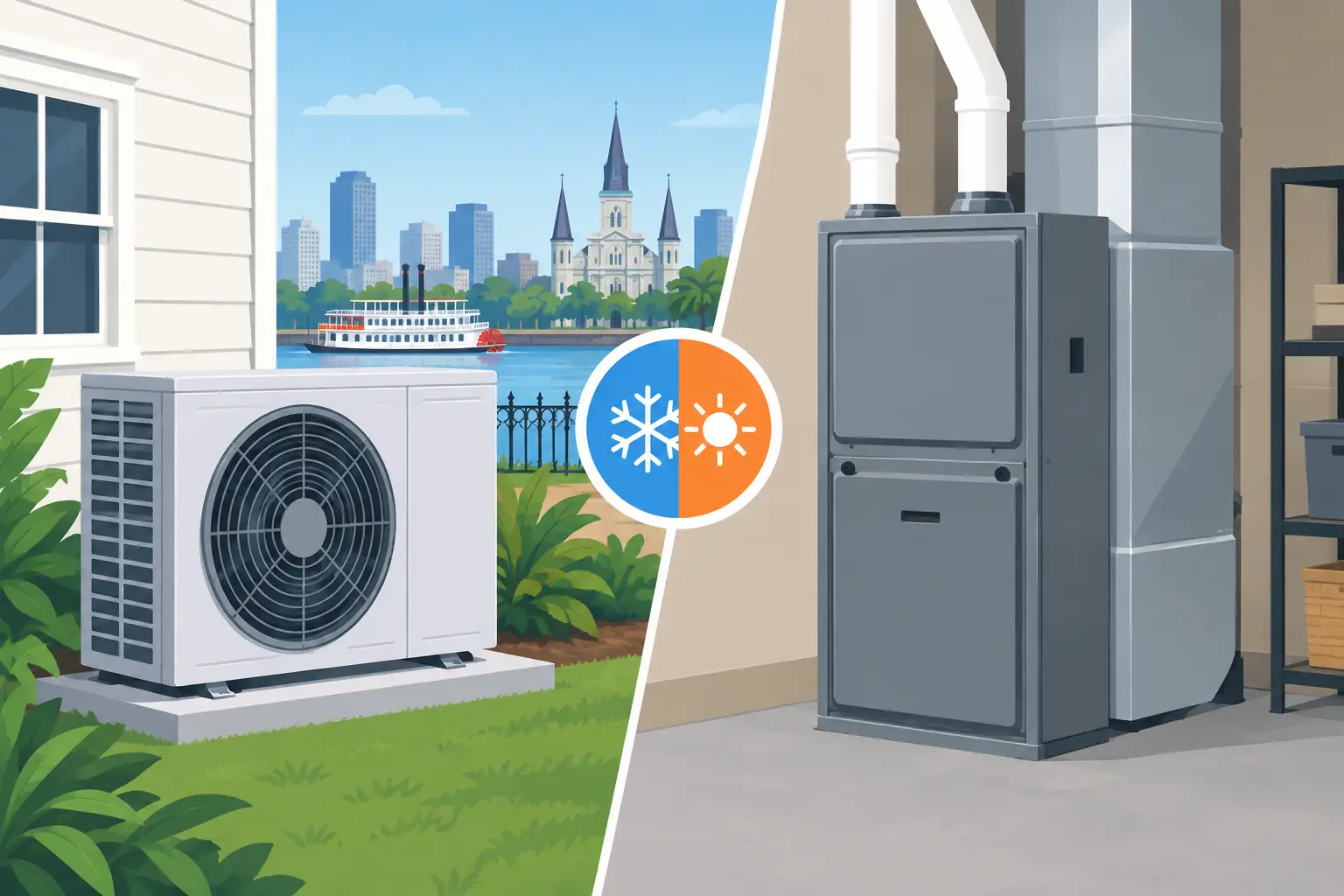
A heating system in Southeast Louisiana rarely has to battle weeks of deep freeze. It does, however, have to work alongside an air conditioner that runs hard for much of the year, manage high indoor humidity, and hold up in a climate where a cold snap can arrive quickly. That is why the heat pump versus furnace decision is different here than it is in northern states. The best choice is usually the one that supports year-round comfort, not simply the one with the highest heating output.
For many New Orleans-area homes, a heat pump is the practical front-runner because it provides both cooling and heating in one system. A furnace can still be the right answer in certain properties, particularly where natural gas is available, an existing system is in good condition, or homeowners prefer the feel of fast, high-temperature heat. The details of the home matter as much as the equipment.
How a Heat Pump and Furnace Create Heat
A furnace creates heat by burning fuel, usually natural gas, or by using electricity in an electric furnace. The blower then moves warmed air through the ductwork. Gas furnaces can produce very warm supply air quickly, which is why they remain common in colder regions and in homes already connected to a gas line.
A heat pump does not generate heat in the same way. It transfers heat from outdoor air to the inside of the home. Even when outdoor temperatures feel chilly, the air contains heat energy that a properly designed heat pump can collect and move indoors. In cooling mode, the process reverses, moving heat out of the house much like a conventional central air conditioner.
That dual-purpose design is significant in Louisiana. Instead of maintaining a separate air conditioner and furnace, a heat pump handles both primary comfort needs with one outdoor unit and one indoor air handler or compatible ducted system.
Heat Pump Versus Furnace in Southeast Louisiana
Local weather should carry real weight in this decision. New Orleans and the surrounding area experience long cooling seasons, high humidity, heavy rain, hurricane-related power interruptions, and only occasional periods of freezing temperatures. A system designed around long, severe winter heating demand may not deliver the best value here.
Why heat pumps often fit the local climate
Heat pumps are highly efficient during the mild winter conditions typical of Southeast Louisiana. Rather than making heat through combustion, they move existing heat, often using less electricity than electric resistance heating. Since the same equipment also provides air conditioning, replacement can be straightforward for a home with an aging split AC system.
A modern variable-speed heat pump can also run at lower, steadier capacity for longer periods. That can reduce temperature swings and, when properly sized and installed, support better humidity removal during cooling season. Comfort in New Orleans is not just about thermostat temperature. A house that feels clammy at 74 degrees is not truly comfortable.
Heat pumps are also an all-electric option. For homeowners reducing dependence on natural gas or planning around future electrical upgrades, that may be appealing. It can be especially practical when paired with envelope improvements such as air sealing, duct repairs, and spray foam insulation.
When a furnace can still make sense
A furnace is not automatically the wrong choice in Louisiana. If a property already has dependable natural gas service and a relatively new central air conditioner, replacing only a failed furnace may be the more economical short-term decision. A gas furnace also provides strong heating capacity during the rare but real hard freeze.
Some homeowners prefer the quicker burst of heat a gas furnace can provide. Commercial properties with specific ventilation, occupancy, or operating requirements may also need a more customized heating approach. In those cases, equipment selection should follow a load calculation and a review of how the building is actually used.
A furnace also has a different relationship with backup power. Gas furnaces still need electricity for controls and the blower, but their fuel source does not rely on the electric grid. A heat pump requires considerably more generator capacity to operate during an outage, particularly at startup. For a property where heating during extended outages is a priority, generator sizing should be discussed before selecting equipment.
Cost Is More Than the Installation Price
Equipment cost matters, but it is only one part of the picture. A heat pump replacement may cost more or less than a furnace replacement depending on whether the project involves replacing a complete AC and heating system, changing electrical components, upgrading ductwork, or adding controls. Incentives, utility rates, and available rebates can also change the math.
Operating cost depends on local electric and gas prices, the system’s efficiency rating, thermostat habits, insulation levels, duct leakage, and the condition of the home. A high-efficiency unit cannot make up for major air leaks in an attic, unsealed ducts, or a poorly insulated building envelope. It will simply work harder to condition air that escapes.
For this reason, the lowest bid is not always the lowest-cost solution. An oversized system can cycle on and off too frequently, leaving humidity behind and increasing wear. An undersized system may struggle during peak summer heat. A correct design starts with the property itself, not a guess based only on the square footage of the house.
Humidity, Ductwork, and Insulation Affect the Result
In this region, HVAC equipment should be evaluated as part of the building’s overall performance. Moisture, attic heat, and air infiltration can change how any heating and cooling system performs.
A home with leaky return ducts can pull hot, humid attic air into the system. That makes cooling less efficient and can contribute to moisture concerns. Poorly sealed supply ducts lose conditioned air before it reaches living spaces. In some homes, duct repairs and air sealing make a noticeable difference before any major equipment change is needed.
Insulation also matters year-round. During summer, it reduces heat gain from the roof and attic. During winter, it slows heat loss. Spray foam insulation can help control air movement and improve the envelope when it is appropriate for the structure and installed as part of a complete moisture-aware plan. The goal is not to make a building overly tight without considering ventilation. The goal is controlled airflow, dependable comfort, and fewer opportunities for humid outdoor air to enter unnoticed.
If a home has recurring musty odors, visible mold, condensation around vents, or rooms that never seem to cool evenly, those issues should be addressed before assuming the equipment alone is the problem. HVAC, insulation, drainage, and moisture conditions are connected.
Questions to Ask Before Choosing a System
The right recommendation should come after a property-specific review. Before choosing between a heat pump and furnace, consider these practical questions:
- Is the existing air conditioner also near the end of its service life?
- Does the home have natural gas service, and is it reliable and affordable?
- Are ducts properly sized, sealed, and insulated where needed?
- Does the house have hot rooms, humidity problems, or high utility bills?
- Will a whole-house generator need to support the HVAC system during outages?
- Are you planning insulation, renovation, roofing, or electrical upgrades soon?
These answers help determine whether a straightforward equipment replacement is enough or whether the project should include improvements that protect comfort and reduce wasted energy. For example, replacing both an aging AC and furnace with a properly sized heat pump may be sensible. In another home, retaining gas heat while correcting duct leakage and replacing the cooling system may deliver the better value.
Maintenance Keeps Either System Dependable
Whether you choose a heat pump or furnace, preventative maintenance is not optional in a humid, high-use climate. Heat pumps should be checked before the cooling season and again before heating demand begins. Technicians should inspect refrigerant performance, electrical connections, drainage, blower operation, coils, filters, and thermostat controls.
Furnaces require their own safety checks, including burner operation, venting, heat exchanger condition, ignition components, and carbon monoxide safeguards. Filters should be changed on schedule, condensate drains kept clear, and unusual noises or short cycling addressed early.
Air Tight Construction approaches HVAC work with the full property in mind. A licensed evaluation can identify whether a comfort complaint comes from failing equipment, duct leakage, insufficient insulation, moisture intrusion, or more than one issue at once.
The most useful next step is a clear on-site assessment of your equipment, ductwork, insulation, and comfort concerns. That gives you a decision based on how your New Orleans-area property actually performs, not a one-size-fits-all answer.