

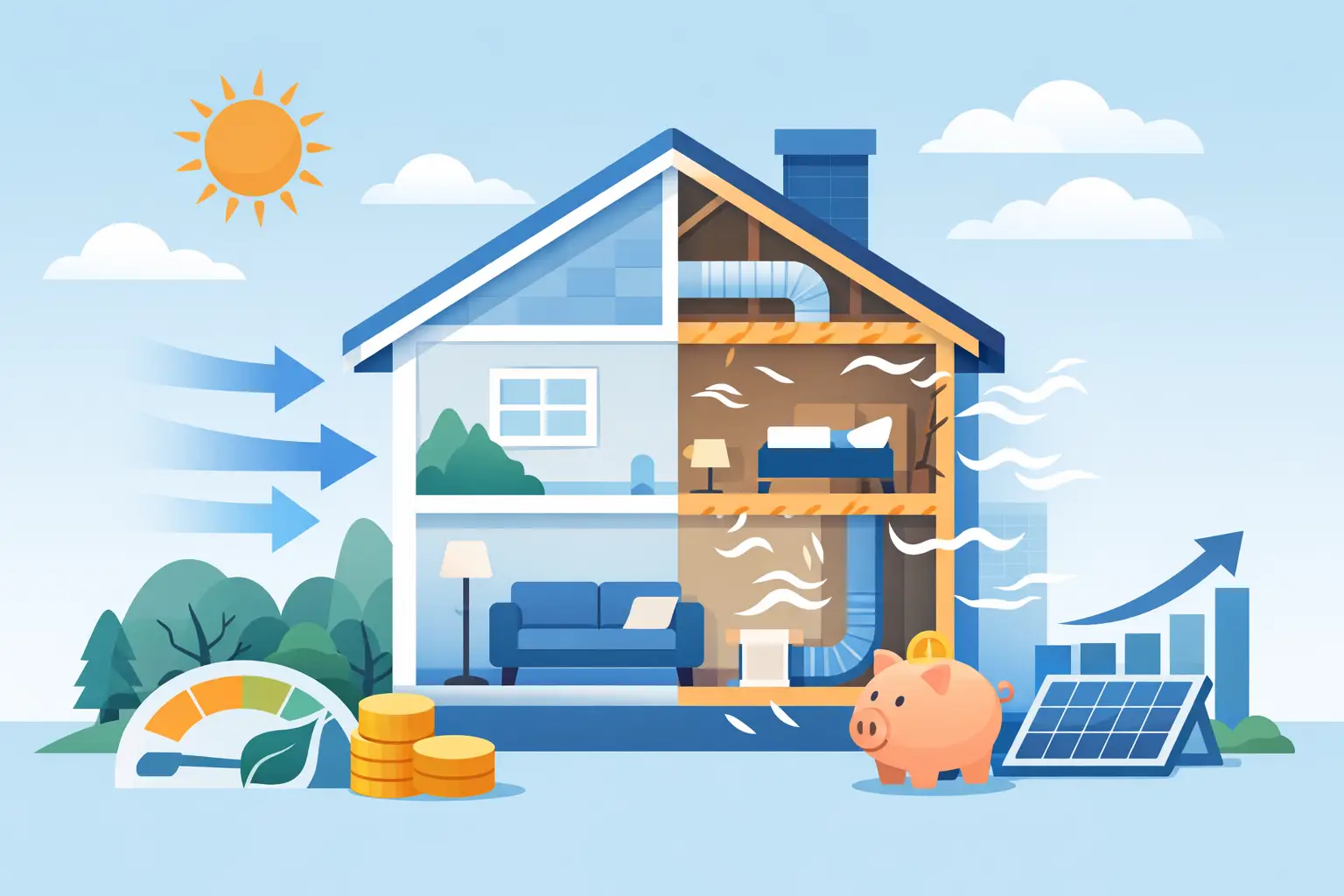
A home can have a new air conditioner, fresh insulation, and a reasonable thermostat setting yet still feel sticky, uneven, and expensive to cool. The missing piece is often air sealing for lower energy bills. Small gaps around the attic, ductwork, plumbing, doors, and exterior penetrations can let conditioned air escape while pulling hot, humid Louisiana air inside.
For New Orleans-area properties, this is more than a comfort issue. Air leakage raises cooling demand, makes humidity harder to control, and places extra strain on HVAC equipment that already works hard through a long Gulf Coast cooling season. Sealing the building envelope helps the entire property perform as a connected system.
Why Air Leaks Cost More in Southeast Louisiana
Air moves through openings wherever pressure differences exist. On a hot afternoon, your air conditioner cools indoor air while outside heat and humidity press against the structure. If there are unsealed gaps in the ceiling plane, wall penetrations, recessed fixtures, attic access, or around duct boots, cooled air can leave and humid outdoor air can enter.
That exchange creates several costs at once. Your HVAC system runs longer to replace lost cooling. Indoor humidity may remain high even when the thermostat reads the right temperature. Rooms near attics, garages, or exterior walls can become harder to keep comfortable. Over time, excess run time can contribute to wear on components and make maintenance issues more noticeable.
In a commercial setting, air leakage can also affect employee comfort, tenant complaints, refrigeration-adjacent spaces, and operating costs. A gap that seems minor in one office or storage area can become meaningful across a larger building with extensive rooflines, mechanical penetrations, and loading entrances.
Where Air Sealing for Lower Energy Bills Matters Most
Most air leaks are out of sight. Property owners often start by replacing windows or upgrading HVAC equipment, but the larger opportunity may be in the connections between building materials and systems.
Attics are a common source of energy loss. Openings around electrical wiring, plumbing stacks, bath fans, chimney chases, attic hatches, and light fixtures can connect conditioned living space directly to a hot attic. In older homes, gaps around framing transitions and top plates are also common. Sealing these areas before adding or upgrading insulation is usually the right order of work. Insulation slows heat transfer, while air sealing stops uncontrolled airflow. They solve related but different problems.
Ductwork deserves the same attention. Leaky supply ducts can send cooled air into an attic or crawlspace instead of the rooms you pay to cool. Return-side duct leaks are especially problematic because they can pull hot, humid, and dusty air into the system. Proper duct sealing, insulation, and connection checks support more consistent airflow and better HVAC performance.
Other frequent trouble spots include exterior door frames, windows, baseboards, plumbing and wiring penetrations, wall-mounted equipment, garage connections, and openings around outdoor lines entering the structure. The right solution depends on the location and material. Caulk, weatherstripping, mastic, foam sealant, gaskets, and carefully installed spray foam all have a place when used correctly.
Spray Foam Is Not a One-Size-Fits-All Answer
Spray foam insulation can be highly effective because it provides insulation and air-sealing benefits in one installed system. It is often useful in attics, roof decks, wall cavities, crawlspaces, and irregular areas where conventional insulation leaves gaps. In the right application, it can reduce air infiltration, improve comfort, and help manage moisture movement.
But more foam is not automatically better. A building needs a deliberate moisture and ventilation strategy, especially in a hot, humid climate. Sealing an attic or crawlspace changes how that space behaves. HVAC equipment location, roof condition, combustion appliances, existing moisture damage, and ventilation needs should be evaluated before selecting materials.
For example, a vented attic with air sealing at the ceiling plane may be the practical choice for one home. Another home may benefit from a properly designed unvented attic with spray foam applied at the roof deck. The correct approach depends on the property, budget, construction details, and the condition of the mechanical systems. Good building performance work addresses those factors together instead of treating insulation as an isolated upgrade.
Signs Your Property May Need Air Sealing
High utility bills alone do not prove that a property is leaky. HVAC efficiency, thermostat habits, roof heat gain, insulation levels, equipment sizing, and electricity rates all affect the final bill. Still, several patterns are worth investigating.
You may have an air-sealing issue if certain rooms stay warmer than others, the air conditioner runs for long stretches, indoor humidity feels persistently high, or you notice dust and attic-like odors around registers. Drafts near doors and windows, visible gaps around plumbing or wiring, and insulation that looks disturbed or dirty can also point to uncontrolled air movement.
In commercial properties, telltale signs may include temperature complaints in perimeter offices, excessive condensation near openings, uncomfortable areas near loading zones, or unusually high cooling costs after changes to occupancy or space use. An evaluation should look beyond the thermostat and identify where the building envelope and HVAC system are working against each other.
Start With Assessment, Then Prioritize the Work
The best air-sealing plan is based on the property rather than a generic checklist. A qualified team can inspect accessible attic areas, penetrations, duct connections, insulation condition, doors, windows, and moisture-prone zones. For larger or more complex projects, diagnostic testing may help pinpoint leakage pathways and pressure problems.
Priorities should focus first on meaningful leaks that affect the conditioned envelope, moisture control, and HVAC performance. An attic hatch with a poor seal, an open plumbing chase, or disconnected ductwork usually deserves more attention than cosmetic gaps that do not connect to the outdoors or attic.
After major leakage paths are addressed, insulation improvements can be more effective. HVAC maintenance or replacement decisions can then be made with a clearer picture of the building load. This sequence matters. Installing oversized equipment to compensate for air leaks can lead to short cycling and weaker humidity control, while replacing insulation without sealing bypasses can leave much of the problem in place.
Do Not Seal Without Considering Ventilation and Safety
Air sealing should make a building controlled, not stale. Tighter homes may need planned ventilation so occupants receive appropriate fresh-air exchange without relying on random leaks. Kitchens, bathrooms, laundry areas, and certain commercial uses also need proper exhaust strategies.
Combustion safety is another consideration. Properties with gas appliances, fireplaces, or other fuel-burning equipment should be evaluated carefully before major envelope changes. Exhausting appliances need adequate combustion air and correct venting. Moisture issues, active roof leaks, mold growth, or wet building materials should also be addressed at the source rather than covered over with insulation or foam.
This is why integrated service matters. Air Tight Construction looks at insulation, air movement, HVAC operation, and moisture conditions as connected parts of the property. That approach helps avoid improvements in one area creating a problem in another.
What Results Should You Expect?
Air sealing can lower heating and cooling waste, but savings vary. A property with obvious attic bypasses and duct leakage may see a noticeable improvement in run time and comfort. A newer, already-tight building may benefit more from targeted weatherstripping, duct corrections, and ventilation adjustments than from a major insulation project.
The most dependable results are often felt before they are measured on a bill: fewer hot spots, less humid indoor air, quieter HVAC operation, and rooms that hold their temperature longer. Utility savings follow when the system no longer has to continuously replace cooled air that is escaping through gaps.
If your home or commercial property feels difficult to cool, start with the building envelope before assuming the air conditioner is the only problem. A careful inspection can reveal practical improvements that protect comfort, control moisture, and give every dollar spent on cooling a better chance to stay inside the building.

5 thoughts on “Air Sealing for Lower Energy Bills That Last”