
A thermostat set to 72 degrees does not guarantee a 72-degree home, especially after a humid New Orleans afternoon. When your system runs constantly, rooms feel sticky, or warm air comes through the vents, residential HVAC troubleshooting should begin with a few safe observations – not a guess at the equipment’s condition.
In Southeast Louisiana, an air-conditioning problem is often more than an air-conditioning problem. High outdoor humidity, clogged drainage, attic heat, leaky ductwork, weak insulation, and storm-related power issues can all affect comfort and utility costs. The goal is to identify what you can safely check, prevent further damage, and know when licensed HVAC service is the right next step.
Start With the Symptom, Not the Assumed Repair
Pay attention to what the system is actually doing. A unit that will not turn on requires a different response than one that runs but cannot cool, freezes up, or leaves the house damp. Note when the problem started, whether it affects every room, and whether it follows heavy rain, a power outage, or unusually high temperatures.
If the system is blowing warm air, check that the thermostat is set to Cool and that the set temperature is below the current indoor temperature. Confirm the fan setting is on Auto rather than On. With the fan set to On, the blower may keep moving air between cooling cycles, making the air from the vents feel warmer even when the cooling equipment is operating normally.
Also check the electrical panel for a tripped HVAC breaker. If you reset a breaker and it trips again, leave it off and schedule service. Repeated tripping can point to an electrical fault, a failing motor, or a compressor issue. It is not a problem to solve by repeatedly resetting the breaker.
Safe Residential HVAC Troubleshooting Checks
Homeowners can handle a few basic checks without opening electrical panels, removing sealed equipment components, or touching refrigerant lines. These steps can resolve simple airflow problems and provide useful information to your technician.
Check the air filter and return vents
A dirty filter restricts airflow. That can make rooms less comfortable, increase operating costs, and in severe cases contribute to an evaporator coil freezing. Pull the filter out and hold it toward a light source. If light barely passes through, replace it with the correct size and type for the system.
Do not install the most restrictive filter available just because it sounds better. Some systems cannot maintain proper airflow with very high-efficiency filters. The right filter depends on the equipment, duct design, household needs, and how often it is changed. A properly sized filter changed regularly is usually more helpful than an overly dense filter left in place too long.
Make sure return grilles are not blocked by furniture, rugs, curtains, or storage. Supply vents should be open and unobstructed as well. Closing multiple vents to force more cooling into one room can increase static pressure and create new airflow problems elsewhere.
Look at the outdoor unit from a distance
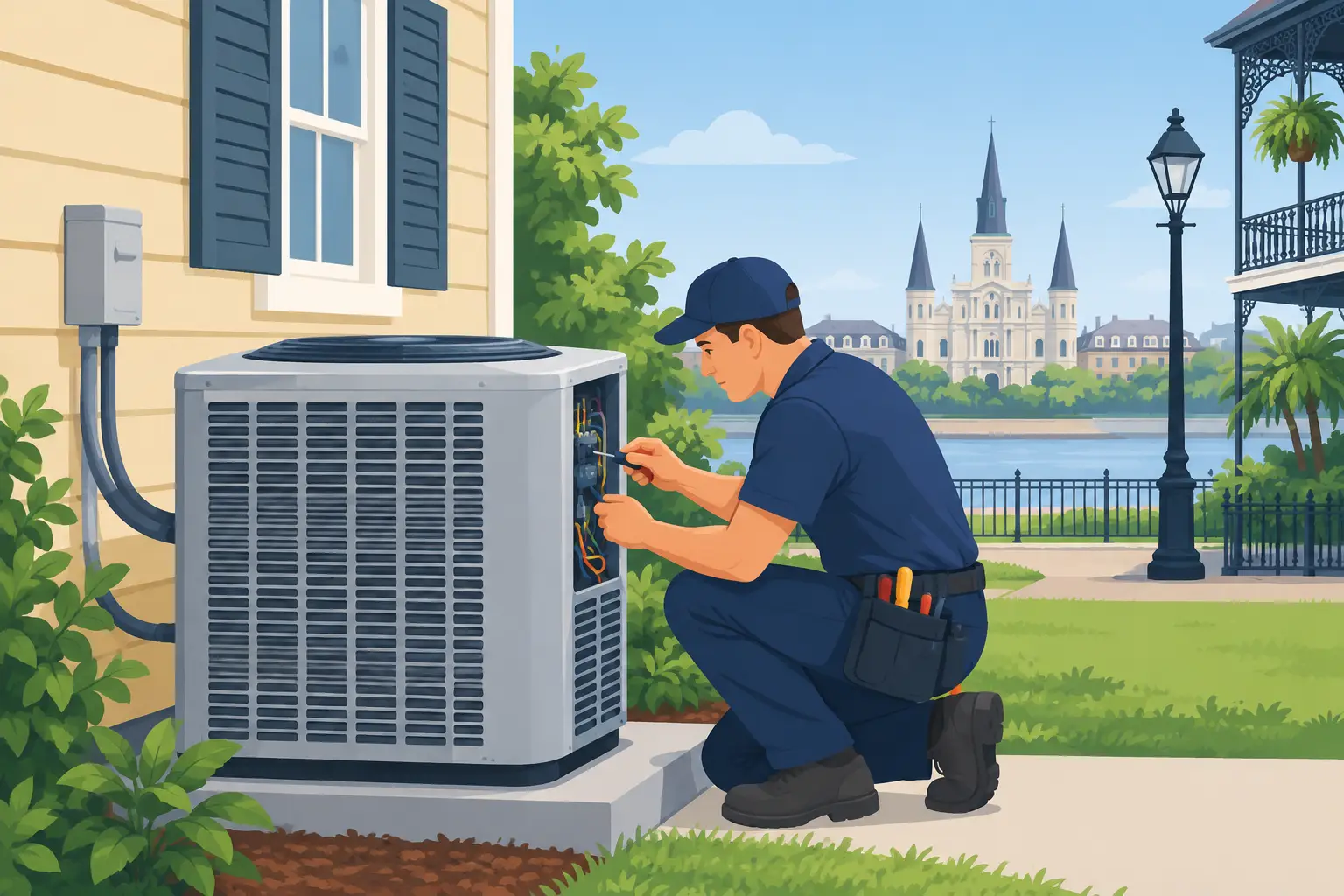
The outdoor condenser needs room to release heat. Clear leaves, grass clippings, branches, and stored items from around the unit. Keep landscaping trimmed back so air can move freely through the coil. Do not pressure wash the coil, straighten fins with sharp objects, or remove panels.
Listen for unusual sounds. A steady fan and normal equipment hum are expected. Loud rattling, grinding, screeching, buzzing, or repeated clicking are reasons to turn the system off and call for service. Continuing to run equipment with a failing fan motor or electrical component can turn a repairable issue into a larger replacement expense.
Inspect the condensate drain area
Cooling systems remove moisture from indoor air, and in New Orleans that moisture load can be substantial. The water should drain safely away through the condensate line. If you see water around the indoor unit, a wet ceiling near an attic air handler, a full drain pan, or staining around the equipment closet, turn the system off if doing so is safe and request service promptly.
A clogged condensate drain can trigger a float switch that shuts the system down. It can also lead to water damage, elevated indoor humidity, and mold-friendly conditions. Pouring random chemicals into the drain line is not always the answer. The line, trap, drain pan, and overall drainage setup need to be evaluated correctly.
When the AC Runs but the Home Still Feels Bad
A system can be mechanically operational and still fail to deliver comfortable conditions. This is where residential HVAC troubleshooting needs to account for the whole home.
If the air feels cool but clammy, the issue may involve oversized equipment, incorrect blower settings, short cycling, duct leakage, outdoor-air infiltration, or drainage and moisture conditions. Lowering the thermostat several degrees may make the equipment run longer, but it does not address the cause and can increase energy use.
If one room stays hot, start by considering its exposure. West-facing rooms, rooms under poorly insulated attic areas, additions, and spaces with large windows often have higher heat gain. A closed or damaged duct, disconnected flex duct in an attic, inadequate return air, or unbalanced airflow may also be involved. Portable fans can improve circulation, but they will not fix a duct or insulation problem.
In many Gulf Coast homes, attic conditions matter as much as the thermostat. Air leaks and insufficient insulation allow heat and humid outdoor air to enter the building envelope. That puts more pressure on the HVAC system and can make upstairs rooms especially difficult to cool. Depending on the home, duct sealing, insulation improvements, spray foam, or targeted construction repairs may be part of the lasting solution.
Signs You Should Stop Troubleshooting and Call a Professional
Some symptoms call for prompt licensed HVAC service. Turn the system off and arrange an inspection if you notice burning odors, smoke, sparking, loud mechanical noise, refrigerant-like hissing, repeated breaker trips, or water leaking near electrical components.
Ice on the refrigerant line or indoor coil is another reason to stop running the system. A frozen coil can result from low airflow, a dirty coil, blower trouble, a refrigerant issue, or a combination of factors. Turning the equipment off allows it to thaw, but repeatedly restarting it before diagnosing the cause can create compressor damage.
Call for service when the outdoor unit runs but the indoor blower does not, when the blower operates but no cooling occurs, or when the system starts and stops every few minutes. Short cycling is hard on equipment and may be related to thermostat placement, drainage safety switches, electrical components, sizing, or refrigerant performance. A technician should test rather than assume.
Never attempt to add refrigerant yourself. Refrigerant is not a routine consumable. If a system is low, it may have a leak that needs to be found and repaired. The system must be evaluated with the correct tools, measurements, and safety procedures.
Prevent Problems Before Peak Summer Heat
Preventive maintenance is usually less disruptive than an emergency repair during the first extended heat wave. A professional visit can include cleaning and inspecting coils, checking electrical connections, testing capacitors and motors, confirming drainage, assessing refrigerant performance, and reviewing temperature split and airflow. The exact scope depends on the equipment type, age, condition, and maintenance history.
Homeowners can help between service visits by changing filters on schedule, keeping the outdoor area clear, watching for drainage issues, and addressing roof, attic, duct, or insulation problems before they become comfort complaints. After a storm or power interruption, check for visible water intrusion and verify that the system restarts normally. If power quality or outages are a recurring concern, a properly planned backup-power solution can protect essential comfort systems, though generator sizing must account for HVAC startup demands.
Air Tight Construction approaches comfort as a connected property-performance issue. When the equipment, drainage, insulation, moisture control, and building envelope are considered together, repairs and upgrades can be chosen for the condition of the property rather than as isolated fixes.
A good next step is simple: write down the symptom, when it occurs, what you have already checked, and any sounds, water, or breaker activity you observed. That information helps a qualified technician get to the real cause faster – and helps protect your home when Louisiana heat and humidity leave little room for HVAC downtime.

https://addlinks.pro/upp45