

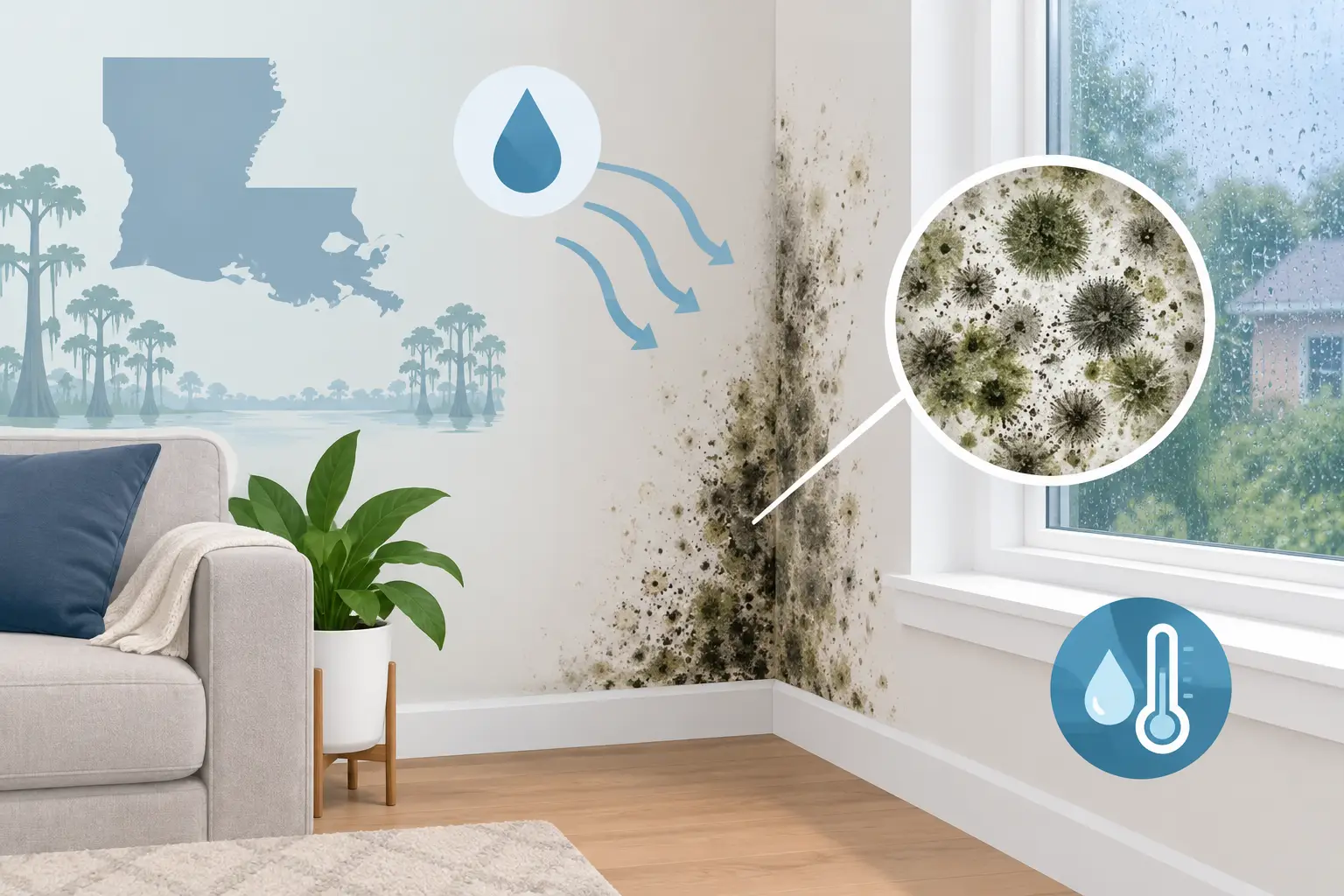
A closet that smells musty after a rainstorm, a dark spot forming near an AC vent, or paint beginning to bubble along an exterior wall can all point to the same issue: moisture is collecting where it should not. In Southeast Louisiana, understanding what causes indoor mold growth is part of protecting your property, not just keeping it looking clean.
Mold spores are naturally present indoors and outdoors. The goal is not to promise complete mold removal from every environment. The practical goal is to control the moisture that allows spores to settle, multiply, and affect building materials and indoor air quality. In a hot, humid, storm-prone climate like the New Orleans area, that means looking beyond the visible spot and finding the building condition behind it.
What Causes Indoor Mold Growth?
Indoor mold needs three basic things: moisture, a food source, and enough time. Drywall paper, wood framing, carpet backing, dust, cardboard, fabrics, and insulation can all provide a surface for growth. The real trigger is usually excess moisture that stays in place for more than a day or two.
A brief spill that is dried promptly may not create a mold problem. A slow plumbing leak inside a wall, an air conditioner that is not removing humidity, or rainwater entering around damaged flashing can keep materials damp for weeks. That is when a small moisture issue can become a larger remediation and repair project.
Humidity makes this especially challenging in Gulf Coast properties. Outdoor air carries substantial moisture for much of the year. When that humid air enters through gaps in the building envelope, or when cool indoor surfaces cause moisture to condense, mold can gain a foothold even without an obvious leak.
Water Intrusion From Roofs, Walls, and Plumbing
Leaks are one of the most direct causes of mold. Some are easy to spot, such as water dripping from a ceiling after a storm. Others are hidden behind cabinets, under flooring, in wall cavities, or around HVAC equipment.
Roof damage, worn sealant, cracked siding, failing window flashing, and gaps around exterior penetrations can allow rainwater into a building. After heavy weather, moisture may travel along framing or collect in insulation before becoming visible indoors. By the time a ceiling stain appears, the wet area can extend well beyond the stain itself.
Plumbing failures also deserve quick attention. A leaking supply line, a loose drain connection, a failing water heater, or a small toilet seal leak can repeatedly wet nearby materials. In commercial properties, overlooked leaks above ceiling tiles or near break rooms, restrooms, and mechanical rooms can affect a larger area before anyone sees the evidence.
The trade-off is simple: cosmetic repairs can make a wall look better, but they will not stop mold if moisture is still entering behind it. The source must be corrected before damaged materials are repaired or replaced.
Condensation Can Be a Hidden Water Source
Not all indoor moisture comes from rain or plumbing. Condensation occurs when warm, humid air touches a cold surface and releases water. In Louisiana, this often happens around poorly insulated ducts, uninsulated refrigerant lines, cold water pipes, metal vents, and windows.
A supply duct sweating in an attic or ceiling cavity can wet insulation and drywall without producing a dramatic leak. Likewise, a cold room with inadequate insulation or air sealing may develop damp areas where humid outdoor air meets a cool interior surface. These issues are building-performance problems as much as they are mold problems.
High Humidity and Poor Airflow
High indoor humidity can feed mold in bathrooms, kitchens, laundry rooms, closets, crawlspaces, and rooms with limited air movement. An indoor humidity level that remains elevated makes ordinary materials slower to dry after daily activities such as showering, cooking, or opening exterior doors.
Poor airflow compounds the issue. A packed closet against an exterior wall, furniture pressed tightly against a damp wall, or a closed room with little conditioned air can develop localized moisture conditions even when the rest of the building seems comfortable. Mold often begins in these overlooked areas because the air is stagnant and surfaces stay damp longer.
Bathrooms need properly vented exhaust fans that discharge outside, not into an attic or another enclosed space. Kitchens, laundry areas, and commercial spaces with moisture-producing equipment may need ventilation strategies that match how the space is actually used. Simply opening a window is not always an effective answer during a humid New Orleans summer.
HVAC Problems That Let Moisture Build Up
Your air conditioning system does more than cool the air. When it operates correctly and is properly sized, it also removes moisture. That humidity-control role is critical for preventing indoor mold growth.
An AC system that is oversized may cool a space too quickly and shut off before it has removed enough moisture. A system with poor airflow, a clogged condensate drain, dirty coils, incorrect refrigerant charge, or duct leakage may also struggle to manage humidity. The result can be a building that feels cool but clammy – a condition that can encourage mold.
Condensate drain issues are particularly common. Air conditioners produce water as they pull humidity from the air. If the drain line clogs or the drain pan overflows, that water can damage ceilings, walls, or equipment areas. Regular HVAC maintenance helps catch these concerns before they become a moisture event.
Ductwork also matters. Leaky return ducts can pull hot, humid attic or crawlspace air into the system. Poorly insulated ducts can sweat. Both conditions increase energy use while adding moisture where it does not belong.
Air Leaks and Inadequate Insulation
A property’s walls, attic, roofline, windows, doors, and penetrations work together as its building envelope. When this envelope has gaps, humid outdoor air can move into conditioned spaces and cavities. When insulation is incomplete or poorly installed, surfaces may become cold enough for condensation to form.
This is why mold prevention is not always solved by adding a portable dehumidifier or repainting a wall. Those steps may help in limited situations, but they cannot correct an air leak around a pipe penetration, wet attic insulation, or a roof assembly that is allowing humid air and rainwater to enter.
Spray foam insulation and proper air sealing can reduce uncontrolled air movement when they are selected and installed for the right application. The details matter. A building needs a moisture-management approach that considers ventilation, HVAC performance, drainage, insulation, and the condition of the exterior shell. Sealing one area without addressing the full system can shift moisture elsewhere.
When Mold Follows Storm Damage or Power Loss
Storms create a fast path to indoor mold growth. Roof damage, wind-driven rain, flooding, and prolonged power outages can leave drywall, flooring, furnishings, and insulation wet. Without air conditioning, indoor humidity rises quickly, and materials that might otherwise dry can remain damp.
After a storm, the first priority is safe drying and documentation of the damage. Remove standing water where possible, improve airflow only when conditions allow, and address active roof or wall leaks. Wet porous materials may need to be removed if they cannot be dried promptly and thoroughly. A generator can help maintain critical power during an outage, but it should be sized and installed safely for the property and the equipment it will support.
Signs It Is Time to Investigate
Visible mold is a clear reason to act, but it is not the only sign. Property owners should also pay attention to recurring musty odors, peeling paint, warped baseboards, persistent window condensation, damp insulation, or rooms that feel humid despite running AC.
These conditions do not always confirm mold on their own. They do confirm that moisture needs attention. Waiting for a stain to spread can turn a targeted repair into a more involved restoration project.
A proper response begins with locating and stopping the moisture source. Depending on the situation, that may involve roof repair, plumbing work, HVAC service, drainage improvements, insulation and air-sealing corrections, or controlled drying. Mold remediation then focuses on containing affected areas, removing or cleaning impacted materials as appropriate, and returning mold levels to normal natural levels after the moisture issue is resolved.
Air Tight Construction approaches these concerns as connected property systems, because a mold issue near a vent may involve HVAC drainage, duct insulation, roof leakage, or indoor humidity – not just the surface that needs cleaning.
If a space keeps smelling damp or showing the same stain after repairs, treat it as useful information. The building is telling you that moisture is still moving through it, and finding that path early is one of the best ways to protect your comfort, your indoor environment, and the structure itself.