

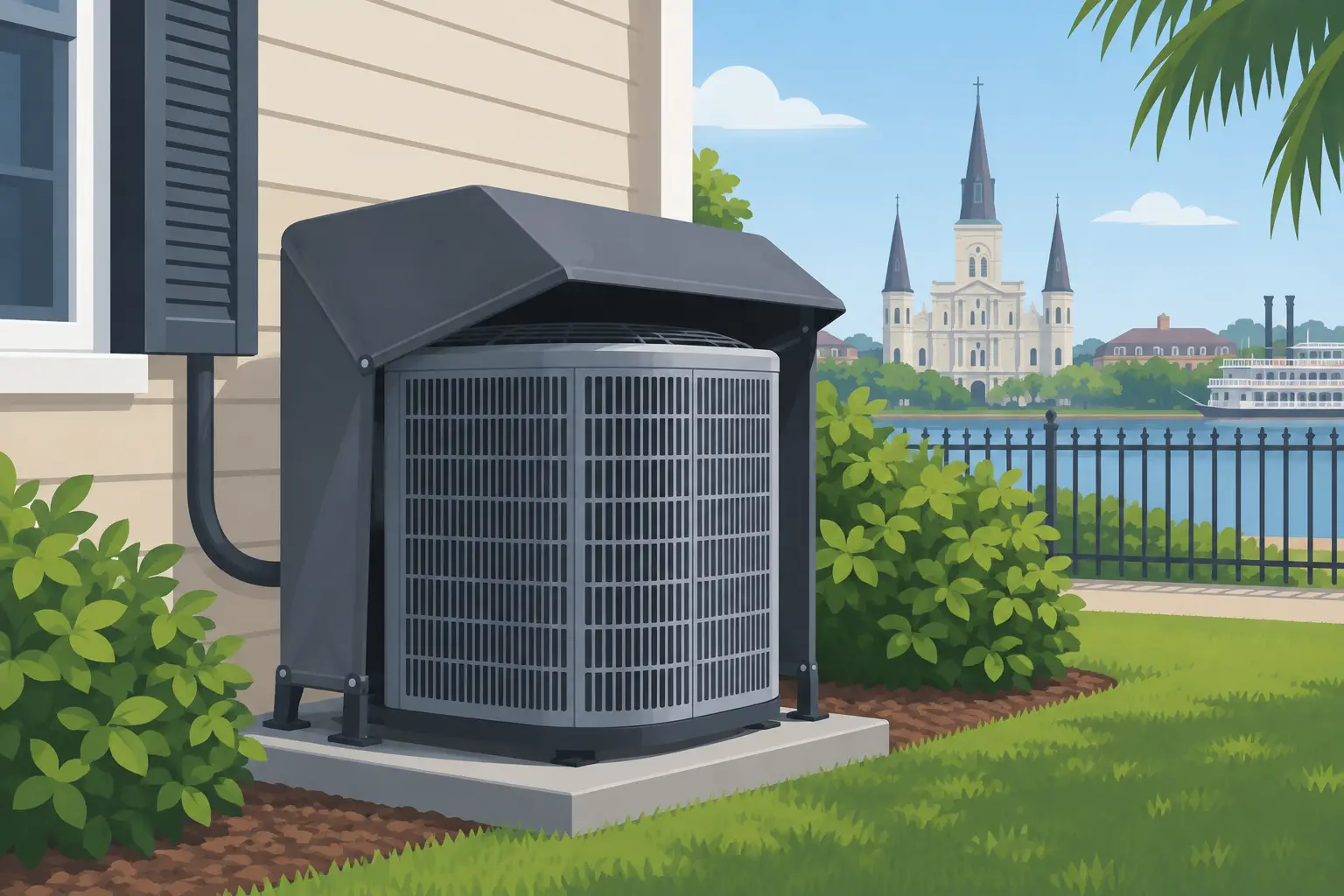
Your outdoor HVAC unit works through some of the harshest conditions on a Southeast Louisiana property: extreme heat, heavy rain, wind-driven debris, standing water, humidity, and corrosive salt air in some areas. Knowing how to protect outdoor HVAC equipment helps prevent avoidable breakdowns, extends equipment life, and keeps cooling costs more predictable when your system is working hardest.
The outdoor condenser or heat pump is built for weather, but it is not built to be ignored. Good protection is less about enclosing the unit and more about preserving airflow, managing water, preventing physical damage, and catching small issues before a summer heat wave or hurricane exposes them.
How to protect outdoor HVAC equipment from heat and debris
An outdoor unit needs open space to move heat out of your home or building. Shrubs, fencing, stored materials, patio furniture, and leaves can all block the coil and make the system run longer than necessary. That extra runtime increases electric use and puts additional strain on the compressor.
Keep vegetation trimmed back at least 2 to 3 feet from the sides of the unit. Leave the top completely open, including the space above it. Avoid stacking bags of mulch, tools, pool equipment, or trash bins nearby, even temporarily. A condenser tucked behind landscaping may look better, but dense greenery can trap heat and moisture around the equipment.
If appearance or security is a concern, an open-style screen can help, provided it allows plenty of airflow and is installed far enough away from the unit. Solid walls and tightly spaced decorative panels can create the same restriction as overgrown shrubs. For commercial equipment, protective bollards or guardrails may be appropriate where vehicles, delivery carts, or lawn equipment can strike the unit. Protection should never interfere with service access.
Leaves, pine needles, grass clippings, and cottonwood-like debris can collect on the coil fins. Do not use a high-pressure washer on the coil. It can flatten the delicate fins and reduce airflow. A technician can safely clean the coil during routine maintenance and check for bent fins, corrosion, loose wiring, and refrigerant-related concerns.
Keep water away from the condenser
Flooding and poor drainage are serious threats to outdoor HVAC systems in the New Orleans area. Even a few inches of water can damage electrical components, contaminate the cabinet, and leave sediment inside areas that are difficult to inspect. Saltwater exposure is especially damaging because it accelerates corrosion long after the visible water is gone.
Start with the equipment pad. The unit should sit level on a stable pad that is high enough to limit exposure to routine runoff and ponding water. If the pad has settled, cracked, or shifted, the refrigerant lines and electrical connections can be stressed. A unit that is visibly tilted deserves attention before the issue becomes more expensive.
Look at the larger drainage picture as well. Gutters should discharge away from the condenser, not directly beside it. Downspouts, roof valleys, driveway runoff, and low landscaping can all direct water toward the unit. Correcting drainage may involve extending a downspout, regrading a small area, improving a swale, or coordinating HVAC work with exterior construction.
Elevation has trade-offs. Raising equipment can reduce flood risk, but the platform must be structurally sound, accessible for service, and properly designed for wind exposure and electrical requirements. For properties with repeated flooding, a licensed HVAC professional and qualified contractor can assess the safest approach rather than relying on a temporary block or improvised stand.
Prepare outdoor HVAC for hurricane season
Before a tropical storm or hurricane, remove loose items around the unit. Patio furniture, planters, grills, branches, and construction materials can become airborne and damage the coil, fan grille, or refrigerant lines. Inspect the area for limbs that could fall onto the equipment and have concerning trees addressed before storm season when possible.
Your unit should be securely attached to its pad or approved support system. In high-wind areas, proper anchoring matters. The correct hardware depends on the type of equipment, pad, building conditions, and applicable local requirements. A loose condenser can shift during severe weather, damaging the lines that connect it to the home or building.
Do not wrap the unit in a tarp before a storm. A tight tarp can trap moisture, encourage corrosion, and create a wind-catching surface. It also does little against major flying debris. Manufacturer-designed protective covers may be useful for short periods when the system is off, but they should never be used while the equipment is operating.
If a storm causes extended outages, turn the thermostat off before shutting off power at the disconnect or breaker if conditions allow. This helps prevent the system from trying to restart unexpectedly when power returns. Once utility power is restored, wait a few minutes before restarting the system. If the unit was submerged, struck by debris, shifted from its pad, or makes unusual sounds, leave it off and schedule an inspection.
Backup generators can keep selected HVAC equipment running during an outage, but the generator must be sized correctly for the equipment and the rest of the electrical load. Starting demand, especially on older systems, can be much higher than normal operating demand. A properly planned generator installation protects comfort without overloading the generator or electrical system.
Address corrosion before it becomes a failure
Humidity, rain, fertilizer, lawn chemicals, and salt air can all shorten the life of outdoor equipment. Corrosion often begins at coil fins, screws, electrical connections, and the cabinet base. It may look cosmetic at first, but advanced corrosion can lead to coil leaks, failed wiring connections, and weakened panels.
Keep sprinkler spray off the condenser. Repeatedly soaking the unit, especially with mineral-heavy water, leaves deposits on the coil and speeds corrosion. When applying fertilizer or weed treatment, keep products away from the equipment and rinse any accidental overspray from nearby hard surfaces. Never spray chemicals directly on the unit.
Some properties benefit from corrosion-resistant equipment options or approved protective treatments, particularly near the coast or in locations with frequent chemical exposure. These measures have a cost, and they do not replace maintenance, but they can make sense when the equipment faces unusually aggressive conditions.
Do not forget the lines, wiring, and surrounding systems
The condenser is only one part of the outdoor HVAC setup. The insulated refrigerant line set should be intact and protected from weather, animals, and lawn equipment. Damaged insulation can reduce efficiency and cause condensation issues. Exposed wiring, a cracked disconnect box, or a loose conduit fitting should be repaired promptly.
Rodents and insects can also create problems. Keep mulch, stacked lumber, and thick ground cover away from the unit to reduce hiding places. If you see chewed insulation, nesting material, or insect activity inside the electrical compartment, have the system checked. Do not open electrical panels unless you are qualified to do so.
For businesses, the same principles apply at a larger scale. Rooftop units need clear access, clean drains, secure panels, and regular inspections after severe weather. Ground-level refrigeration and HVAC equipment may need vehicle barriers, elevated supports, or added protection from grease, chemicals, and foot traffic depending on the site.
Schedule maintenance before peak cooling season
The most practical protection is preventative maintenance. A professional visit can identify weak capacitors, worn contactors, dirty coils, drain issues, loose electrical connections, low airflow, and early corrosion before they create a no-cool call in July or August.
Homeowners can help between service visits by keeping the area clear, changing indoor filters on schedule, checking that the unit is not surrounded by standing water, and paying attention to changes in sound or performance. Longer cooling cycles, warm air from vents, ice on refrigerant lines, unusual buzzing, or a sudden increase in energy use are reasons to call for service rather than waiting for a complete failure.
Air Tight Construction approaches HVAC care as part of the whole property. Outdoor equipment performs better when drainage, insulation, air sealing, electrical service, and storm preparation are working together. A well-maintained condenser cannot fully compensate for a building with major air leaks, moisture problems, or inadequate electrical planning.
A few minutes spent clearing debris, checking drainage, and planning seasonal service can protect far more than an outdoor unit. It helps protect the comfort, energy efficiency, and day-to-day reliability your property depends on when Louisiana weather is at its toughest.