

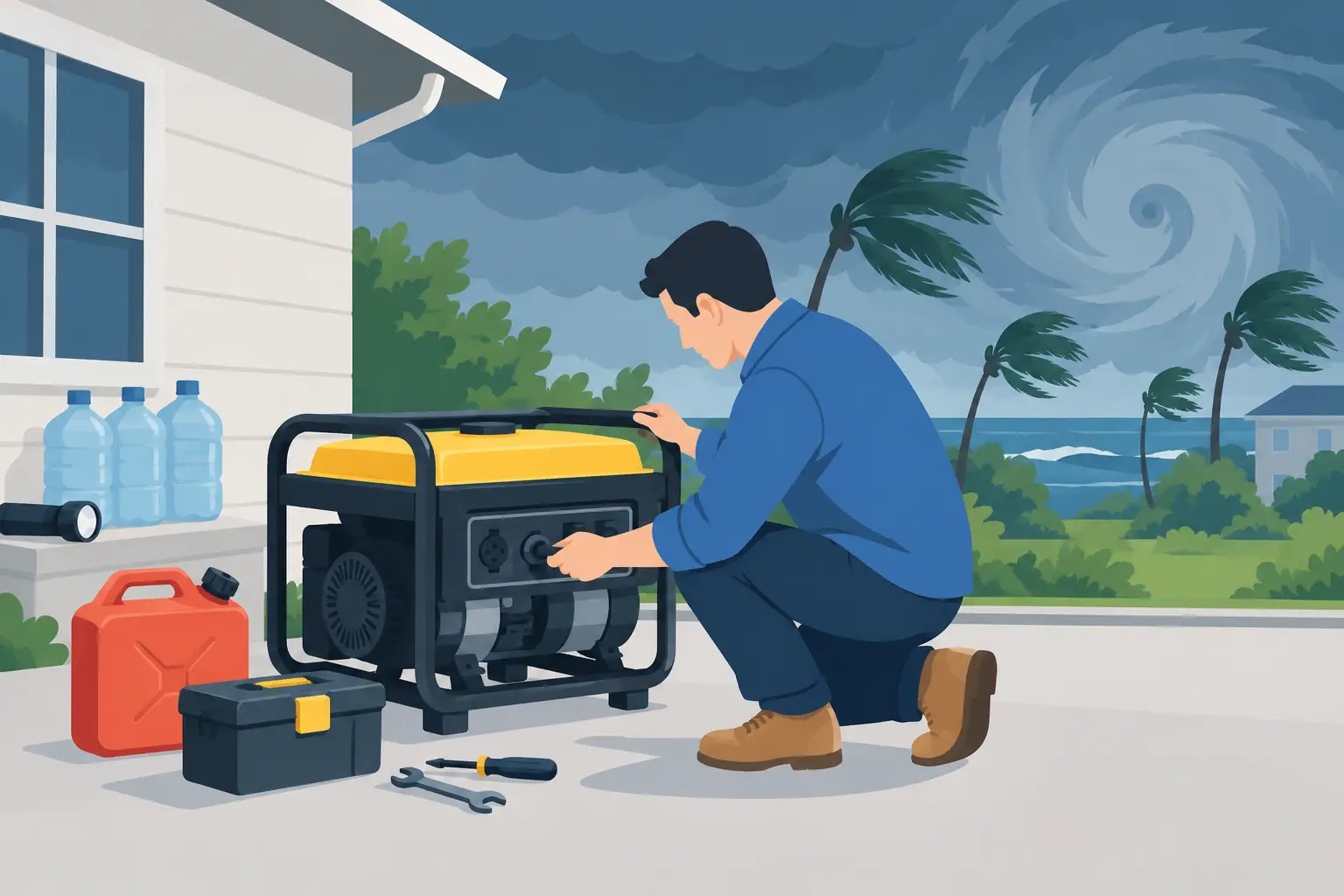
A generator that will not start after the wind picks up is not backup power. It is extra equipment taking up space when your home or business needs refrigeration, lighting, communications, and possibly air conditioning. To prepare a generator before a hurricane, start early enough to find and correct problems – not when fuel stations are crowded and service schedules are full.
For Southeast Louisiana properties, generator readiness is part of storm preparation, not a separate task. Heat, humidity, long outages, flooding, and debris all affect how safely your equipment can operate. The right plan depends on whether you have a portable generator, an automatic standby unit, or a larger commercial system, but the fundamentals are the same: test it, fuel it, protect it, and know what it will power.
Prepare Your Generator Before a Hurricane
Begin preparation several days before a storm is expected, even if the forecast may change. Waiting until a hurricane warning can leave you with stale fuel, a dead battery, low oil, or a transfer switch problem that cannot be resolved quickly.
First, identify your generator type and its intended loads. A portable unit may support a refrigerator, freezer, a few lights, chargers, a small window AC unit, and select outlets. A properly sized whole-house generator can power much more, but it still has limits. Central air conditioning, electric water heaters, ovens, pool equipment, and multiple large appliances can create a heavy demand if the system was not designed to carry them together.
Find the unit’s manual and keep it where you can access it without internet service. Confirm the model number, fuel type, running wattage, starting wattage, recommended oil, and maintenance intervals. If the manual is missing, record this information now rather than trying to search for it during an outage.
Test the Generator Under Load
A quick start is useful, but it is not a complete test. Run the generator according to the manufacturer’s instructions and let it reach normal operating temperature. For a portable unit, connect a few planned loads using properly rated cords. For a standby generator, perform the recommended exercise cycle and, if appropriate, test its transfer switch operation with a qualified technician.
Listen for unusual rattling, surging, hard starting, warning lights, or exhaust changes. Check for fuel, oil, or coolant leaks. If the generator runs but does not produce power correctly, do not assume it will improve during an outage. Electrical problems, battery issues, and fuel-delivery problems usually become more difficult to solve after a storm.
Standby generators often run an automatic weekly exercise cycle, but that does not replace regular inspection. Verify that the enclosure is clear, the battery terminals are clean and secure, and the controller shows no active alerts. Commercial owners should also confirm that maintenance logs, remote monitoring, and emergency contacts are current.
Check Fuel, Oil, and Battery Condition
Fuel is often the weak point in hurricane preparation. Gasoline degrades over time, especially in hot, humid conditions. If you use a portable gasoline generator, inspect stored fuel and follow the generator manufacturer’s guidance on fuel stabilizer and storage duration. Use approved fuel containers, label them with the date, and store them away from living areas, ignition sources, and flood-prone locations.
Do not store gasoline inside a home, garage, shed attached to the home, or near a water heater. Even an empty portable generator should be allowed to cool completely before refueling. Spilled fuel on hot engine components can ignite.
For natural gas standby generators, confirm the fuel supply is active and that accessible gas lines, valves, and connections show no signs of damage. Propane-powered systems need adequate tank capacity for the loads and outage duration you expect. Diesel commercial systems require attention to fuel quality, water contamination, filters, and tank levels. A diesel generator with neglected fuel may start poorly or fail under sustained demand.
Check engine oil before the storm, and keep the correct oil and filters on hand if your generator may run for several days. Review the manual for oil-change intervals under continuous operation. For electric-start portable units and standby systems, inspect the battery. A battery can appear fine during normal weather and still fail after months of heat exposure.
Set Up Safe Generator Placement
Carbon monoxide is a serious generator hazard. Portable generators must operate outdoors only, far from doors, windows, vents, crawlspace openings, and other paths where exhaust can enter the building. Never run one in a garage, carport, covered porch, crawlspace, or partially open shed. Opening the garage door does not make indoor generator use safe.
Place the unit on stable, dry, level ground where it is protected from standing water but has open airflow around it. A generator cannot be enclosed tightly to keep it dry. It needs ventilation, and exhaust must be directed away from people and buildings. Use a manufacturer-approved outdoor cover only when the unit is off and cooled, unless the manufacturer specifically provides a rated operating enclosure.
Make sure carbon monoxide alarms are installed inside the property, especially near sleeping areas. Test the alarms and replace batteries where needed. During an outage, symptoms such as headache, dizziness, nausea, confusion, or weakness may indicate carbon monoxide exposure. Leave the area immediately and call emergency services if anyone feels ill.
For standby units, clear leaves, branches, stored materials, and loose objects from around the enclosure. Gulf Coast storms can drive debris into cooling openings and damage electrical connections. Do not stack sandbags, tarps, or outdoor furniture against the generator.
Plan Connections Before the Power Goes Out
Never plug a portable generator directly into a wall outlet. This dangerous practice, often called backfeeding, can energize utility lines and put neighbors, utility crews, and your property at risk. It can also damage the generator and home electrical system.
The safe options are limited: use heavy-duty extension cords rated for the intended appliances, or connect the generator through a properly installed transfer switch or generator inlet. A transfer switch isolates your building from the utility supply and allows selected circuits to receive generator power safely. It also makes operation more manageable during a stressful outage.
Inspect cords for cracked insulation, bent prongs, loose connections, and inadequate wire size. Long, undersized cords can overheat and cause voltage drop, which is hard on motors, refrigerators, and electronics. Keep cords out of standing water and away from areas where vehicles or doors may crush them.
Create a simple load plan. Decide which equipment is essential and which can remain off. For many homes, priorities include refrigeration, freezer storage, a few lights, phone charging, internet equipment, medical devices, and a fan or limited cooling. Businesses may prioritize refrigeration, security, communications, sump pumps, point-of-sale equipment, or critical lighting. Start large motor loads one at a time to avoid overloading the generator.
Protect the Generator From Storm Damage
Bring portable generators inside only after they have cooled and are not in use. Store them above anticipated flood level if possible. Before the storm, secure the unit in a location where it cannot be exposed to wind-driven rain, falling branches, or rising water.
A permanently installed standby generator should be mounted on a suitable base and positioned with proper clearances. Inspect the surrounding area for dead limbs, loose fence panels, or roof materials that could become projectiles. If the generator has been exposed to floodwater, do not operate it until it has been inspected. Water intrusion can compromise the engine, alternator, wiring, and safety controls.
After the storm passes, inspect the area before starting any equipment. Watch for downed lines, damaged gas piping, standing water, and structural hazards. If there is any uncertainty about electrical connections, transfer equipment, or fuel-system damage, bring in a qualified professional rather than taking a chance.
When Professional Generator Service Makes Sense
A pre-hurricane check is especially worthwhile if your standby unit has not been serviced recently, shows a fault code, struggles to start, or has not been tested under load. It is also the right time to evaluate whether your current system can support the circuits that matter most. Generator capacity is not only about a large number on a spec sheet. It must account for starting loads, fuel source, transfer equipment, and the way your property actually operates.
For homes and commercial properties in the New Orleans area, Air Tight Construction can help coordinate generator maintenance, repairs, whole-house standby installations, and electrical planning around your building’s power needs. That approach matters when backup power must work alongside HVAC equipment, refrigeration, moisture control, and other critical systems.
A hurricane plan is strongest when it is practical enough to follow. Test the generator while conditions are calm, keep the fuel and connection plan clear, and leave room to make safe decisions once the weather turns.