

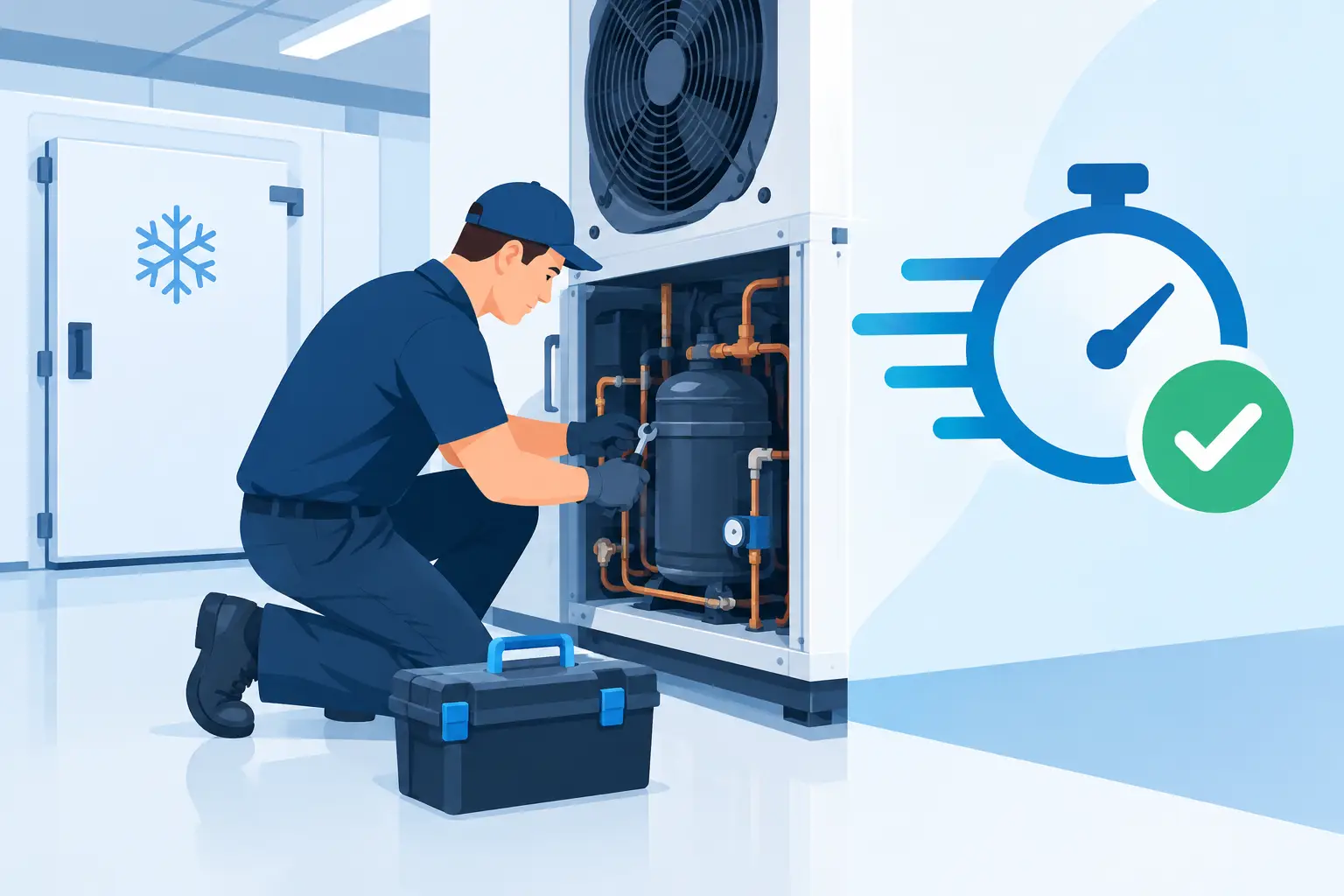
A walk-in cooler that stops holding temperature can turn into a product-loss emergency quickly. A reach-in unit that runs hot can disrupt a restaurant line, a retail operation, or a medical storage area before anyone sees a visible failure. Knowing how to reduce refrigeration downtime starts with treating refrigeration as a business-critical system, not a piece of equipment that only needs attention when it quits.
In the New Orleans area, heat, high humidity, severe weather, and power interruptions all put added strain on refrigeration equipment. The best downtime strategy combines routine maintenance, early warning signs, reliable power planning, and prompt repair from a qualified refrigeration technician.
How to reduce refrigeration downtime before failure
Most refrigeration failures give warning signs. The trouble is that busy property owners and staff often do not notice them until cooling capacity has already dropped. Preventive maintenance creates a consistent opportunity to find worn components, restricted airflow, refrigerant issues, and drainage problems before they become an after-hours breakdown.
For commercial equipment, schedule professional refrigeration maintenance based on the unit type, operating hours, product load, and manufacturer requirements. A high-use walk-in cooler, freezer, ice machine, or restaurant reach-in generally needs more frequent attention than a lightly used residential refrigerator. Equipment operating in a hot kitchen, mechanical room, or outdoor location may also require a tighter service schedule.
During a service visit, a technician should inspect operating temperatures and pressures, electrical connections, controls, contactors, fan motors, door seals, defrost components, drains, coils, and refrigerant performance. The goal is not simply to confirm that the system is currently cold. It is to identify what could prevent it from staying cold next week.
Keep a simple service record for each unit, including installation date, repairs, temperature readings, maintenance dates, and replaced parts. This record helps identify repeating failures. If the same fan motor, defrost issue, or drain problem keeps returning, the root cause may be installation conditions, electrical quality, airflow, or an aging system rather than a single defective part.
Protect airflow at the condenser and evaporator
Restricted airflow is one of the most common and preventable causes of refrigeration trouble. Refrigeration equipment moves heat out of the conditioned space. When the condenser coil cannot release that heat, the compressor works harder, operating temperatures rise, and component wear accelerates.
Condenser coils collect dust, grease, pollen, and debris. In Southeast Louisiana, outdoor equipment also contends with heavy moisture, vegetation, and storm debris. Kitchen refrigeration can accumulate grease quickly. Cleaning coils at the right interval helps the system reject heat efficiently, but the method matters. Incorrect cleaning can bend coil fins or force debris deeper into the equipment.
The area around the condensing unit should remain clear. Do not stack boxes, supplies, pallets, or cleaning materials against equipment louvers. Make sure exhaust air is not trapped in a small, unventilated space and then pulled back through the condenser. A unit can appear mechanically sound while struggling because it is repeatedly breathing its own hot discharge air.
Inside the cooler or freezer, avoid overpacking products against evaporator sections and air returns. Product needs cold airflow around it, not just a cold room. Damaged evaporator fan motors, frozen coils, and blocked air paths can create warm pockets that threaten inventory even when the thermostat display appears normal.
Watch temperatures, alarms, and door habits
A dependable thermometer and temperature log are low-cost protections against expensive loss. Staff should know the acceptable range for each cooler or freezer and understand when a reading requires action. A single temperature spike may be caused by a delivery, a prolonged door opening, or a defrost cycle. A rising pattern over several checks is a service call.
For operations with valuable inventory or after-hours risk, remote temperature monitoring and alarms can be worthwhile. These systems can notify designated staff when temperatures exceed set limits, allowing someone to move product, check a door, or call for repair before the next business day. The right system depends on the size of the operation and the cost of the goods being protected.
Door gaskets deserve special attention. A torn, flattened, or dirty gasket lets warm, humid air enter the cabinet or walk-in. That creates excess frost, longer run times, water around the unit, and added stress on the compressor. Train staff to close doors fully, limit unnecessary openings, and report doors that do not seal or self-close properly.
Humidity makes this issue more serious in the Gulf Coast. Every extended door opening brings moisture into the refrigerated space. That moisture can freeze on coils, compromise product conditions, and make the system work harder. In a walk-in, strip curtains and properly adjusted closers may be a practical investment when traffic is frequent.
Plan for power interruptions and electrical problems
Power loss is a refrigeration risk, especially during hurricane season and severe thunderstorms. A generator can keep critical refrigeration operating, but it must be sized and configured for the actual load. Starting a compressor can require more power than its normal running load, and a generator that is undersized may trip, overload, or fail to support connected equipment as intended.
A professional load assessment should account for refrigeration equipment, lighting, ventilation, HVAC needs, pumps, communications, point-of-sale equipment, and any other systems that must operate during an outage. Some businesses need whole-facility backup power. Others may be better served by a properly designed critical-load plan that prioritizes freezers, coolers, and essential equipment.
Power restoration can also create problems. Voltage fluctuations, electrical surges, and improper restart timing can damage controls or place stress on compressors. Refrigeration equipment should have appropriate electrical protection and delay controls where needed. If a unit has been without power, avoid repeatedly cycling it on and off in an attempt to force a restart. Record the temperatures, keep doors closed, and have the system evaluated if it does not recover normally.
Address the room, not only the refrigeration unit
A refrigeration unit cannot overcome every building condition. A hot, humid, poorly ventilated space forces equipment to run longer and increases failure risk. This is especially relevant when a cooler is located near a kitchen, inside a warehouse, under direct sun exposure, or in a room with inadequate air conditioning.
Check for heat sources near condensers, missing insulation, gaps around walk-in panels, damaged door sweeps, and water intrusion. Air leakage and moisture can undermine refrigeration performance just as they affect comfort in the rest of a building. If a cooler area has recurring condensation, mold concerns, or persistent temperature instability, the answer may require both refrigeration service and improvements to the surrounding envelope, drainage, ventilation, or insulation.
This integrated view is particularly useful for older commercial properties, renovations, and facilities that have added equipment over time. Air Tight Construction can evaluate refrigeration concerns alongside HVAC performance, moisture conditions, insulation, and backup power needs, helping property owners avoid treating connected building problems as unrelated repairs.
Know when repair is no longer the economical choice
Fast repairs reduce immediate downtime, but repeated repairs can create a different kind of risk. An older unit with frequent compressor issues, refrigerant leaks, control failures, or unavailable parts may be costing more in disruption and product exposure than a replacement would cost over time.
Replacement decisions should consider the equipment age, repair history, efficiency, refrigerant type, equipment condition, and the cost of downtime for your operation. A small repair may be the sensible choice for a newer unit with a clear, isolated issue. Replacement may be the better decision when failure is recurring or when the equipment cannot reliably support the load.
If replacement is needed, proper sizing matters. Oversized and undersized equipment can both cause operating problems. A qualified installation should account for room size, insulation levels, product volume, door traffic, ambient heat, and operating schedule instead of relying only on the size of the old equipment.
Give staff a clear response plan
Downtime becomes more expensive when no one knows what to do. Assign responsibility for checking temperatures, documenting readings, protecting inventory, and contacting service. Keep the equipment model and serial numbers accessible, along with the location of disconnects and the name of the person authorized to approve repairs.
When a unit begins warming, keep doors closed as much as possible and avoid loading additional warm product into the space. Do not ignore water, ice buildup, unusual noise, frequent cycling, burning odors, or a tripped breaker. These are signals to investigate, not conditions to work around until the next scheduled visit.
The most reliable refrigeration operation is built through small, consistent decisions: clean coils, clear airflow, sealed doors, recorded temperatures, dependable power, and service before a minor issue becomes a shutdown. That kind of attention protects inventory, supports staff, and gives your property a better chance of staying operational when the weather and workload are working against it.