

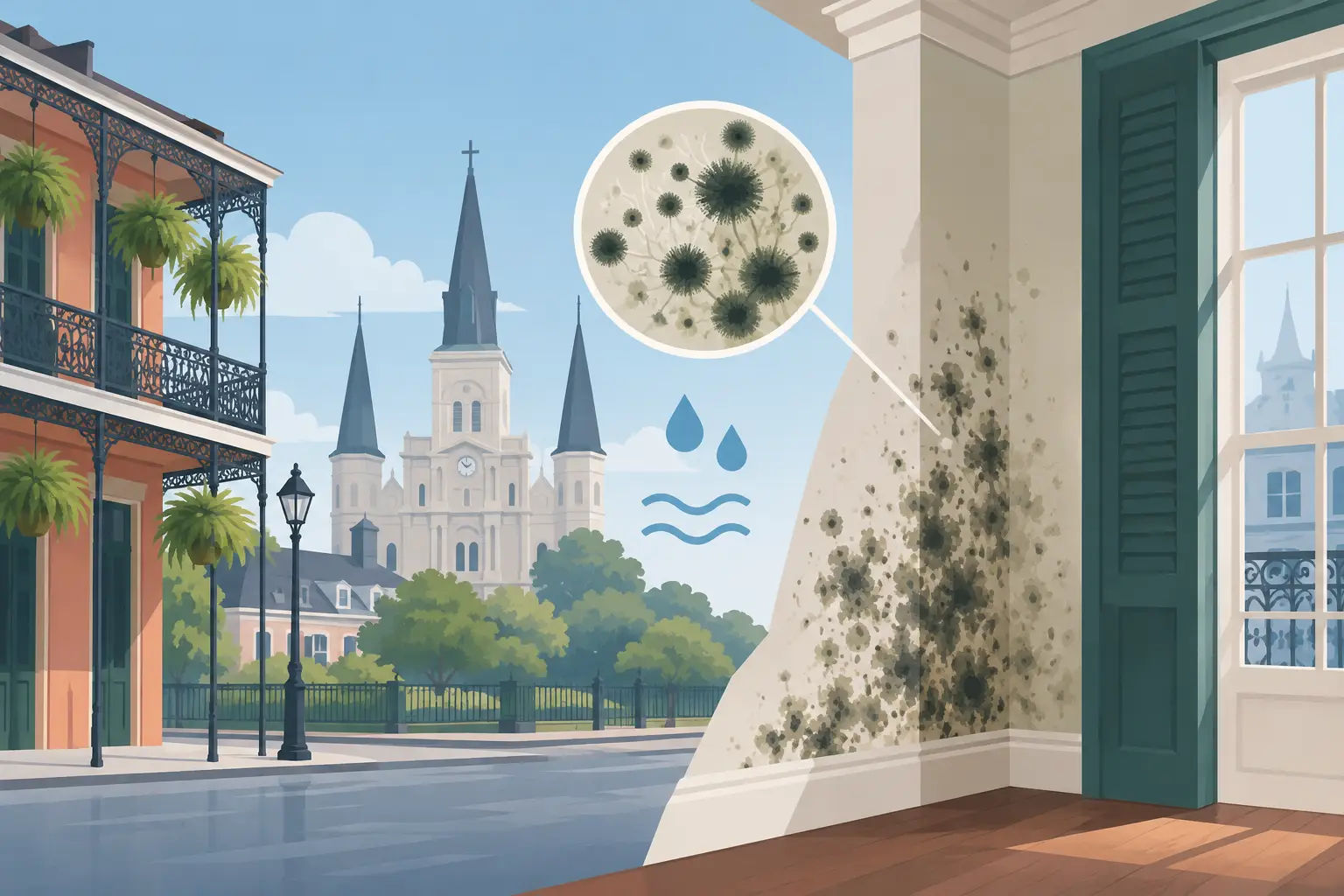
A ceiling stain after a heavy rain, a musty closet, or condensation on a supply vent can become more than a cosmetic concern in Southeast Louisiana. Understanding why mold spreads helps property owners act before a small moisture issue moves into drywall, insulation, HVAC components, and adjacent rooms. Mold is always present at low natural levels outdoors and can enter a building through doors, windows, ventilation, and foot traffic. The problem begins when indoor conditions give those spores a damp surface and enough time to grow.
Mold Spreads When Moisture Stays in Place
Mold needs three basic things: spores, a food source, and moisture. Spores are hard to avoid, and many common building materials provide food. Drywall paper, wood framing, carpet backing, dust, cardboard, ceiling tiles, and insulation can all support growth when wet or consistently humid.
That is why the moisture source matters more than the visible spot. Cleaning a small patch without correcting the leak, humidity problem, or condensation may improve the appearance temporarily, but it does not change the conditions that caused the growth. Mold can continue behind a wall, beneath flooring, or above a ceiling where it is not immediately visible.
In the New Orleans area, high outdoor humidity makes this especially challenging. A building does not need a major flood to develop a mold problem. A slow roof leak, sweating duct, poorly drained air conditioner, plumbing drip, or crawl space with damp soil can create the right environment over time.
How Mold Moves Beyond the Original Wet Area
Mold does not spread like a stain bleeding across paint. It grows into damp materials and releases microscopic spores that can travel through the air. Air movement from occupants, fans, HVAC systems, and normal building pressure changes can carry spores to other damp locations.
A water-damaged wall, for example, may contain moisture well beyond the area that looks discolored. Drywall and insulation can wick water sideways and downward. If the wall cavity remains wet, mold may establish itself on the back of the drywall, wood studs, baseboards, and nearby flooring before the front surface shows obvious signs.
HVAC Systems Can Distribute Moisture and Spores
Air conditioning is essential in Louisiana, but it also has a direct role in indoor moisture control. A properly sized, maintained system removes heat and humidity. When equipment is not draining correctly, short-cycles, has dirty coils, leaks from a condensate line, or runs with damaged ductwork, moisture problems can follow.
Condensation around supply registers or on duct surfaces is a warning sign. Cold air meeting warm, humid air can produce water on metal ducts, vents, and nearby ceiling materials. If insulation is missing or air leaks allow humid attic or crawl space air into the system, those surfaces may stay damp long enough for mold to grow.
An oversized AC system can also be part of the problem. It may cool a space quickly and shut off before it has removed sufficient humidity. The room feels cool, but indoor relative humidity remains too high. For many properties, keeping indoor humidity generally around 30% to 50% supports comfort and reduces the conditions mold prefers, although the right approach depends on the building and its equipment.
Air Leaks Bring Humid Air Into Hidden Spaces
Warm, moisture-heavy outdoor air can enter through gaps around penetrations, attic access points, poorly sealed ductwork, wall openings, and other breaks in the building envelope. When that air reaches a cooler surface inside the structure, it can condense.
This is one reason mold prevention is not only a cleaning issue. It is a building-performance issue. Roof condition, drainage, insulation, air sealing, HVAC operation, and ventilation all affect where moisture goes and whether materials have a chance to dry.
Spray foam insulation and targeted air sealing can help in the right application by reducing uncontrolled humid-air infiltration. However, insulation is not a substitute for repairing active leaks or managing indoor humidity. Sealing a building without considering ventilation, combustion equipment, and HVAC capacity can create new comfort or moisture concerns. The solution should fit the structure rather than follow a one-size-fits-all approach.
The Most Common Reasons Mold Keeps Returning
Recurring mold usually means a moisture condition was missed, not that someone failed to scrub hard enough. In homes and commercial properties, the source may be intermittent and only appear during certain weather conditions or occupancy patterns.
Roof leaks often show up after wind-driven rain, especially around damaged shingles, flashing, penetrations, or aging roof details. Plumbing leaks may wet cabinets, walls, or slab-adjacent areas slowly enough to go unnoticed. After a storm or power outage, an AC system that remains off for days can allow indoor humidity to climb rapidly, particularly in a closed building.
Poor drainage creates another common path. Water that ponds near the foundation, enters a crawl space, or backs up around exterior walls increases the moisture load on the building. Bathrooms, laundry rooms, kitchens, mechanical rooms, and refrigeration areas also need particular attention because they regularly produce water vapor or have drain connections that can fail.
For commercial facilities, the stakes can be broader. A leak above ceiling tiles, a sweating chilled-water line, or an improperly draining HVAC unit can affect offices, inventory areas, tenant spaces, and indoor air quality at once. Fast investigation limits disruption and helps protect the asset.
What to Do When You Find Mold
The first step is to control the water. Turn off the source if it is safe to do so, such as shutting off a leaking fixture or placing a container under an active drip. Dry visible water promptly, but do not assume the area is dry because the surface feels dry to the touch. Materials behind finishes can retain moisture.
Small, isolated surface growth on a nonporous material may be cleaned if the moisture source is corrected and the area is fully dried. Porous materials such as wet drywall, carpet padding, ceiling tiles, and insulation often cannot be reliably cleaned once mold has grown into them. They may need to be removed as part of a proper remediation plan.
Avoid disturbing a large affected area without containment. Aggressive scraping, sanding, or demolition can send spores and contaminated dust into other parts of the property. This is especially important when growth is extensive, has followed floodwater or sewage exposure, is located inside HVAC components, or affects people with respiratory sensitivities.
Professional mold remediation focuses on returning mold levels to normal natural levels, not making the misleading promise that every mold spore can be removed from a building. A sound process identifies the moisture source, protects unaffected areas, removes or cleans affected materials as appropriate, dries the structure, and verifies that the conditions supporting growth have been addressed.
Prevention Starts With Faster Drying
After a leak, storm intrusion, or plumbing failure, time matters. Mold can begin growing on wet materials within 24 to 48 hours under favorable conditions. Quick drying does not always eliminate the need for repairs, but it can greatly reduce the amount of material affected.
Make regular inspections part of property care. Check under sinks, around water heaters, near HVAC air handlers, at condensate drains, below roof penetrations, and along exterior walls after heavy rain. Watch for peeling paint, warped trim, soft drywall, persistent odors, rusted vents, and repeated condensation. These are often moisture clues before they become major mold damage.
Maintain the systems that keep the building dry. Clear AC condensate drains, replace filters on schedule, address duct damage, repair roof and plumbing leaks promptly, and keep gutters and drainage paths moving water away from the structure. During prolonged outages, backup power can also protect humidity control, sump equipment, refrigeration, and critical building operations where appropriate.
Air Tight Construction approaches mold concerns by looking beyond the visible growth to the connected conditions that allow it to spread. The lasting fix may involve remediation, HVAC correction, insulation, roof repair, drainage improvements, or a coordinated combination of services.
A musty smell or a small stain is worth investigating early. Finding the moisture path while the repair is still contained is one of the most practical ways to protect your property, indoor comfort, and budget.