

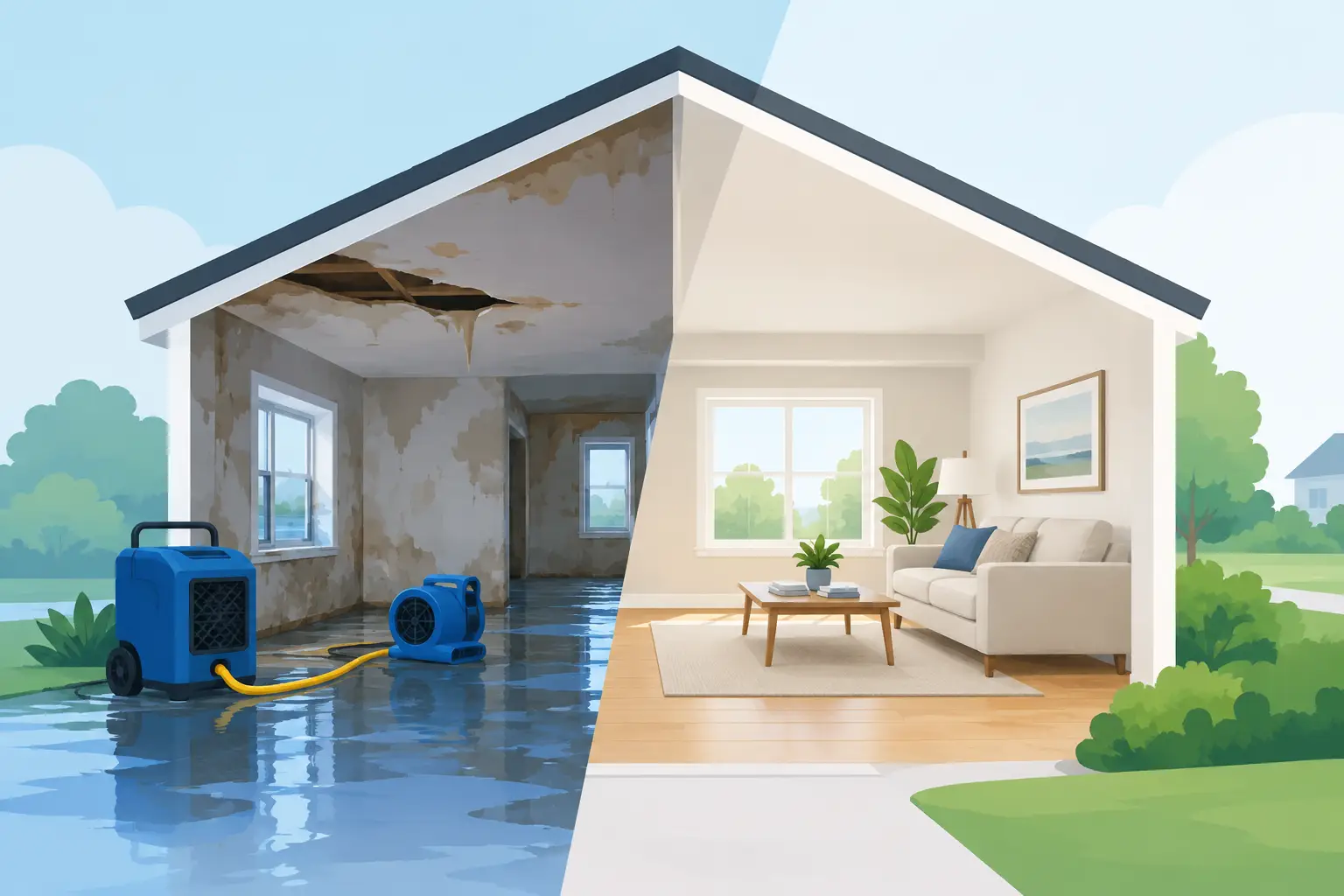
A flood damaged home restoration example in Southeast Louisiana often starts with a deceptively simple call: water is gone, but the house still feels damp, smells musty, and the air conditioner cannot keep up. At that point, the work is no longer just cleanup. The structure, insulation, walls, HVAC equipment, electrical components, and indoor humidity all need to be evaluated as connected systems.
Consider this illustrative scenario: a one-story New Orleans-area home took on several inches of water after intense rainfall overwhelmed drainage near the property. The homeowners removed furniture and standing water quickly, but water had already reached drywall, baseboards, lower cabinets, flooring, and portions of the HVAC return system. A proper restoration plan focused first on safety and drying, then on rebuilding the home in a way that could better manage Gulf Coast moisture.
First 24 Hours: Stabilize the Property
The first priority was making the home safe to enter and preventing additional damage. Before demolition began, the restoration team verified that electrical hazards had been addressed and that the source of water intrusion was under control. If water is still entering through a damaged roof, failed flashing, cracked exterior opening, or drainage issue, drying the interior without correcting that problem only delays the next loss.
Standing water was extracted, wet belongings were moved, and affected rooms were documented. Documentation matters for insurance claims, but it also creates a clear record of which materials were wet and how far the moisture traveled. Water does not always stop where the visible waterline stops. It can wick upward into drywall and insulation, travel beneath flooring, and collect behind cabinets or inside wall cavities.
In a humid climate, opening every window is not always the best response. Outdoor air can carry substantial moisture into the home, especially after a storm. Controlled drying with commercial air movers, dehumidification, and monitored ventilation is usually more effective than relying on open doors and windows alone.
Assessing What Can Stay and What Must Go
The restoration assessment found that some materials could be cleaned and dried, while others needed removal. The decision depends on the type of water, how long materials remained wet, and whether they can be thoroughly dried and cleaned.
Nonporous surfaces such as certain tile, metal, and solid wood components may be salvageable when addressed promptly. Porous materials are more difficult. Wet carpet padding, insulation, swollen particleboard cabinets, saturated drywall, and cellulose ceiling materials can hold moisture and create conditions for microbial growth. Keeping them simply because they look acceptable on the surface can leave hidden problems inside the building.
In this example, the damaged drywall was cut out above the measured moisture line rather than only at the visible stain. Wet insulation was removed from exterior walls, affected baseboards were taken out, and damaged laminate flooring was pulled up. Lower kitchen cabinet sections that had swollen and separated were removed, while solid-wood elements that could be cleaned and dried were evaluated individually.
This is where homeowners often face a difficult trade-off. Removing more material can feel disruptive and expensive, but incomplete removal can lead to repeat repairs, odor, deterioration, and mold concerns later. The right scope should be based on moisture readings and material condition, not guesswork.
Mold Remediation Is a Controlled Process
Mold is naturally present in indoor and outdoor environments. The goal is not to promise an impossible mold-free building. The goal is to address elevated mold conditions caused by water damage, remove contaminated materials where needed, and return the home to normal natural levels.
For this home, the crew established containment around the affected areas before disturbing wet drywall and insulation. That step helps limit the spread of dust and spores into clean rooms. Materials were removed carefully, surfaces were cleaned using appropriate methods, and the area was dried until moisture readings supported reconstruction.
The team also checked less obvious locations: behind appliances, inside lower cabinets, around supply and return vents, beneath flooring transitions, and in closets against exterior walls. In Southeast Louisiana, a damp wall cavity can become a continuing moisture problem long after new paint covers the original waterline.
Odor alone does not identify the source of a problem, but it should not be ignored. A persistent musty smell after cleanup may point to hidden wet materials, an improperly dried crawlspace, duct issues, or ongoing humidity problems. Restoration should resolve the conditions creating the odor, not mask them with fragrance.
HVAC and Electrical Checks Protect the Rebuild
After a flood, the air-conditioning system deserves more than a quick visual inspection. In this case, the home’s HVAC return path had been exposed to moisture, and the lower portion of the indoor equipment area needed evaluation. Floodwater can affect duct insulation, filters, electrical controls, drain components, and air quality inside the system.
A licensed HVAC technician inspected the equipment, replaced affected filters, checked electrical components, evaluated the condensate drain, and verified cooling and dehumidification performance before the home was fully closed back in. If ductwork has been contaminated or insulation around ducts is wet, repair or replacement may be necessary. Running a system through wet or contaminated materials can distribute odors and particles throughout the house.
Electrical equipment, outlets, appliances, and generator connections also require qualified inspection when floodwater has reached them. Homeowners should not assume an outlet or appliance is safe simply because it appears to work. Water exposure can create corrosion and delayed failures that are not visible from the outside.
Rebuilding for Humidity Control, Not Just Appearance
Once the home was dry and cleared for repairs, the restoration moved into reconstruction. New drywall, trim, flooring, cabinet components, and paint restored the appearance of the rooms. But this stage also offered an opportunity to correct performance issues that existed before the flood.
In the exterior walls that were opened, air sealing and insulation details were reviewed before drywall went back up. Properly installed spray foam insulation can help reduce air leakage and limit humid outdoor air from entering wall and attic spaces. It is not the answer to every water problem – bulk water intrusion must always be fixed at its source – but it can be an effective part of a broader moisture-control strategy.
The homeowners also addressed a drainage issue at the exterior, repaired damaged trim, and improved the transition points where water had entered. For properties exposed to frequent storms, exterior maintenance, fortified roofing decisions, sealed penetrations, and reliable drainage can be just as important as interior repairs.
The air conditioner was then set up to support indoor humidity control. An oversized system can cool a home too quickly without running long enough to remove adequate moisture, while an undersized or poorly maintained system may struggle through the hottest part of the year. Equipment selection, duct condition, insulation, and air sealing need to work together.
What This Flood Damaged Home Restoration Example Shows
The visible repair was only one part of the project. The successful outcome came from treating water removal, mold remediation, construction, HVAC evaluation, insulation, and exterior corrections as one coordinated scope of work.
For some homes, restoration will be relatively limited: remove wet finishes, dry framing, repair the source of the leak, and rebuild. For others, especially when floodwater has remained for an extended period or reached multiple building systems, the project may require more extensive demolition, remediation, electrical work, HVAC repair, and structural reconstruction. The scope depends on the water source, duration of exposure, materials affected, and the building’s existing condition.
Air Tight Construction approaches restoration with that full-property perspective. A home should not merely look repaired after a flood. It should be dry, safe, comfortable to occupy, and better prepared to handle the next period of heavy rain, heat, and humidity.
If your property has been affected by water, act before hidden moisture becomes a larger repair. A careful inspection and a clear restoration plan can protect both the building and the people who rely on it.